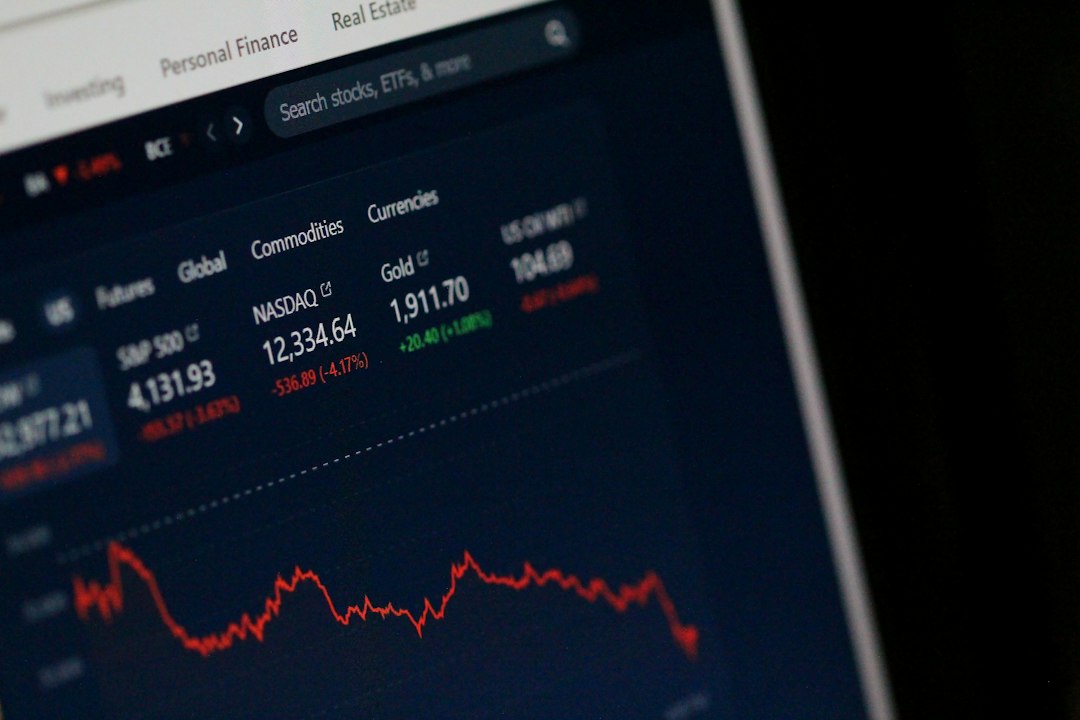
AI Whiplash Triggers Equity Rotation as Sentiment Swings Reshape Portfolio Flows
Bloomberg reports that extreme sentiment swings in artificial intelligence stocks are jolting global equities, forcing investors to recalibrate exposure as narratives shift rapidly between fear and greed. The volatility reflects a deeper structural shift: capital allocation is increasingly driven by AI momentum rather than fundamentals, creating fragile feedback loops across sectors and regions.
Market Impact & Global Context
The current AI-driven whiplash is not merely a tech-sector phenomenon. As capital chases AI narratives, traditional sectors — industrials, consumer staples, energy — face persistent outflows, widening valuation gaps to historic extremes. This rotation has accelerated fragmentation in Eurozone equity markets, where AI-exposed names trade at premium multiples while domestic cyclicals languish.
Emerging markets face a dual transmission channel. First, AI-related supply-chain demand creates concentrated winners in semiconductor hubs like Taiwan and South Korea. Second, the dollar-denominated AI capex boom tightens global liquidity, pressuring EM currencies and sovereign spreads. Investors ignoring this cross-asset linkage risk mispricing duration and credit risk in portfolios.
"The velocity of sentiment reversals in AI names now exceeds 2021 meme-stock dynamics, but with far larger market-cap weightings. Portfolio managers are being forced into reactive de-risking that amplifies moves across uncorrelated assets," said a senior cross-asset strategist at a major European asset manager.
Historical precedent suggests such sentiment-driven rotations correct violently when earnings revisions fail to match pricing. The 2000 telecom bust and 2021 software compression both featured similar "narrative premium" collapses. Today's concentration — where five AI-linked names drive over 30% of S&P 500 gains — magnifies systemic fragility. A modest disappointment in hyperscaler capex guidance could trigger synchronized de-leveraging across quant, fundamental, and passive strategies.
For European investors, the divergence is acute. The region's equity benchmark lacks direct AI champions, causing persistent underperformance versus U.S. indices. This structural gap fuels political pressure for industrial policy responses, potentially distorting capital allocation further. Meanwhile, China's consumer sector illustrates how AI capital suction starves domestic demand stories of liquidity, extending valuation compression beyond tech.
Key Takeaways
- Sentiment fragility: AI-driven flows now dominate short-term market direction, decoupling price action from macro fundamentals across sectors.
- Cross-asset spillover: Dollar liquidity tightening from AI capex creates hidden risks in EM debt, commodities, and currency hedging costs.
- Rotation asymmetry: Sectors without AI exposure face structural outflow bias; recovery requires either AI earnings disappointment or policy-driven rebalancing.
- Risk management imperative: Static correlation assumptions fail during narrative-driven regimes; dynamic hedging and regime-aware sizing are essential.
Frequently Asked Questions
How does AI sentiment volatility affect non-tech sectors?
Capital rotation into AI names creates persistent outflows from traditional sectors, depressing valuations and liquidity. This "crowding out" effect forces non-tech companies to offer higher risk premia to attract investment, raising their cost of capital regardless of fundamentals.
What signals should investors watch for a regime shift in AI-driven markets?
Key inflection points include hyperscaler capex guidance revisions, semiconductor order momentum, and breadth divergence — where AI leaders advance while equal-weight indices decline. A sustained breakdown in market breadth often precedes narrative collapse by 4-8 weeks.