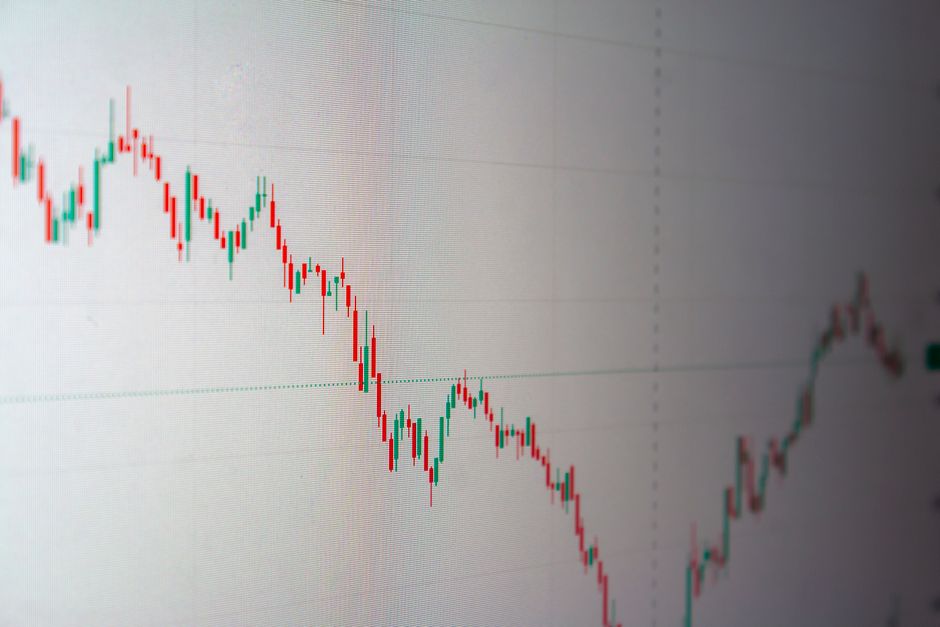
Bitcoin (BTC) Nears $80,000: Why the Next Pullback Is Critical
Bitcoin is pressing against the $80,000 mark, a level carrying heavy technical and psychological weight, yet analysts caution that the character of the next pullback — not the approach to the round number itself — will decide whether the uptrend extends or unwinds. For investors, the actionable signal is no longer the rally; it is how the market behaves when it inevitably steps back.
Market Impact & Global Context
Round numbers act as liquidity magnets in crypto markets. Options desks cluster hedges around strikes set at clean increments such as $80,000, while leveraged futures traders stack stop-losses just beneath them. That mix tends to amplify volatility on approach: price is drawn toward the level, then whipsaws as positions trigger. A decisive close above $80,000 on strong volume would force shorts to cover and momentum capital to chase; a rejection could hand sellers control for days.
History offers a useful template. Breakouts through major round levels — $10,000 in 2017, $20,000 shortly after — often accelerated once cleared, while failed tests marked durable tops. Bitcoin's November 2021 peak just below $69,000 remains the canonical case: the failure to convert resistance into support preceded a prolonged drawdown. Analysts assessing today's advance are applying the same lens, consistent with our earlier coverage of why bitcoin's six-month outperformance against stocks and gold has brought it closing in on $80,000.
The macro backdrop strengthens the bull case while raising the stakes. With the Federal Reserve pivoting toward easier policy and gold rallying in parallel, the debasement trade keeps pulling capital into hard assets. As we reported, financial repression has become the new buzzword for bitcoin bulls, capturing investor concern that real yields stay negative — a regime that historically favors scarce assets over cash.
"In a trend this strong, pullbacks are usually bought — until suddenly they aren't. The tell is depth and duration: a shallow dip that holds prior consolidation zones confirms genuine accumulation, while a fast, high-volume reversal signals leveraged longs unwinding and demands immediate risk reduction."
Transmission effects extend across portfolios. Spot Bitcoin ETFs have made the asset a mainstream allocation, so equity investors now carry indirect exposure through fund flows. Crypto-linked stocks — exchanges and miners — typically trade with higher beta than Bitcoin itself, magnifying both legs of any swing. Altcoins, which consolidated after their strongest stretch in years, tend to lag on the way up but fall harder when Bitcoin's trend cracks, meaning a failed test at $80,000 would likely hit the broader digital-asset complex first.
Key Takeaways for Investors
- $80,000 is a battleground: clustered options and liquidation levels make elevated volatility around the figure likely.
- Judge the pullback, not the peak: shallow dips holding prior breakout zones validate the trend; steep reversals warn of distribution.
- Macro tailwinds persist: Fed easing expectations and the debasement trade continue to underpin hard assets.
- Mind your beta: crypto-linked equities and altcoins will amplify whichever way Bitcoin breaks.
Frequently Asked Questions
Should investors buy Bitcoin before it reaches $80,000?
Chasing price directly beneath a major round number offers poor risk-reward, since volatility spikes near clustered option strikes and stop-losses. Many traders favor staged entries on pullbacks that hold prior support, letting the market confirm demand before adding exposure.
What would a healthy Bitcoin pullback look like?
A constructive retracement is typically shallow and orderly, with fading volume and price defending broken resistance-turned-support levels. A sharp sell-off on expanding volume that reclaims old ranges would instead suggest leveraged positions are being flushed, warranting tighter risk management.