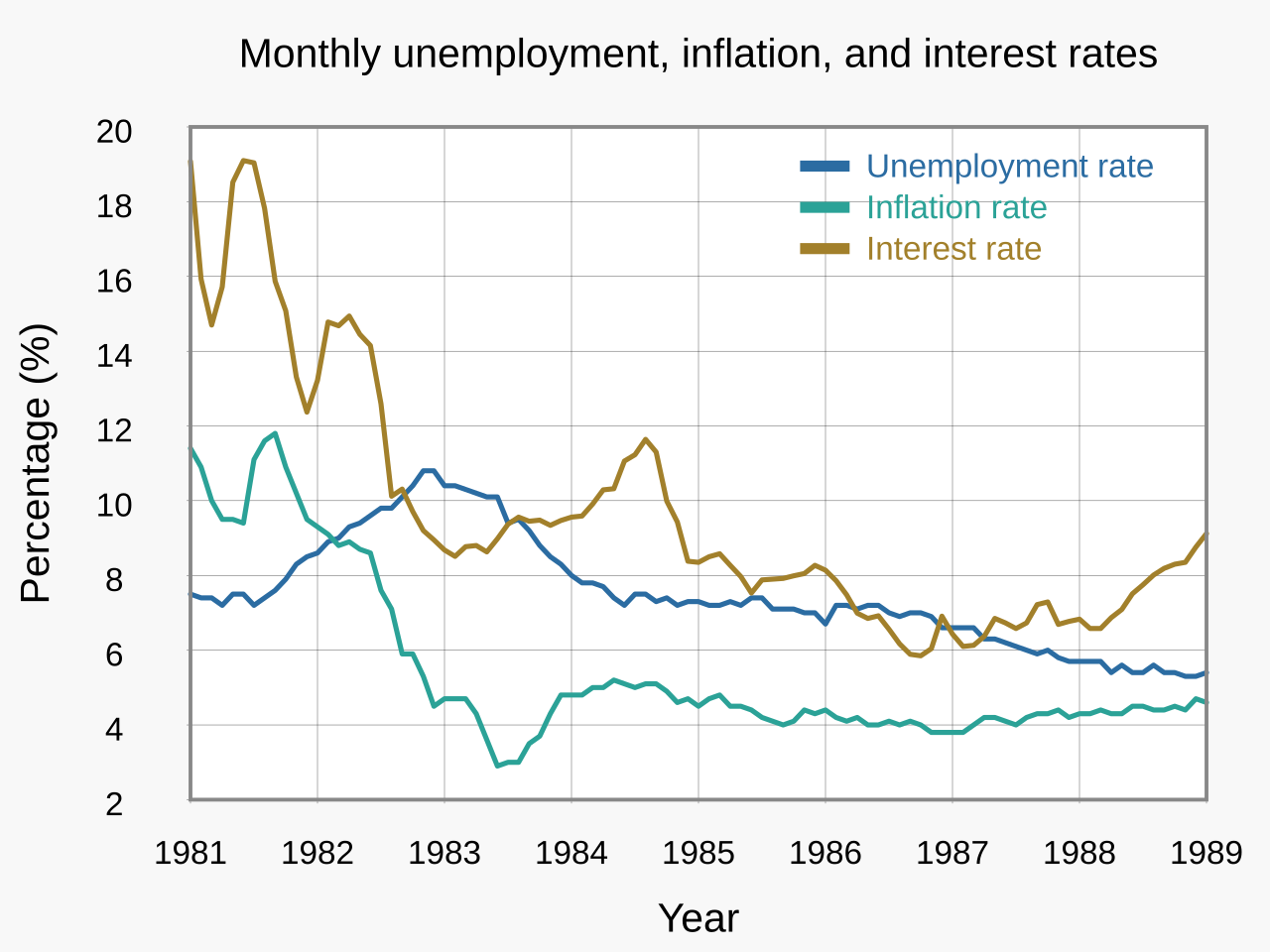
Inflation Volatility Surge Reshapes Fed Rate Path and Global Asset Allocation
Persistent inflation volatility is forcing a fundamental reassessment of monetary policy trajectories across major economies, with the Federal Reserve's rate-cut timeline now contingent on disinflation durability rather than headline prints alone. This shift elevates term premium in Treasury markets and compresses risk premiums across equities, particularly for duration-sensitive growth sectors.
Market Impact & Global Context
Inflation volatility — measured by the dispersion of monthly CPI and PCE prints around their trend — has historically correlated with higher equity risk premiums and wider credit spreads. The current regime, where core services inflation remains sticky while goods deflation normalizes, creates a bimodal distribution of outcomes that frustrates forward guidance. Bond markets have responded by pricing a higher neutral rate (r*), with the 10-year real yield anchoring above 2% for the first time since 2009.
For global equity allocators, this environment favors quality factor exposure and sectors with pricing power over pure beta plays. European equities face additional headwinds from ECB policy divergence; the Eurozone's slower disinflation trajectory may delay rate cuts relative to the Fed, widening transatlantic yield spreads and pressuring EUR/USD. Emerging markets with high dollar-denominated debt face refinancing risk as volatility keeps long-end U.S. yields elevated.
"The market is transitioning from pricing 'when' the Fed cuts to pricing 'how many' cuts are justified by the inflation data. That distinction matters enormously for duration risk — a 25bp shift in terminal rate expectations moves 10-year Treasuries by 15-20bp, but a shift in cutting cycle depth moves them by 40-50bp. Investors are underweight the latter risk."
— Senior Rates Strategist, Global Fixed Income Desk
Commodity markets reflect this uncertainty. Gold has decoupled from real yields, trading as a geopolitical hedge rather than an inflation hedge, while industrial metals price in China's property sector stabilization rather than global manufacturing momentum. This fragmentation reduces cross-asset correlation benefits, complicating portfolio construction for multi-asset managers.
The transmission to credit markets is nuanced. Investment-grade spreads remain tight on strong fundamentals, but high-yield issuance calendars are front-loaded as borrowers race to lock rates before potential volatility spikes. Leveraged loan repricing activity has surged, signaling sponsor confidence in soft-landing narratives — a contrarian indicator worth monitoring.
Key Takeaways
- Terminal rate uncertainty dominates: The range of plausible Fed terminal rates has widened to 3.75%-4.50%, making duration positioning the primary alpha source in fixed income.
- Sector rotation favors pricing power: Healthcare, utilities, and select tech infrastructure names with contracted revenue outperform speculative growth in high-volatility regimes.
- Emerging market differentiation intensifies: Creditor nations with current account surpluses (e.g., Gulf states, parts of ASEAN) decouple from debtor nations reliant on volatile portfolio flows.
- Options markets signal skew: Elevated put-call skew on S&P 500 and 10-year Treasury futures indicates institutional hedging against downside inflation surprises, not upside.
Frequently Asked Questions
How does inflation volatility differ from high inflation for portfolio construction?
High inflation implies a directional trend requiring real asset allocation; volatility implies distributional uncertainty requiring convexity and liquidity. Portfolios should emphasize optionality (long gamma) and reduce leverage rather than simply increasing commodity exposure.
What signals would confirm a durable disinflation trend sufficient for Fed easing?
Three consecutive months of core services ex-housing below 0.25% m/m, coupled with wage growth tracking below 3.5% y/y and a stable unemployment rate, would give the Fed confidence to cut without reigniting demand.