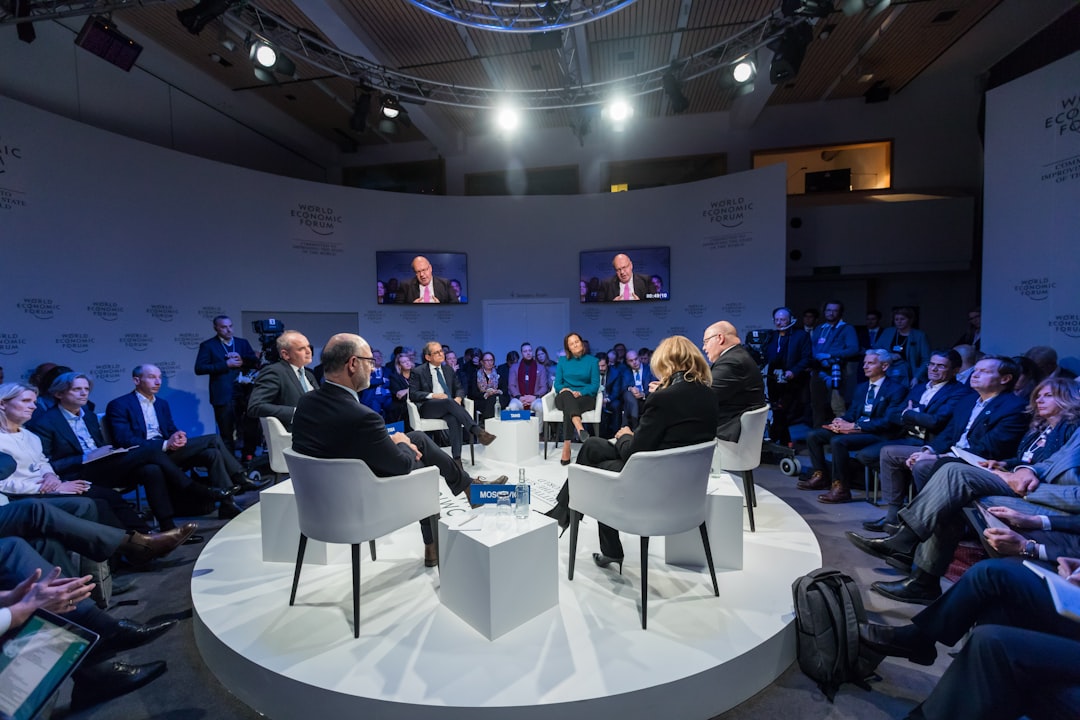
ECB's Lagarde Warns on Growth at Davos: Eurozone Outlook and Market Stakes
European Central Bank President Christine Lagarde used a World Economic Forum panel in Davos to deliver a cautious assessment of the European economy, signaling that headwinds to growth remain firmly in place even as inflation pressures gradually recede. Her remarks come at a sensitive juncture for the euro area: rate-setters are weighing how far to push monetary tightening without fracturing a fragile recovery, while currency traders and bond investors scrutinize every word from Frankfurt for clues on the next policy move.
Market Impact & Global Context
Lagarde's downbeat tone carries immediate weight for European equities, which have spent the past several quarters oscillating between soft-data optimism and hard-data disappointment. A more cautious ECB narrative tends to weigh on the euro, which directly influences the earnings translations of the region's export-heavy multinationals listed on the DAX and CAC 40. A softer single currency can cushion reported revenue for companies with significant dollar-denominated sales, but it simultaneously raises the import price of energy and commodities priced in USD, complicating the inflation calculus Frankfurt is trying to balance.
For bond markets, dovish-leaning commentary from the ECB reinforces the steepening of the eurozone yield curve that has played out in recent sessions. Front-end Bund yields have remained anchored while longer-dated paper reflects both fiscal expansion and structural defense spending, meaning curve trades that favor the long end may continue to draw institutional flows. The wider spillover reaches the U.S. Treasury market: when the ECB signals patience on cuts, the relative-yield advantage of holding euro-denominated debt narrows, which historically tends to keep the dollar bid and apply a tightening financial conditions impulse across emerging markets reliant on dollar funding.
Commodity desks are also attentive. A weaker euro combined with persistent global uncertainty tends to keep gold supported as a hedge against policy missteps, while European industrial metals remain sensitive to any signal that the eurozone manufacturing cycle is stabilizing or sliding further. Energy importers on the Mediterranean periphery face the dual risk of currency depreciation and elevated LNG costs, a transmission channel that has defined eurozone periphery's spread dynamics since 2022.
According to market analysts at a leading European investment bank, "Lagarde's framing of the growth-inflation balance in Davos underscores that the ECB is in no rush to declare victory. Markets priced for an early pivot are now being forced to recalibrate, which means volatility in EUR crosses and peripheral spreads is likely to stay elevated into the next round of confidence surveys and PMI releases."
According to market analysts at a leading European investment bank, "Lagarde's framing of the growth-inflation balance in Davos underscores that the ECB is in no rush to declare victory. Markets priced for an early pivot are now being forced to recalibrate, which means volatility in EUR crosses and peripheral spreads is likely to stay elevated into the next round of confidence surveys and PMI releases."
The broader global context matters as well. With the Federal Reserve navigating its own path between jobs strength and inflation progress, the ECB's dovish tilt relative to the Fed could either compress or widen transatlantic rate differentials depending on incoming U.S. data. A persistent euro-underperformance cycle, as explored in the broader market reaction to synchronized central-bank caution, has historically rewarded investors in U.S. large-cap exporters while pressuring unhedged European investors holding dollar assets.
Key Takeaways
- EUR direction is the immediate trade: Dovish-leaning ECB commentary keeps the euro on the back foot, supporting dollar strength and pressuring unhedged EM debt.
- Curve steepening favored: Patient ECB policy combined with rising long-end issuance continues to support eurozone curve-steepening strategies.
- Cross-asset hedging costs rise: Importers in the periphery face higher energy and commodity hedging costs as euro weakness amplifies USD-denominated input prices.
- Policy synchronization risk: Divergence between ECB caution and Fed resolve on inflation will likely drive FX volatility through the next data cycle.
Frequently Asked Questions
What did Christine Lagarde say about the European economy at Davos?
Lagarde struck a cautious tone on the eurozone outlook at a World Economic Forum panel, emphasizing that growth headwinds persist even as inflation gradually eases. The remarks signal that the ECB is in no rush to pivot, reinforcing the patient-policy message delivered at recent rate meetings.
How do ECB rate signals affect euro-dollar trading and global markets?
When the ECB signals patience while the Fed remains restrictive, the rate differential narrows in favor of the dollar, pressuring EUR/USD. Weaker欧元 supports European exporters' reported earnings but raises import costs, while a stronger dollar tightens financial conditions for emerging markets that borrow in USD.