Lead Paragraph
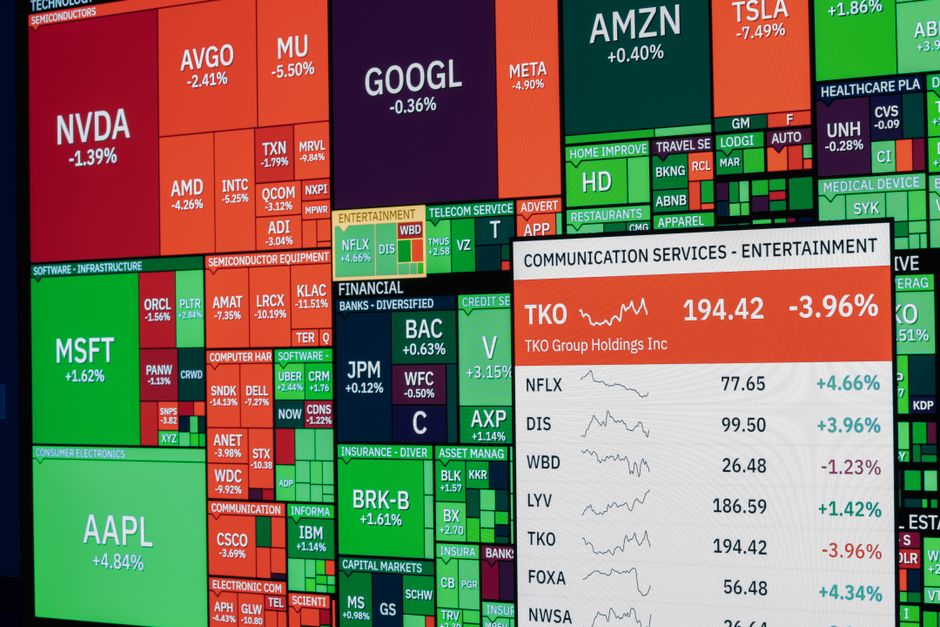
Early Wednesday trading revealed a stalled momentum across United States equity markets, with futures remaining largely stagnant as mounting geopolitical tensions and climbing borrowing costs dampened risk appetite. Contracts tied to the Dow Jones Industrial Average and the S&P 500 hovered near equilibrium, while the tech-heavy Nasdaq-100 futures experienced a slight contraction of 0.2%. This muted premarket performance follows a turbulent Tuesday session that marked the broader market benchmark's third consecutive day of declines, driven by a historic global sell-off in sovereign debt and escalating inflation fears.
Market Analysis
The prevailing cautious sentiment is rooted in a potent combination of energy market volatility and tightening global credit conditions. Crude oil benchmarks advanced more than 1% on Wednesday amidst unconfirmed geopolitical intelligence suggesting potential Iranian threats against American infrastructure in Europe. This sustained elevation in energy costs is directly fueling inflation anxieties, which in turn have catalyzed a dramatic repricing in international bond markets. Furthermore, the technology sector is experiencing idiosyncratic headwinds. Shares of Oracle retreated nearly 1% ahead of the opening bell following media reports regarding OpenAI; disclosures revealed that despite an 18% quarter-over-quarter revenue expansion, the artificial intelligence enterprise is grappling with widening financial deficits. This tech-driven pessimism concurrently pressured industry stalwarts in early trading, including Alphabet, Intel, and Marvell.
By The Numbers
The sovereign debt market is currently flashing historic signals across multiple international jurisdictions. During Tuesday's session, the United States 30-year Treasury yield spiked to levels unseen in 19 years. The international fixed-income landscape mirrored this aggressive trajectory: Japan's 10-year government bond yield scaled a 30-year peak. European debt instruments followed suit, with Germany's 30-year bund yields reaching their highest mark since 2011, and France's equivalent maturity hitting thresholds not recorded since 2008. Despite these alarming yield milestones, select institutional research strategists maintain that robust corporate earnings and resilient cash flows provide a sufficient structural buffer against broader macroeconomic shocks.
The Takeaway
Institutional capital is now firmly anchored on the impending release of the Federal Open Market Committee's latest meeting minutes, scheduled for Wednesday afternoon. Market participants will rigorously dissect the documentation for underlying policy friction, specifically scrutinizing the rationale of the three dissenting officials who advocated for an immediate interest rate hike during the July assembly. Moving forward, the interplay between corporate fundamental resilience and restrictive central bank posturing will dictate the near-term trajectory of risk assets.