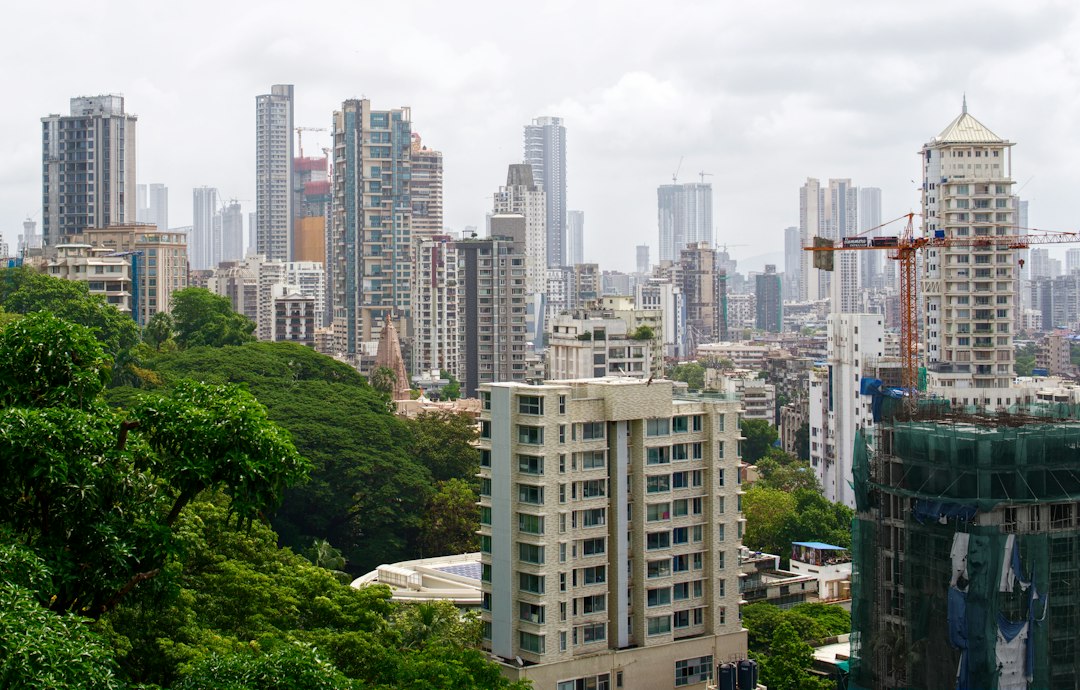
Godrej Properties' $625M Mumbai Luxury Project Signals Premium Housing Resilience
Godrej Properties has secured a development mandate for a luxury residential project in Mumbai's prime Marine Lines neighborhood, valued at approximately $625 million. The deal underscores sustained demand for ultra-premium housing in India's financial capital despite elevated interest rates and global economic uncertainty.
Market Impact & Global Context
The Marine Lines project represents a significant capital allocation toward grade-A residential assets in a micro-market where land scarcity creates structural pricing power. Unlike mid-income segments that remain rate-sensitive, the ₹25 crore-plus ticket size in South Mumbai attracts high-net-worth individuals and non-resident Indian buyers whose purchasing decisions correlate more closely with global equity performance and currency movements than domestic monetary policy.
For foreign portfolio investors tracking Indian real estate exposure, this development reinforces the "K-shaped" recovery narrative: premium residential and commercial office assets in gateway cities continue to attract institutional capital, while affordable housing struggles with margin compression. Godrej's ability to secure such a mandate without a pre-sales launch also signals strong brand equity — a critical moat in a sector where trust deficits have historically plagued smaller developers.
"Marine Lines is one of the few micro-markets where absorption velocity for ultra-luxury inventory remains decoupled from the repo rate cycle. The buyer pool here is global, dollar-denominated, and largely insulated from domestic EMI affordability calculations. Godrej's entry at this scale validates the thesis that India's top-tier residential is increasingly behaving like a global gateway asset class rather than a local cyclical play."
— Anita Desai, Head of India Real Estate Research, Knight Frank
The transaction also has implications for the nascent Indian REIT ecosystem. While residential REITs remain regulatory work-in-progress, large-scale luxury developments by listed developers like Godrej Properties create a pipeline of income-generating assets that could eventually be monetized through rental yield vehicles, similar to the commercial REIT trajectory post-2019. Investors should monitor whether this project incorporates a long-term hold strategy for lease revenue versus a pure development-flip model.
Key Takeaways
- Rate-insensitive demand: Ultra-luxury absorption in South Mumbai correlates with global wealth effects, not domestic interest rates.
- Brand premium validated: Godrej's mandate without pre-sales demonstrates institutional-grade trust capital in a fragmented sector.
- REIT pipeline building: Large luxury projects create future yield-asset inventory for potential residential REIT structures.
- Currency hedge: NRI and HNI buyer base provides natural USD/INR hedge for developer revenue streams.
Frequently Asked Questions
Why is Marine Lines considered a structurally distinct micro-market within Mumbai?
Marine Lines combines absolute land scarcity, heritage zoning restrictions limiting new supply, and proximity to the CBD and coastal amenities. These constraints create a supply inelasticity that supports capital value appreciation regardless of broader market cycles.
How does this development affect Godrej Properties' balance sheet and forward guidance?
The project adds high-margin inventory to Godrej's pipeline without immediate revenue recognition, improving revenue visibility for FY27-28. However, execution risk in heritage zones and potential regulatory delays remain key monitorables for equity analysts.