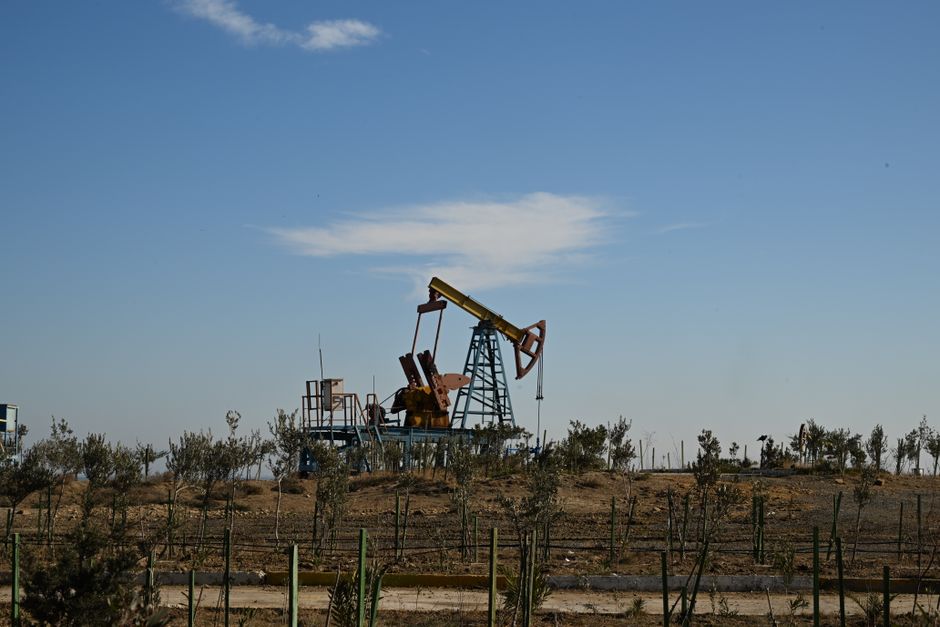
WTI Crude Jumps on US-Iran Strikes: Will Oil Supply Risks Reshape Fed Rate Path?
Oil prices climbed in early trading after the United States and Iran exchanged direct military strikes, reviving fears of a supply disruption in the Persian Gulf. The escalation injected a fresh geopolitical risk premium into crude benchmarks, reversing a week of declines driven by oversupply concerns. For energy markets and global investors, the renewed conflict reopens the central question: how durable is the peace-by-quota framework that OPEC+ has relied upon since 2022?
Market Impact & Global Context
The immediate effect of kinetic exchanges between Washington and Tehran is felt most acutely in the Brent and WTI futures curves. Historically, the market's first reaction to Middle East escalation is a spike in front-month contracts driven by insurance and freight risk, followed by a secondary move in shipping-sensitive commodities such as jet fuel and marine diesel. Iran sits adjacent to the Strait of Hormuz, through which roughly a fifth of global seaborne oil passes; even a marginal increase in tanker insurance premiums reverberates through European refining margins and Asian import bills.
The more profound transmission, however, runs through inflation expectations. If traders price in a sustained risk premium of $5-$10 per barrel, headline CPI in import-dependent economies — particularly across the Eurozone periphery and emerging Asia — faces upward pressure precisely at the moment the European Central Bank and Federal Reserve are attempting to anchor long-end yields. Higher energy costs also complicate the broader inflation picture confronting policymakers, adding a stagflationary tail that bond desks are already pricing.
Energy equities and oil-sensitive currencies typically outperform in this regime. The Canadian dollar, Norwegian krone, and Russian ruble (where traded) historically bid on supply fears, while emerging-market oil importers — including Turkey, India, and the Philippines — see their current accounts deteriorate. The Philippines has already flagged how even muted pass-through pressures constrain central-bank easing, illustrating how quickly geopolitical energy shocks feed through to EM monetary policy.
Equally important is what does not move. If OPEC+ signals restraint and absorbs the shock through spare capacity rather than panic pricing, the rally is likely to fade within sessions. But if the cartel interprets the conflict as justification to defend the current production baseline, the floor under crude could shift materially higher. OPEC+ holding output steady while strikes resume is the most bearish configuration for consumers and the most bullish for integrated majors and refiners sitting on hedged 2025 books.
"A direct US-Iran exchange is the only catalyst that reliably overrides the bearish fundamentals currently baked into the curve," noted energy desk analysts at a major European investment bank. "Watch the front-month WTI versus the 12-month spread: if backwardation steepens, the market is pricing a real probability of Hormuz disruption rather than a headline fade."
The macroeconomic derivative is straightforward but often underpriced. Persistent energy-driven inflation erodes the real-income gains that have sustained consumer spending in the United States and kept European GDP forecasts out of recession territory. A 10% sustained move in Brent typically shaves 15-25 basis points off US real GDP growth in subsequent quarters, while pushing headline CPI 20-40 basis points higher — numbers that central banks cannot ignore when calibrating the terminal rate.
Key Takeaways
- Supply risk premium is back: Front-month WTI and Brent are likely to carry a $5-$10 geopolitical premium as long as US-Iran kinetic activity continues, even without Hormuz closure.
- Inflation expectations are the second-order risk: Energy shocks of this type historically add 20-40 bps to headline CPI, complicating the Fed and ECB rate-cut trajectories into late 2025.
- Sector rotation favors energy and defense: Integrated oil majors, refiners with hedged 2025 books, and defense primes typically outperform during Middle East escalations, while emerging-market oil importers face current-account stress.
- OPEC+ posture is the swing variable: Whether the cartel holds output or signals a supply response will determine whether crude holds its gains or fades back into the prior oversupply range.
Frequently Asked Questions
How do US-Iran strikes affect global oil prices and supply chains?
Direct military exchanges typically push crude benchmarks up by 3-7% in the first sessions as freight risk and insurance premiums rise. Sustained gains depend on whether Iran retaliates against Gulf shipping or whether OPEC+ adjusts output. The larger supply-chain impact runs through the Strait of Hormuz, where any disruption would spike tanker rates and force Asian and European buyers to source alternatives at a premium.
Will rising oil prices delay Federal Reserve interest rate cuts in 2025?
Energy-driven inflation historically delays monetary easing when it pushes headline CPI above central-bank tolerance bands. The Fed's 2% target is sensitive to fuel pass-through; a sustained crude rally driven by Iran tensions could keep core inflation sticky and push rate-cut expectations further into 2026, particularly if wage growth remains elevated.