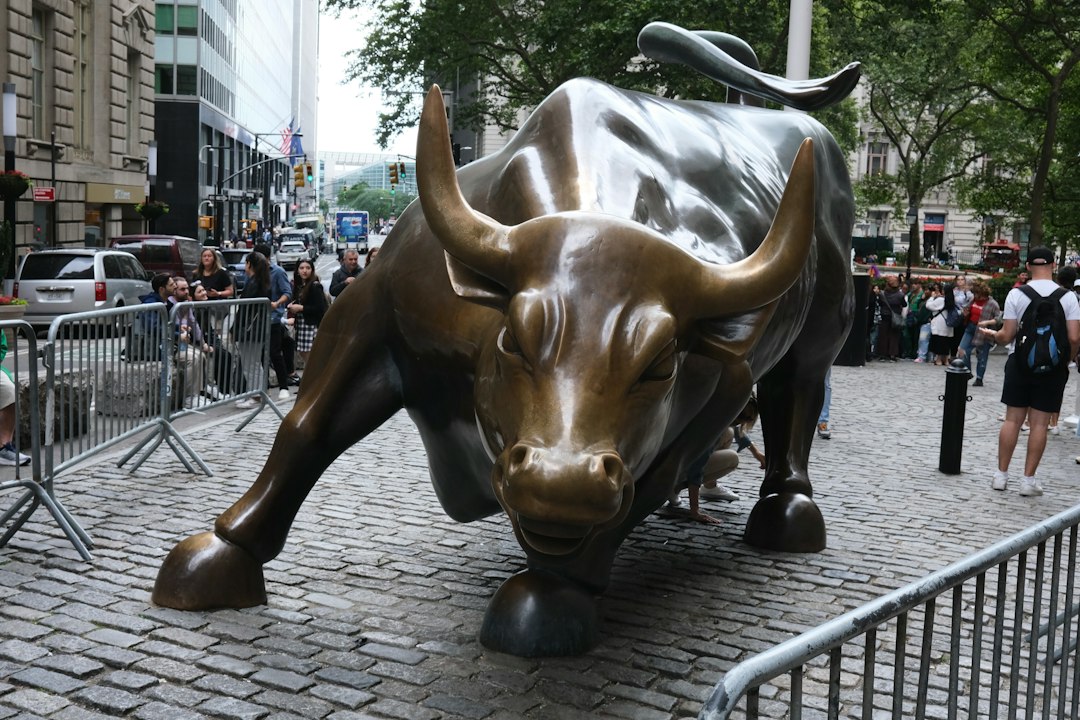
US Market Sentiment Swings Between Fear and Greed: Decoding the Volatility Signal
The CNN Business Fear & Greed Index — a widely tracked gauge of investor psychology — continues to oscillate sharply, reflecting persistent uncertainty over monetary policy trajectory and earnings sustainability. These swings signal that market participants remain divided on whether the current equity rally represents a durable recovery or a bear-market trap.
Market Impact & Global Context
Sentiment indicators like the Fear & Greed Index function as contrarian tools rather than predictive models. Extreme fear readings have historically coincided with intermediate-term buying opportunities, while extreme greed often precedes pullbacks. The current volatility in the index itself — rapid shifts between zones — suggests a market lacking conviction, driven by conflicting data on inflation, labor markets, and Federal Reserve policy expectations.
For global allocators, US sentiment swings transmit quickly through capital flows. Emerging market equities and European bourses often experience amplified volatility when US risk appetite shifts abruptly, as cross-border portfolio rebalancing accelerates. The dollar’s safe-haven status also means fear spikes tend to strengthen USD, tightening financial conditions abroad.
"The Fear & Greed Index is flashing a market that hasn't decided which narrative to believe — the soft-landing story or the delayed-recession thesis. Until macro data resolves that tension, expect sentiment to remain a reactive, not leading, indicator," said a senior cross-asset strategist at a major global bank.
Sector rotation patterns confirm the confusion. Defensive sectors (utilities, healthcare) and growth-oriented tech have alternated leadership weekly, a hallmark of an index-driven market without a durable fundamental catalyst. Volume analysis shows diminishing participation on up-days, a technical divergence worth monitoring.
Key Takeaways
- Sentiment volatility = conviction vacuum: Rapid index swings reflect genuine uncertainty, not noise — position sizing should reflect wider outcome dispersion.
- Contrarian utility intact: Extreme readings remain useful for tactical entry/exit timing, but require confirmation from breadth and volume metrics.
- Global spillover risk: US sentiment shifts drive capital flows and currency moves that disproportionately affect emerging markets and small-open economies.
- Watch participation, not just price: Narrow leadership and declining up-volume are more reliable warning signs than the sentiment index alone.
Frequently Asked Questions
What does the Fear & Greed Index actually measure?
The index aggregates seven indicators — including market momentum, put/call ratios, junk bond demand, and safe-haven flows — into a single 0-100 score. It captures investor psychology, not fundamental valuation.
How should traders use sentiment extremes in current conditions?
Treat extreme readings as alerts to reassess positioning, not standalone signals. Combine with options skew analysis, credit spreads, and earnings revision trends for higher-confidence decisions.