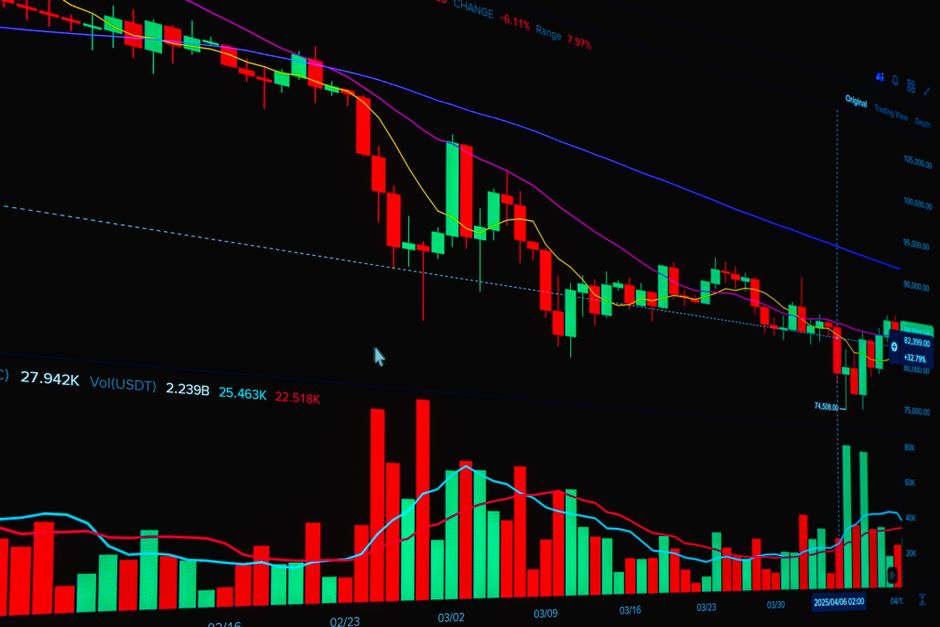
Tech Stocks Tumble After AI Leaders Urge Industry Slowdown
AI industry leaders have issued an unprecedented call for the sector to decelerate its rapid expansion, sending tech stocks into a sharp sell-off across global markets. The warning represents a critical inflection point for an industry that has served as the primary engine of equity market gains over the past two years.
Market Impact & Global Context
The sell-off reflects more than a single headline — it signals a potential regime change in how capital allocates within the technology complex. Historically, when authoritative voices within a high-conviction sector publicly advocate for restraint, markets undergo a painful re-rating process. The dot-com era provides a relevant precedent: periods of peak enthusiasm in technology have historically ended not with gradual cooling but with abrupt corrections once internal voices challenge the prevailing growth narrative.
The transmission channel runs first through semiconductor equities and cloud infrastructure providers, which carry the highest sensitivity to AI capital expenditure projections. When AI spending expectations are revised downward, these companies face immediate earnings risk because their valuations embed aggressive growth assumptions. Data center operators and AI-adjacent software firms typically follow as secondary casualties, reflecting the cascading nature of sentiment-driven de-rating within a connected sector ecosystem.
Macroscopically, a sustained tech pullback creates ripple effects across bond markets and the US dollar. Technology companies dominate corporate earnings expectations in major indices, and downward revisions to their growth trajectories can compress equity risk premiums, potentially dragging down broader index performance. A weaker tech earnings outlook may also weigh on the dollar if international capital flows shift away from US equities toward other regions.
"According to market analysts at leading financial institutions, when influential industry voices publicly advocate slowing growth, it often signals that the current investment thesis may be reaching a point of diminishing marginal returns, prompting institutional investors to reassess position sizing and overall risk exposure."
For short-term traders, the immediate priority is monitoring volume spikes and volatility in semiconductor and cloud computing ETFs, which tend to lead the broader tech correction. Long-term investors, by contrast, should evaluate whether the pullback creates a meaningful entry point or reflects a fundamental shift in sector profitability that warrants structural portfolio rebalancing.
This development arrives at a time when the economic integration of artificial intelligence into broader productivity — as explored in How AI Forces Us to Rethink the Economy — remains a subject of intense debate among policymakers and market participants. The tension between AI's long-term productive potential and the sector's current valuation excess defines the central risk facing tech equities.
Key Takeaways
- Sector-wide sentiment shift: Public calls from AI leaders for deceleration mark a rare moment of internal caution, historically a precursor to meaningful tech corrections.
- Semis and cloud infrastructure most exposed: These subsectors face immediate earnings risk because their valuations directly embed aggressive AI capital spending assumptions.
- Macro implications extend beyond tech: A sustained pullback can compress equity risk premiums, affect bond yields, and influence capital flows into and out of the US dollar.
- Investor strategy bifurcation: Short-term traders should monitor semiconductor ETF volatility; long-term investors must distinguish between tactical buying opportunities and structural de-rating.
Frequently Asked Questions
Will tech stocks recover after AI leaders call for a slowdown?
Recovery depends on whether the call reflects a temporary sentiment correction or a fundamental reassessment of AI spending. Historically, tech stocks have recovered from sentiment-driven sell-offs, but the timeline varies significantly based on whether underlying earnings expectations are also revised downward.
How does an AI industry slowdown affect semiconductor stocks?
Semiconductor stocks are typically the first to absorb impact because their valuations directly reflect AI capital expenditure forecasts. Reduced spending by AI companies translates into lower demand for chips and networking equipment, compressing margins across the entire supply chain.
Sources
- Financial News Feed — Tech Stocks Tumble After AI Leaders Call for Industry to Slow Down