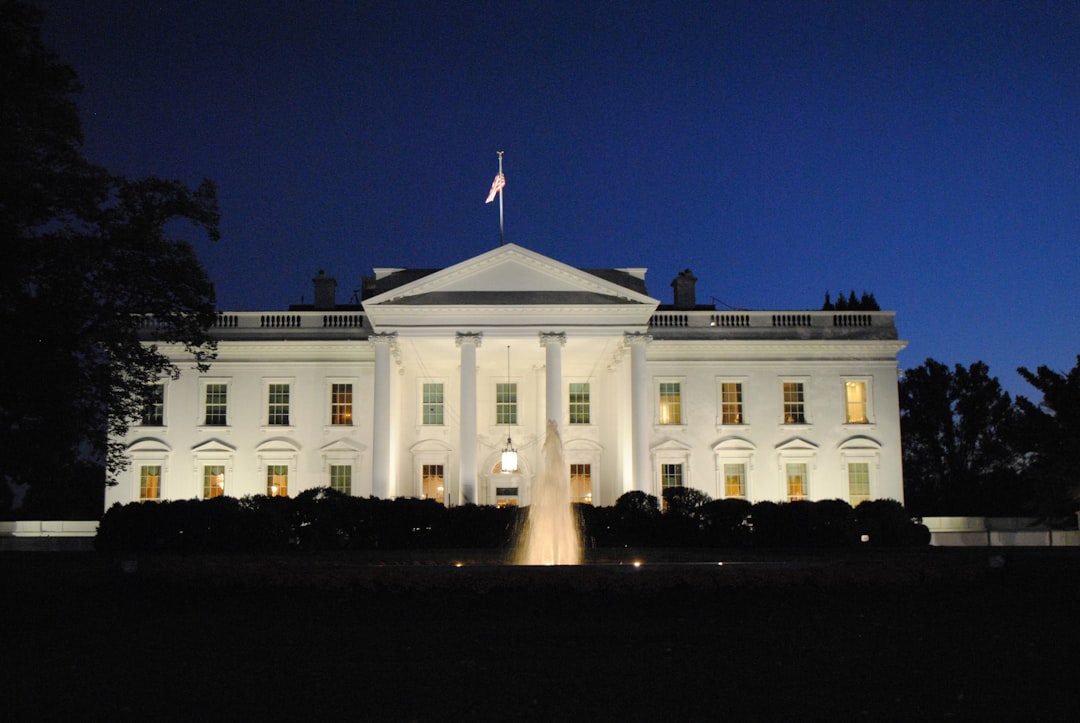
White House Tech Dinner Signals Tariff Truce as AI Regulation Emerges as New Geopolitical Lever
Top technology executives convened at the White House Thursday night amid intensifying U.S.-China negotiations over tariffs, trade frameworks, and the nascent architecture of artificial intelligence governance. The gathering underscores a strategic pivot: semiconductor supply chains and AI compute access are supplanting traditional trade deficits as the primary currency of great-power competition.
Market Impact & Global Context
The dinner functions as a real-time signal to equity markets that the administration is willing to modulate tariff pressure on critical technology inputs — particularly advanced logic chips and high-bandwidth memory — in exchange for Chinese concessions on AI model export controls and data localization mandates. Semiconductor equipment makers (ASML, Applied Materials, Lam Research) and foundry operators (TSMC, Samsung Foundry) stand to benefit most immediately from any de-escalation, as their revenue visibility hinges on uninterrupted China fab utilization rates.
European equities face asymmetric exposure. ASML’s China revenue share exceeds 30%, while European automotive and industrial supply chains remain dependent on mature-node Chinese output. A durable tariff truce would relieve margin compression for German industrials, but the parallel push for AI regulatory alignment introduces compliance cost uncertainty for EU cloud providers navigating divergent U.S. and Chinese model certification regimes. Eurozone supply chain exposure and BCE fragmentation risks amplify this dynamic, as monetary policy transmission grows uneven across member states with varying tech-sector weightings.
"The White House is treating AI compute access as a strategic choke point analogous to 1970s oil embargoes. Tariffs are no longer the primary lever; controlling the diffusion of frontier model weights and training infrastructure is. Markets pricing only tariff risk are missing the structural repricing of AI sovereignty."
— Senior Strategist, Global Technology Research, independent analysis
Emerging markets confront a bifurcated risk matrix. Nations aligned with U.S. AI standards (India, Vietnam, Mexico) may attract redirected semiconductor assembly and test capacity, but face heightened scrutiny on re-export controls. Commodity exporters (Chile, Zambia, DRC) supplying critical minerals for AI hardware — copper, cobalt, rare earths — gain negotiating leverage, yet risk becoming pawns in a resource nationalism escalation if export restrictions broaden beyond dual-use technologies.
Historical precedent suggests caution. The 2019 Phase One trade deal produced a temporary semiconductor equipment rally that reversed once entity-list expansions resumed. Current negotiations lack a verification mechanism for AI model governance — an inherently opaque domain — raising the probability of episodic volatility in the SOX index and correlated Asian tech gauges (KOSPI, TAIEX) through 2026.
Key Takeaways
- Tariff de-escalation on semiconductors is probable but conditional on AI governance concessions, creating a new class of regulatory risk for chipmakers.
- European supply chains remain vulnerable to fragmentation as U.S. and Chinese AI certification regimes diverge, pressuring BCE policy coherence.
- Emerging market mineral exporters gain tactical leverage but face strategic risk of resource nationalism spillover.
- Historical analogs (2019 Phase One) warn that absent verifiable AI compliance frameworks, equity rallies in semiconductor names are likely transient.
Frequently Asked Questions
How does this dinner affect semiconductor stock valuations?
The event signals potential tariff relief on critical chipmaking inputs, which supports near-term revenue visibility for equipment and foundry names. However, the contingent AI governance demands introduce a novel regulatory overhang that standard valuation models do not yet price, suggesting elevated volatility over a 6-12 month horizon.
What are the implications for European Central Bank policy?
Divergent U.S.-China AI regulatory frameworks create asymmetric supply chain shocks across Eurozone economies, complicating the ECB’s mandate. Member states with high semiconductor exposure (Netherlands, Germany) may require differentiated fiscal support, challenging monetary policy uniformity and fragmenting transmission channels.