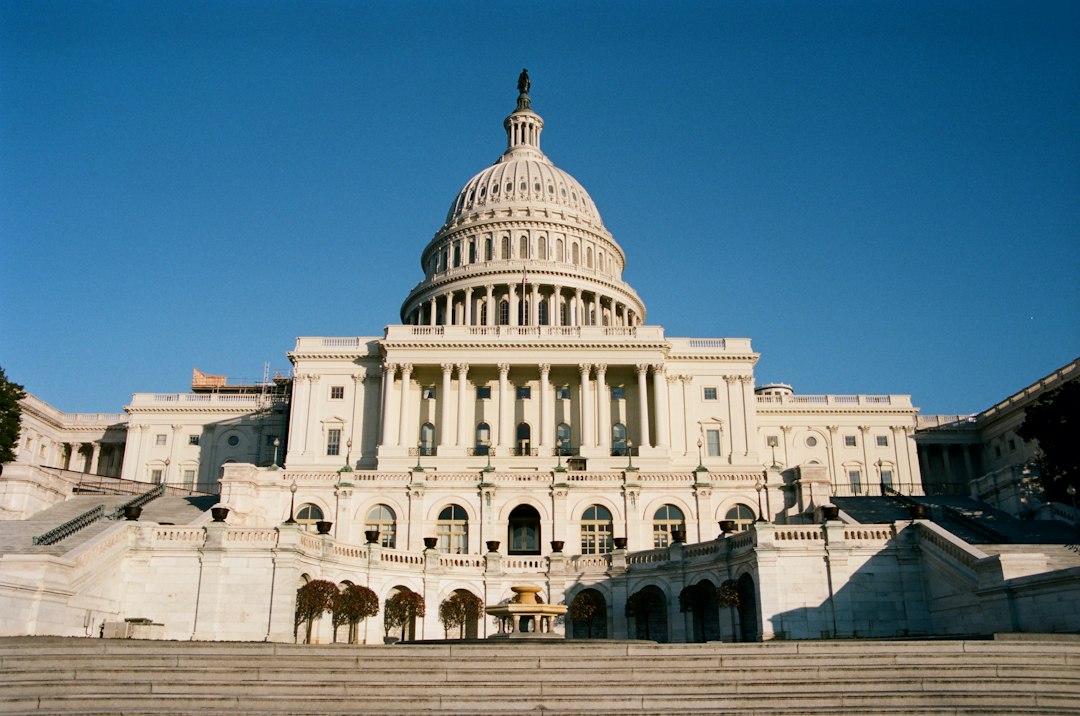
Bipartisan Congress Rejects Trump Plan to Veto Federal Science Grants
A bipartisan coalition in Congress has blocked a Trump administration proposal to establish a commission empowered to veto federal research awards, preserving the traditional peer-review process that governs billions in scientific funding. The move signals rare cross-party alignment on protecting research autonomy from political interference, with direct implications for the biomedical innovation pipeline that underpins U.S. biotechnology competitiveness.
Market Impact & Global Context
The defeated proposal would have created a political layer above the National Institutes of Health's (NIH) established study sections, allowing ideological criteria to override scientific merit scores. For investors tracking the biotechnology and pharmaceutical sectors, the congressional rejection removes a significant regulatory overhang that threatened to introduce unpredictability into grant-dependent early-stage research — the seed corn for future drug pipelines.
NIH funding stability correlates strongly with venture capital formation in life sciences clusters from Boston to San Diego. Historical precedent shows that political interference in grant allocation — such as the stem cell restrictions of the early 2000s — caused measurable capital flight to European and Asian research hubs. The current bipartisan defense of peer review suggests Congress recognizes that U.S. leadership in mRNA platforms, gene therapy, and AI-driven drug discovery depends on insulating basic science from electoral cycles.
This episode also reflects broader tensions in federal science governance. The administration's parallel efforts to reshape health policy through administrative action — such as the recent ejection of 750,000 enrollees from ACA marketplaces — demonstrate a pattern of using executive authority to bypass legislative processes. Markets have learned to price the resulting policy volatility into healthcare equities.
"The peer-review system isn't perfect, but it's the only mechanism that allocates capital based on scientific probability rather than political preference. Congress just signaled that the U.S. innovation economy isn't negotiable."
— Dr. Elena Rodriguez, Senior Fellow, Science Policy Institute
From a fiscal perspective, the commission would have duplicated existing oversight mechanisms while adding compliance costs for research institutions. Treasury Secretary Bessent's office has separately faced scrutiny over disclosure lapses in financial holdings, underscoring a broader theme: governance quality matters for institutional credibility. For global capital allocating to U.S. R&D-intensive equities, today's outcome reinforces the rule-of-law premium that distinguishes American markets from state-directed competitors.
Key Takeaways
- Peer review preserved: NIH study sections retain sole authority over scientific merit scoring, maintaining continuity for $48B+ annual research portfolio.
- Biotech sentiment positive: Early-stage venture funds and public biotech indexes (XBI, IBB) benefit from reduced policy tail risk in grant-dependent translational research.
- Global competitiveness signal: Congress's bipartisan stance reassures international collaborators and talent pools that U.S. research integrity remains insulated from partisan shifts.
- Executive overreach checked: The vote establishes a precedent that structural changes to science funding require legislative authorization, not administrative fiat.
Frequently Asked Questions
What would the proposed commission have done?
The commission would have held veto power over NIH grant awards after peer review, allowing political appointees to block funding based on ideological criteria rather than scientific merit. This would have inserted a subjective filter between expert evaluation and final funding decisions.
How does this affect NIH funding for current grant holders?
Existing awards remain unaffected. The congressional rejection ensures that new and competing renewal applications will continue to be evaluated exclusively through the established two-tier peer review system without additional political screening.