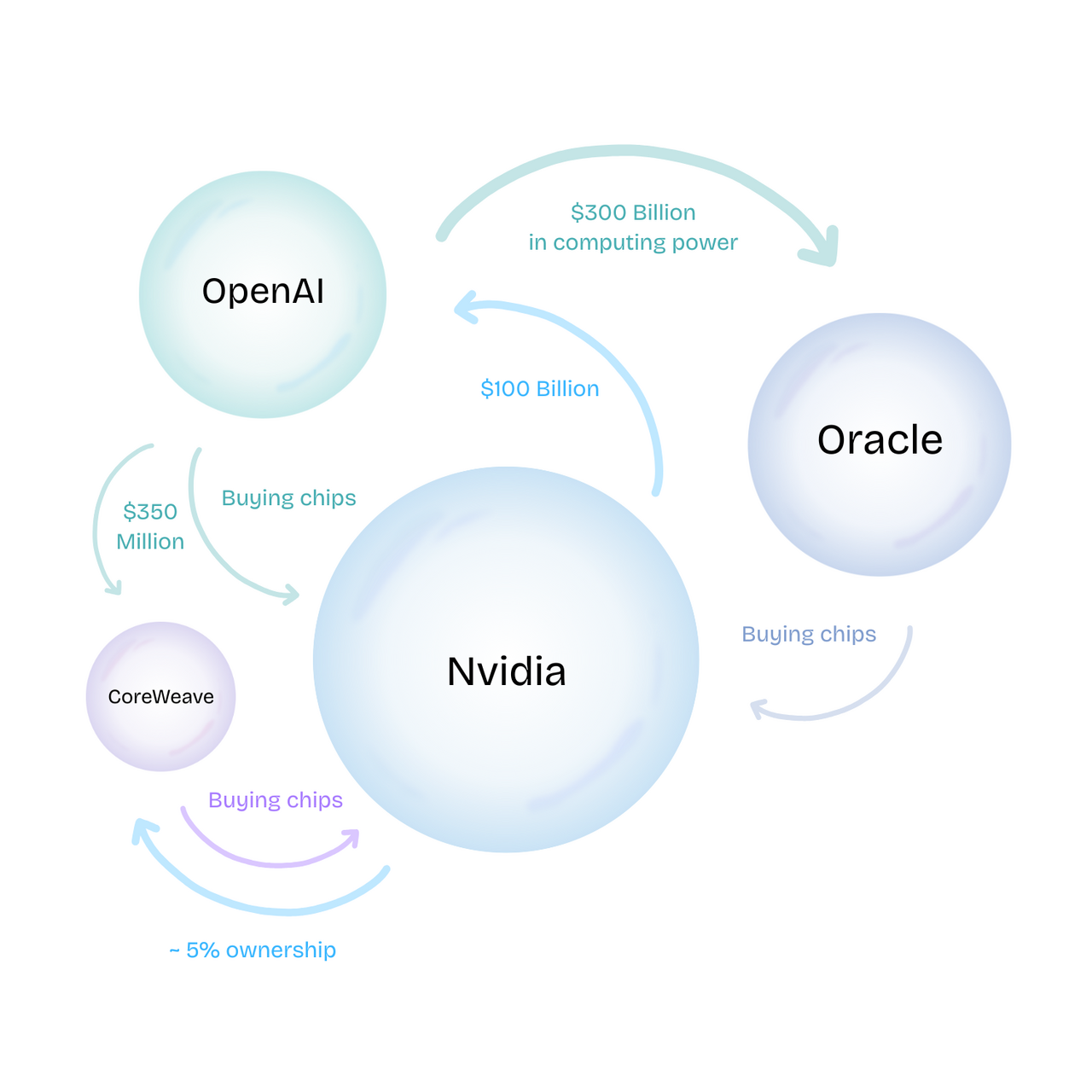
Barclays global head of equities tactical strategies Alexander "Alty" Altmann joined Bloomberg to dissect Wall Street's evolving stance on artificial intelligence investments following a volatile week marked by Anthropic's S-1 filing and mixed hyperscaler earnings from Oracle and Microsoft.
The AI investment narrative faces a critical stress test as traditional valuation frameworks struggle to accommodate the sector's unprecedented capital intensity and revenue trajectories. Hyperscaler capital expenditure commitments now exceed $200 billion annually across major cloud providers, yet monetization timelines for generative AI workloads remain opaque. This divergence between infrastructure spend and near-term revenue visibility has amplified equity volatility, particularly for semiconductor and data center exposure. Historically, such capex supercycles — seen in 1990s telecom and 2000s fiber builds — eventually triggered severe multiple compression when demand failed to justify capacity. Analysts note this dynamic could pressure Brazil payroll processing timelines as enterprises reassess IT budget allocations amid macroeconomic uncertainty.
Market Impact & Transmission Channels
The transmission mechanism operates through three primary channels: semiconductor order visibility, cloud margin sustainability, and cost-of-capital sensitivity for long-duration AI projects. Rising terminal rates increase the discount rate applied to distant AI cash flows, disproportionately impacting high-multiple names. Simultaneously, enterprise software vendors face pressure to demonstrate AI-driven average revenue per user expansion before 2026 budget cycles finalize. Credit markets signal caution through widening spreads on investment-grade tech issuance, reflecting skepticism about return on invested capital timelines.
"The market is pricing AI as a platform shift comparable to mobile internet, but the capital absorption capacity required is an order of magnitude larger. Valuation discipline will reassert once the hype cycle peaks."
Sector rotation risks favor semiconductor equipment and power infrastructure beneficiaries over pure-play model developers. Hyperscalers with diversified revenue bases — advertising, enterprise software, cloud services — possess superior optionality to absorb AI investment losses compared to concentrated exposure vehicles. Fixed income investors should monitor tech commercial paper issuance for funding stress signals.
Key Takeaways for Investors
- Monitor: Hyperscaler capex guidance revisions in Q4 2026 earnings calls for signals of demand elasticity.
- Expect: Increased volatility in semiconductor equipment names as order books reflect enterprise AI adoption curves.
- Assess: Portfolio concentration risk in high-multiple AI beneficiaries lacking visible monetization pathways before 2027.
- Evaluate: Barbell strategy pairing AI infrastructure exposure with quality compounders insulated from capex cyclicality.
Frequently Asked Questions
How does Barclays view the current AI valuation disconnect relative to historical tech cycles?
Barclays' Altmann characterizes the AI trade as exhibiting valuation dynamics that challenge conventional economic laws, drawing parallels to prior infrastructure supercycles where capital intensity ultimately triggered multiple compression when monetization lagged expectations.
What specific catalysts could trigger a reassessment of AI trade positioning in coming quarters?
Key catalysts include hyperscaler capex guidance adjustments, enterprise software AI revenue attribution disclosure, and semiconductor order book revisions that would signal whether end-demand justifies current infrastructure build-out trajectories.