Democrats seized control of Congress and key governorships in Tuesday's midterms, propelled by voter backlash against tech billionaire influence and AI infrastructure expansion. The incoming majority has pledged investigations into Musk, Bezos, and Zuckerberg, subpoenas for Nvidia and Amazon records, and state-level moratoriums on hyperscale datacenter construction.
Key Takeaways
- Democrats won Congress and key governorships (TX, OH, GA) on anti-tech billionaire platform
- Musk spent $450m on GOP candidates; key ally Ken Paxton lost Texas race decisively
- State governors pledged moratoriums on hyperscale datacenter construction, threatening AI compute supply
- Record preservation letters sent to Nvidia and Amazon precede formal congressional subpoenas
- Musk's 'department of government efficiency' conduct is a primary investigative target
Executive Intelligence Brief
Electoral Backlash Reshapes Political Calculus
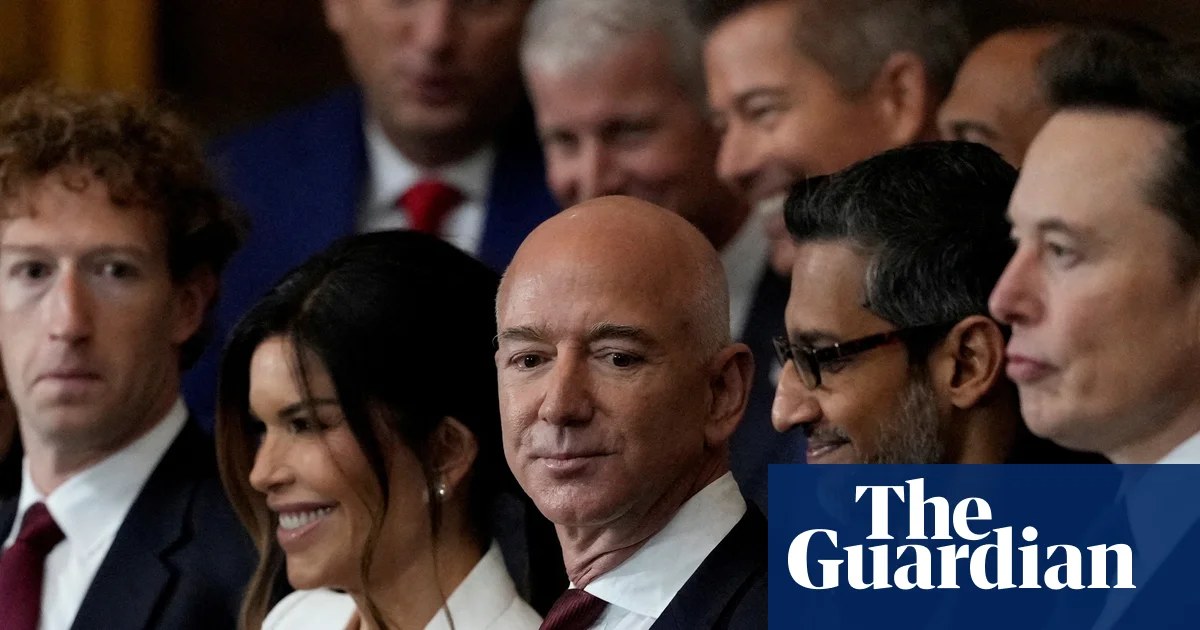
The photograph of Silicon Valley centibillionaires — Musk, Bezos, and Zuckerberg — seated front row at Donald Trump's inauguration once symbolized a symbiosis of ultra-wealth and political power. That alignment now resembles a target list for a Democratic Congress intent on dismantling the regulatory capture they allege defined the prior era. Musk's net worth, which surpassed $1tn during the AI boom, and his $450m in midterm spending — heavily directed at Texas Attorney General Ken Paxton — yielded little return; Paxton lost by a wide margin.
Representative Greg Casar of Texas framed the mandate explicitly: 'Voters rejected Republicans in part because they were bought and paid for by AI billionaires. Democrats must hold them accountable instead of cashing their checks.' Senator Jon Ossoff of Georgia, fresh from re-election, pledged to 'bring big tech to heel,' citing the industry's existential AI warnings alongside private bunker-building. Senator Ed Markey of Massachusetts warned: 'They are going to need to plant new forests for all of the subpoenas we'll be printing.'
Datacenter Moratoriums Threaten AI Compute Arms Race
The most immediate operational threat to AI firms comes from state-level action. Governors-elect Gina Hinojosa (Texas), Amy Acton (Ohio), and Keisha Lance Bottoms (Georgia) have all pledged pauses on hyperscale datacenter construction. These facilities — massive, noisy, resource-intensive complexes packed with semiconductor chips — form the physical backbone of the generative AI expansion. Public opposition to their energy demands, water consumption, and local disruption proved a potent mobilizing force in the midterms.
For Nvidia, Amazon, Microsoft, and other compute-intensive operators, these moratoriums introduce acute supply-side uncertainty. The AI sector's growth model assumes uninterrupted access to cheap power and permissive zoning for ever-larger GPU clusters. State-level freezes could force a geographic redistribution of compute capacity or slow the training runs underpinning next-generation models.
Congressional Investigations and Preservation Demands
At the federal level, Democrats have moved swiftly to lock in evidence. Letters demanding record preservation have already been dispatched to Nvidia and Amazon, a standard precursor to formal subpoena authority once committee gavels change hands. Musk presents a singular target: his leadership of the self-styled 'department of government efficiency' — which oversaw the dismantling of USAID and broad federal workforce reductions — offers Democrats a high-profile investigative vehicle with built-in public interest.
The scope of inquiry will likely extend beyond antitrust into AI safety, data governance, labor practices, and the intersection of private corporate power with state authority. For investors, the re-emergence of congressional oversight as a material risk factor reintroduces regulatory discounting to mega-cap tech valuations that had largely priced in a permissive environment.
Forward Outlook: Subpoenas, Stays, and Strategic Pivots
The next 90 days will define the enforcement trajectory. House and Senate committees must organize, issue formal subpoenas, and schedule hearings — a process that typically begins in early 2027. State moratoriums face potential legal challenges from industry groups citing federal preemption and commerce clause arguments. Meanwhile, tech lobbyists will test whether the Democratic majority's progressive wing can maintain discipline against centrist members historically receptive to industry arguments.
For Musk specifically, the convergence of federal investigation, failed political spending, and Tesla's exposure to shifting EV policy creates a multi-front crisis. The market's immediate reaction will hinge on whether the new Congress moves toward targeted enforcement or broad structural remedies — breakups, data-divestiture mandates, or compute licensing regimes.