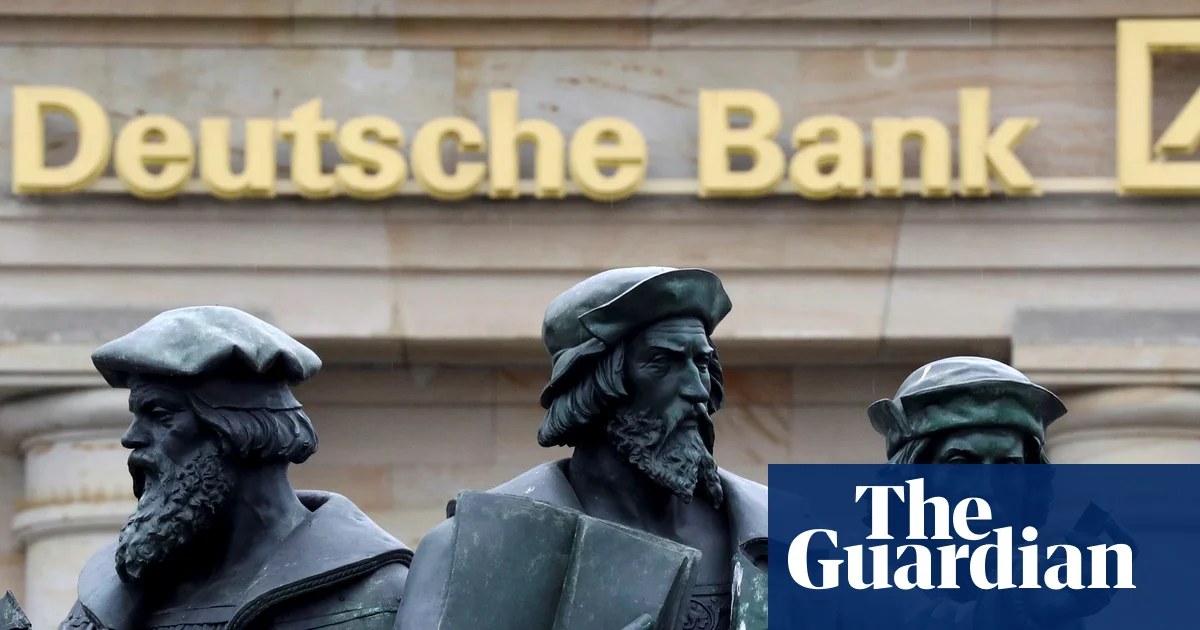
Deutsche Bank repeatedly overruled internal compliance officers to maintain business with high-risk Russian clients, including sanctioned oligarchs and state-owned enterprises, according to an international investigation published Tuesday based on 15 million leaked internal documents. The reports allege the bank prioritized profit over controls until 2021, resisting exit from Russia even after the 2022 invasion of Ukraine, prompting a 4% share price drop in Frankfurt trading.
Key Takeaways
- 15m leaked files allege Deutsche Bank ignored compliance warnings on ~50 'most sensitive clients' linked to the Kremlin, including Gazprom, Sibur, and Oleg Deripaska.
- Bank allegedly processed ~$600m in suspicious Epstein-linked payments, far exceeding prior disclosures.
- Shares fell 4% on Nov 17, 2026, erasing roughly €1.2bn in market cap amid renewed legal risk fears.
- Bank cites €7bn control investment (2019-2025) and 'fundamental transformation'; regulators have not yet commented on new probes.
- Exposure centers on historic conduct (2010-2021); current Russian exposure minimal post-March 2022 exit.
Executive Intelligence Brief
The 'Most Sensitive Clients' List and Russian Exposure
The investigation, coordinated across Der Spiegel, the Financial Times, the New York Times, and Le Monde, centers on a purported internal list of roughly 50 'most sensitive clients' ranked by proximity to the Kremlin and financial crime risk. Named entities allegedly include state-owned gas giant Gazprom, petrochemicals group Sibur, and oligarch Oleg Deripaska. The leaked files suggest Chief Executive Christian Sewing pursued a growth strategy driven by competitive pressure from American rivals, expanding the Russian franchise until 2021 despite mounting geopolitical tension and internal dissent.
Compliance officers reportedly flagged these relationships repeatedly, warning of money-laundering exposure reminiscent of the bank's 'mirror trading' scandal that moved $10 billion out of Russia between 2010 and 2015. The bank allegedly resisted a full exit even after the February 2022 invasion of Ukraine, executing a U-turn only in March 2022.
Epstein and Trump Links Resurface
Beyond Russia, the documents allege Deutsche Bank processed nearly $600 million in suspicious payments linked to convicted sex offender Jeffrey Epstein, a figure significantly higher than previously disclosed. The bank stated it 'regrets [its] historical relationship' with Epstein and cited 'considerable investments in strengthening controls.' Separately, the reports claim the bank accidentally leaked former U.S. President Donald Trump's tax documents to another client during his first term and withheld that information from the White House. Deutsche Bank severed ties with Trump in 2021 and declined to comment on specific client relationships.
Remediation Spend vs. Historical Liability
In its formal response, Deutsche Bank argued the issues 'date back many years, in some cases as much as two decades' and had been addressed by leadership. The bank emphasized a 'fundamental transformation' under Sewing, citing €7 billion in direct investments in its control environment between 2019 and 2025, a period coinciding with a return to record profitability in 2025. However, the market reaction — a 4% single-session decline — signals investor skepticism that legacy legal risk is fully provisioned.
Regulatory Outlook and Next Steps
The revelations place the bank back under the microscope of BaFin, the European Central Bank, and the U.S. Federal Reserve. While the bank asserts it 'worked closely with regulators' on historical matters, the specificity of the leaked compliance memos may prompt new enforcement inquiries into whether prior remediation orders were fully satisfied. No new regulatory actions have been announced as of publication.