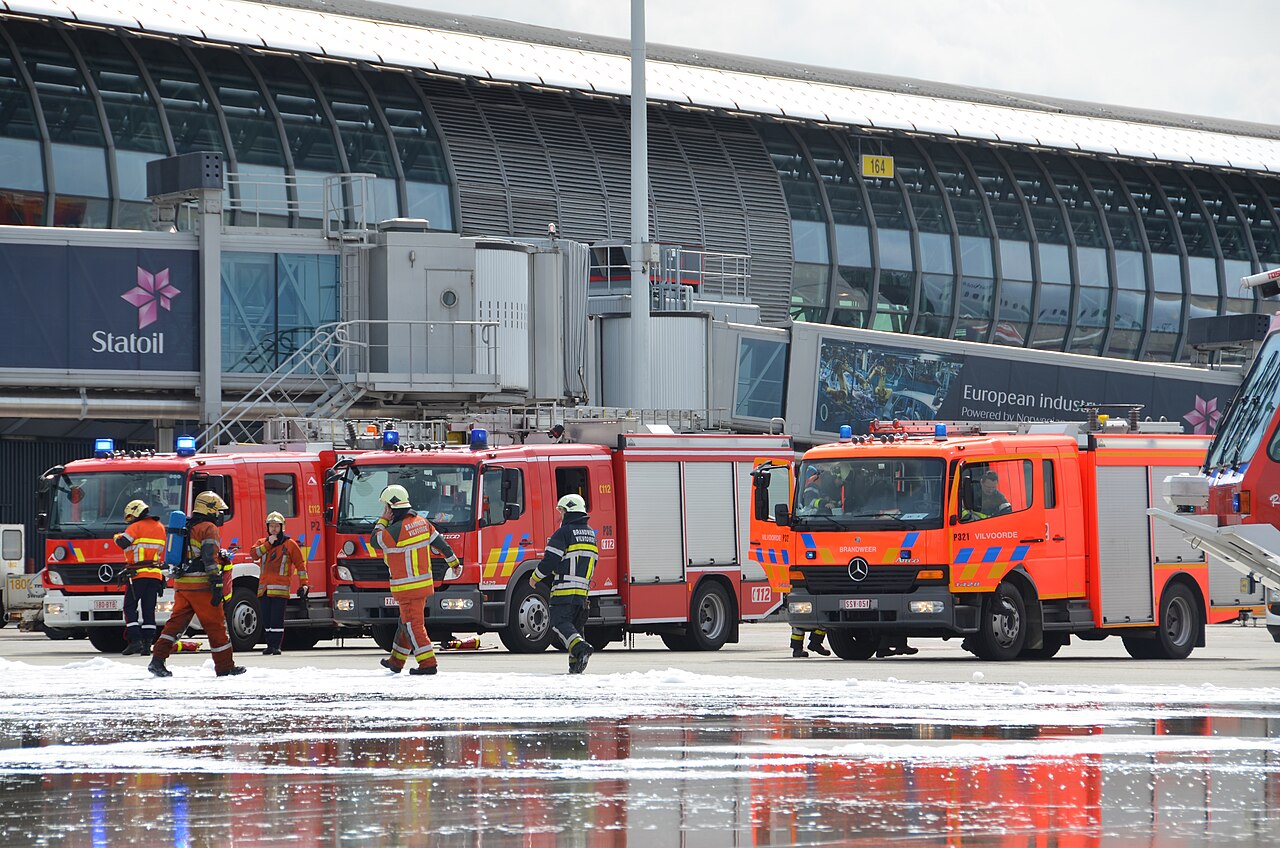
The Federal Aviation Administration mandated a full-scale emergency exercise at John F. Kennedy International Airport last weekend, activating the triennial requirement under 14 CFR Part 139 that governs airport certification. The simulated wide-body aircraft crash mobilized over 200 first responders across multiple agencies, underscoring the recurring capital and operational burden airport operators absorb to maintain federal compliance.
Market Impact & Global Context: Aviation Safety Regulation Drives Infrastructure Allocation
Triennial disaster drills represent a non-discretionary cost center for airport authorities, forcing capital allocation toward specialized training facilities, interoperable communications systems, and mass-casualty logistics rather than revenue-generating terminal expansions. For publicly traded airport operators and concessionaires, these mandated exercises compress operating margins in the near term while reducing tail-risk insurance premiums over longer horizons. The JFK exercise, coordinated between the Port Authority, FAA, NTSB, and local fire departments, illustrates the sector's increasing reliance on cross-jurisdictional interoperability — a capability that demands sustained investment in command-and-control software and shared-data architectures.
"Regulatory exercises like the JFK drill are essentially stress tests for an airport's balance sheet. They reveal whether capital planning has adequately funded the 'invisible' resilience layer — communications redundancy, specialized foam tenders, mutual-aid agreements — that insurers price into catastrophe bonds and property policies. Operators who treat drills as mere compliance checkboxes eventually face higher cost-of-capital when the market reassesses their risk profile."
The focus on resilient transportation infrastructure echoes similar large-scale investments in emerging markets, such as Maersk investerer 3,5 milliarder i vietnamesisk jernbaneprosjekt and Ferrovia Norte-Sul no Vietnã: Maersk e Hateco aportam US$ 3,5 bi e redesenham logística da Ásia, where logistics operators deploy billions to harden supply-chain corridors against disruption. In both aviation and rail, the capital intensity of safety compliance is becoming a distinct asset class for infrastructure funds seeking inflation-linked, regulated returns.
Key Takeaways for Infrastructure Investors
- Monitor airport operator CapEx guidance for line items tied to Part 139 compliance, particularly communications upgrades and specialized ARFF fleet replacement cycles.
- Watch insurance renewal terms for aviation liability and property programs; drill performance increasingly influences underwriting models for catastrophe-exposed assets.
- Evaluate public-private partnership pipelines where concession agreements transfer drill execution risk to private partners, creating contracted revenue streams.
- Hedge exposure to regulatory creep by tracking FAA rulemaking on unmanned aircraft systems integration, which will expand drill scope and cost bases.
Frequently Asked Questions
How often are airports required to conduct full-scale disaster drills?
U.S. certificated airports must conduct a full-scale emergency exercise at least once every three calendar years under 14 CFR §139.325, with tabletop exercises required annually in the interim periods.
What are the financial implications of FAA Part 139 compliance for airport operators?
Compliance drives recurring operating expenses for training, equipment, and multi-agency coordination, while also influencing credit ratings and insurance pricing through demonstrated operational resilience.