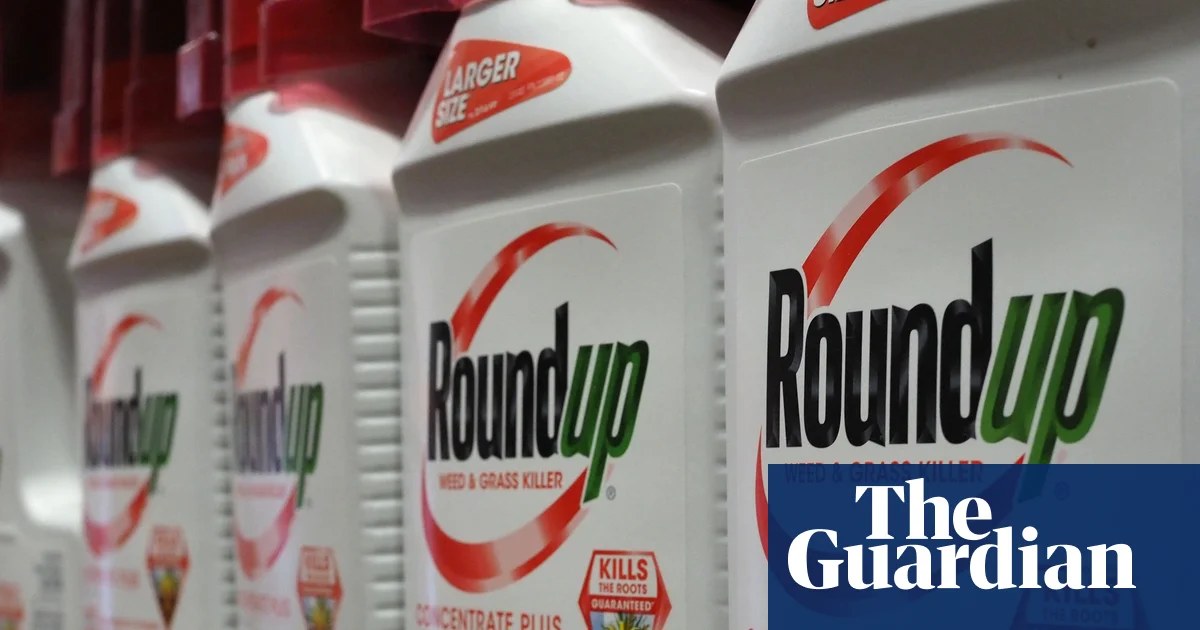
A Missouri state court judge on Friday approved Bayer's $7.25 billion settlement to resolve roughly 65,000 U.S. lawsuits alleging its Roundup weedkiller causes cancer, lifting a near-decade legal overhang that has cut the German company's market value nearly in half since its 2018 Monsanto acquisition.
Key Takeaways
- Missouri judge grants final approval to $7.25B settlement covering ~65,000 current and future U.S. Roundup claims.
- Judge Boyer overruled objections on payout disparity, citing risk of 'indeterminate' delay for terminally ill claimants.
- Bayer shares have fallen 46% since the $63B Monsanto acquisition; CEO calls approval 'decisive milestone.'
- U.S. Supreme Court FIFRA preemption ruling (7-2) strengthens Bayer's defense in ~200 remaining federal cases.
- Settlement includes no admission of liability; Bayer maintains glyphosate is safe based on decades of studies.
Executive Intelligence Brief
Settlement Terms and Judicial Rationale
Judge Timothy Boyer of the St. Louis Circuit Court ruled the agreement 'fair, reasonable and adequate,' overruling objections from some claimants who argued that payouts would be lower than those secured in prior individual settlements. The judge emphasized that delaying resolution would force victims, including those with terminal cancer, to wait 'an indeterminate number of years' for compensation. The settlement, announced in February, aims to resolve nearly all current and future Roundup claims in U.S. state courts.
Litigation History and Supreme Court Precedent
Bayer inherited the litigation when it acquired Monsanto for $63 billion in 2018. The company previously settled the bulk of existing claims for $10.9 billion in 2020 but failed to win court approval for a separate $1.25 billion fund to handle future claims. The legal landscape shifted significantly this year when the U.S. Supreme Court, in a 7-2 decision, overturned a $1.25 million jury award to Missouri resident John Durnell. The Court held that the Federal Insecticide, Fungicide, and Rodenticide Act (FIFRA) preempts state-law failure-to-warn claims, undercutting a central pillar of the plaintiff's bar strategy.
Market Impact and Balance Sheet Relief
The litigation has exacted a heavy toll on Bayer's valuation, with shares falling 46% since the Monsanto deal closed. CEO Bill Anderson called the approval a 'decisive milestone' in the company's strategy to mitigate litigation risk. While the $7.25 billion payout is substantial, the finality of the state-court resolution provides a degree of certainty that markets have lacked. Bayer maintains that glyphosate, Roundup's active ingredient, is safe and that decades of studies support its non-carcinogenicity; the settlement includes no admission of liability.
Remaining Exposure and Federal Docket
The settlement does not cover approximately 200 cases pending in federal court. Bayer has stated that the Supreme Court's FIFRA preemption ruling provides 'strong defenses' in those remaining matters. Plaintiffs' counsel Christopher Seeger acknowledged the Durnell decision 'narrowed the ability of Roundup victims to pursue claims in court' but welcomed the immediate relief for state-court claimants. Lawyers for objecting plaintiffs have not yet indicated whether they will appeal Judge Boyer's order.
Forward Outlook: Distribution and Federal Defense
The immediate focus shifts to the administration of the settlement fund and the pace of payouts to the tens of thousands of eligible claimants. Investors will monitor the trajectory of the remaining federal docket, where Bayer intends to leverage the Supreme Court precedent to secure dismissals or favorable settlements. Any appeal of the Missouri approval could delay distributions but is unlikely to overturn the settlement given the judge's detailed findings on adequacy and the risk of delay to terminally ill claimants.