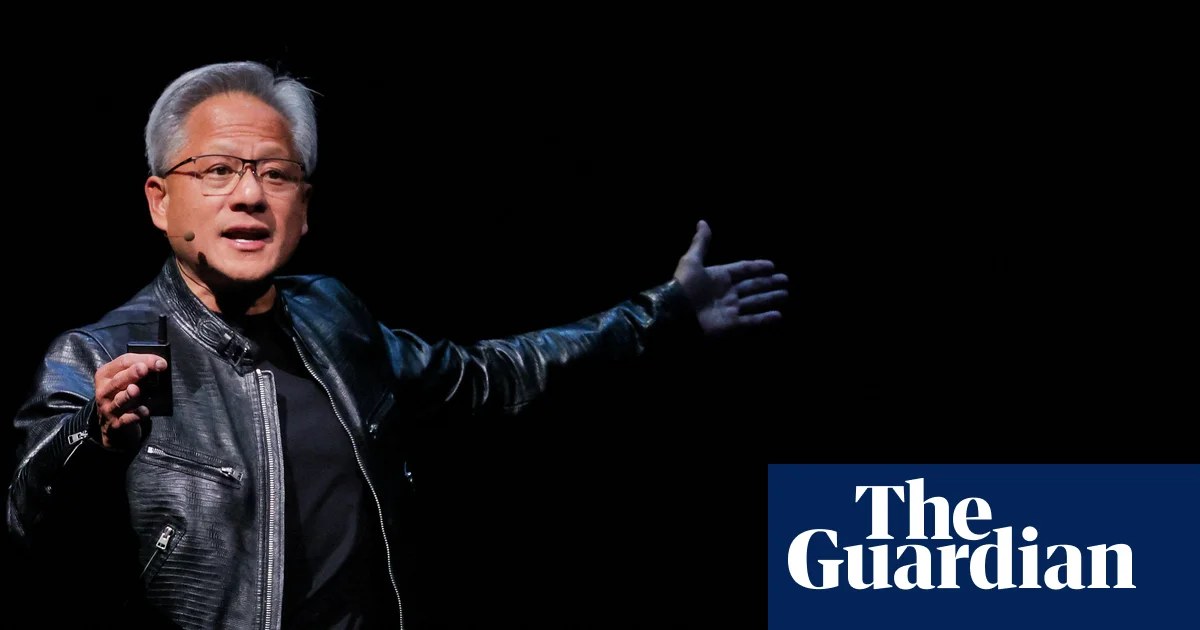
Nvidia's board chairman Harvey Jones said Tuesday the company does not intend to reinstate Jensen Huang as chief executive, closing the door on a high-pressure campaign by Donald Trump and Elon Musk, as the chipmaker posted third-quarter revenue of $115.84 billion — more than double a year earlier — and beat Wall Street profit estimates.
Key Takeaways
- Board chairman Harvey Jones definitively ruled out Jensen Huang's reinstatement as CEO.
- Q3 revenue doubled to $115.84bn, beating $109.15bn consensus; EPS $2.68 vs $2.47 estimate.
- Stock down >10% since ouster, valuation fell from ~$6tn to $3.7tn; after-hours +5%.
- Interim CEO Colette Kress (13-year veteran) says 'business as usual'; Blackwell ramp underway.
- Trump, Musk, Kalanick publicly urged Huang's return; board resisted political pressure.
Executive Intelligence Brief
Board Ends Reinstatement Speculation
Jones, speaking during Nvidia's first earnings call since Huang's ouster last Thursday, stated the former CEO had voluntarily stepped down and the board accepted his resignation 'effective immediately.' The board's position was unequivocal: it 'does not intend to reinstate Jensen as CEO.' Jones highlighted interim CEO Colette Kress's 13-year tenure, noting she has been 'at the center of this company's extraordinary growth.' Kress, previously CFO, told investors 'it's business as usual' and that staff remain 'committed.' Huang issued a public statement Tuesday morning apologizing and saying he would be 'honored to answer these calls and return as CEO' if the board asked.
Earnings Power Undimmed by Turmoil
Revenue of $115.84 billion surpassed the $109.15 billion Bloomberg consensus, rising 103% year-over-year and 20% sequentially. Earnings per share came in at $2.68 versus a $2.47 estimate. 'We delivered another outstanding quarter,' Kress said. 'Our ambition will not change.' The results suggest the AI infrastructure build-out by hyperscalers — OpenAI, Anthropic, Google, and others reliant on Nvidia's 90% market share — continues at full throttle despite the leadership vacuum.
Market Reaction and Valuation Reset
Nvidia shares have fallen more than 10% since the ouster, erasing hundreds of billions in market capitalization and pulling the valuation down from an October peak near $6 trillion to $3.7 trillion. In after-hours trading Tuesday, the stock recovered 5%. The volatility reflects investor uncertainty over whether Huang's unique control — he managed roughly 60 direct reports — can be replicated, and whether the allegations involving a suspected Chinese asset will draw US export-control scrutiny.
Political Pressure and Governance Test
Donald Trump told reporters Monday he 'would not mind' Huang's return, adding 'I think he learned a big lesson.' Elon Musk, Travis Kalanick, and prominent venture capitalists echoed the call. The board's refusal signals institutional independence but also invites scrutiny of whether the decision was driven by fiduciary duty or external pressure. No shareholder proxy challenge has been announced, but the risk persists ahead of the next annual meeting.
Forward Outlook: Search, Scrutiny, and Silicon
The board has not disclosed a timeline or criteria for a permanent CEO search. Kress's stewardship during the Blackwell product ramp will be the immediate test. Investors should monitor: (1) formal search committee formation; (2) Q4 guidance for any demand signal shift; (3) potential Bureau of Industry and Security inquiries given the spy-allegation context; and (4) any organized shareholder action. For now, the earnings beat provides a financial floor while the governance vacuum persists.