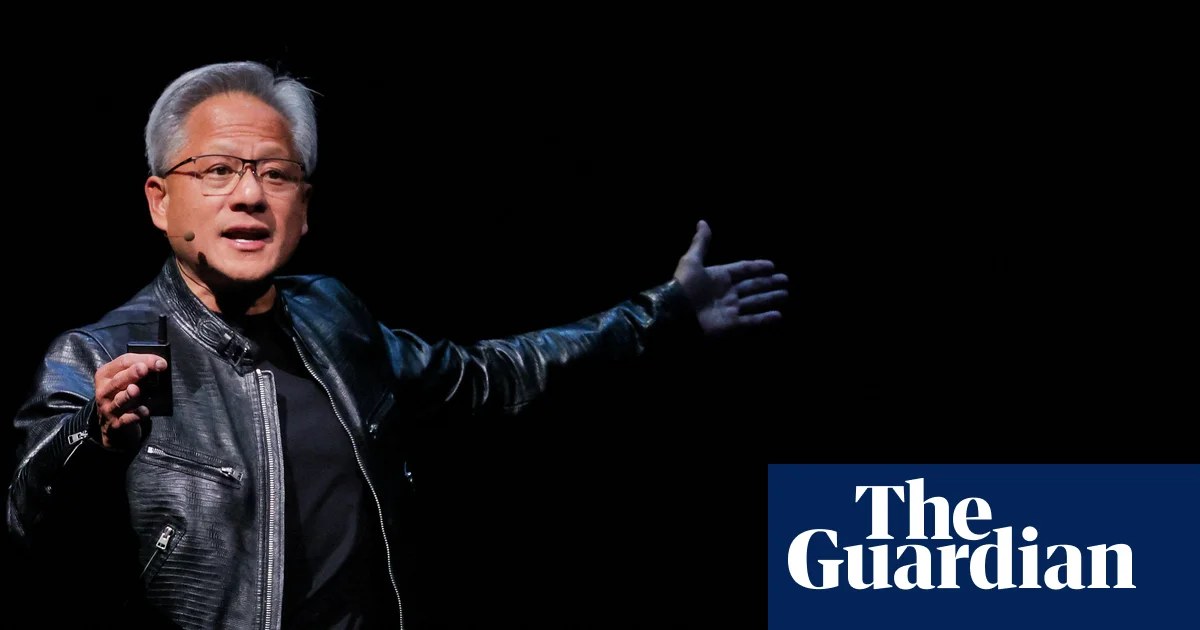
Nvidia's board chairman Harvey Jones said Tuesday the company does not intend to reinstate Jensen Huang as chief executive, closing the door on a high-pressure campaign from Donald Trump and Silicon Valley allies, while the chipmaker posted third-quarter revenue of $115.84 billion — more than double a year earlier — and beat Wall Street estimates.
Key Takeaways
- Board chairman Harvey Jones definitively ruled out Jensen Huang's reinstatement as CEO
- Q3 revenue of $115.84bn (+103% YoY) and EPS of $2.68 both beat consensus estimates
- Interim CEO Colette Kress emphasized 'business as usual' and employee commitment
- Stock down >10% since ouster, valuation fell from ~$6tn peak to $3.7tn; up 5% after-hours
- Trump, Musk, Kalanick, and VCs publicly pressed for Huang's return; Huang expressed willingness
Executive Intelligence Brief
Board Closes Door on Huang Return
Speaking during Nvidia's first earnings call since Huang's ouster, Jones stated the former CEO had voluntarily stepped down and the board accepted his resignation 'effective immediately.' The declaration comes days after Donald Trump told reporters he 'would not mind' Huang's return, adding 'I think he learned a big lesson.' Elon Musk, former Uber chief Travis Kalanick, and prominent venture capitalists had also publicly advocated for reinstatement.
Huang issued his first public statement Tuesday morning, apologizing for his mistakes and declaring he would be 'honored to answer these calls and return as CEO' if the board deemed it in the best interest of shareholders, employees, the company, and America. Jones, elaborating on the board's position, nodded to interim CEO Colette Kress's 13-year tenure, saying she has been 'at the center of this company's extraordinary growth.' He added: 'While this was an unexpected transition, the board is proactively dealing with the consequences.'
Record Earnings Amid Governance Crisis
Nvidia reported revenue of $115.84 billion for the third quarter, up 103% from the same period a year ago and 20% above the prior quarter. Earnings per share came in at $2.68, surpassing the Bloomberg consensus of $109.15 billion in revenue and $2.47 EPS. The results mark the first full quarter under Kress, who was named interim CEO last week after Huang's resignation.
'We delivered another outstanding quarter,' Kress told investors. 'Our ambition will not change.' She characterized operations as 'business as usual' and said the company's staff remains 'committed,' adding 'we will take care of our employees during this transition.' In after-hours trading, Nvidia shares rose 5%, paring some of the more than 10% decline since Huang's departure erased hundreds of billions in market value, dropping the company's valuation from an October peak near $6 trillion to $3.7 trillion.
Market Dominance and Systemic Exposure
Nvidia controls approximately 90% of the market for AI computing chips, with OpenAI, Anthropic, Google, and other leading AI firms dependent on its hardware. The company's trajectory carries outsized influence on U.S. equity markets, where trillions in passive and active capital are exposed to Nvidia's weight in major indices. Huang co-founded the company in 1993 and ran it with an unusually flat structure — roughly 60 direct reports — concentrating operational knowledge in a single executive.
The allegations prompting Huang's exit included an extramarital affair with a suspected Chinese intelligence asset and two additional affairs with company employees. The national security implications of the first allegation remain unclear; no regulatory review has been publicly confirmed.
Forward Outlook: CEO Search and Blackwell Ramp
The board has not disclosed a timeline for a permanent CEO search. Kress's deep institutional knowledge — she has served as CFO since 2013 — positions her as a natural internal candidate, though the board may consider external applicants given the geopolitical sensitivity of the role. Investors will next focus on Nvidia's fourth-quarter guidance and the production ramp of its Blackwell architecture chips, which are critical to sustaining the current growth trajectory. Any disruption to customer allocations or roadmap execution would test the 'business as usual' narrative.