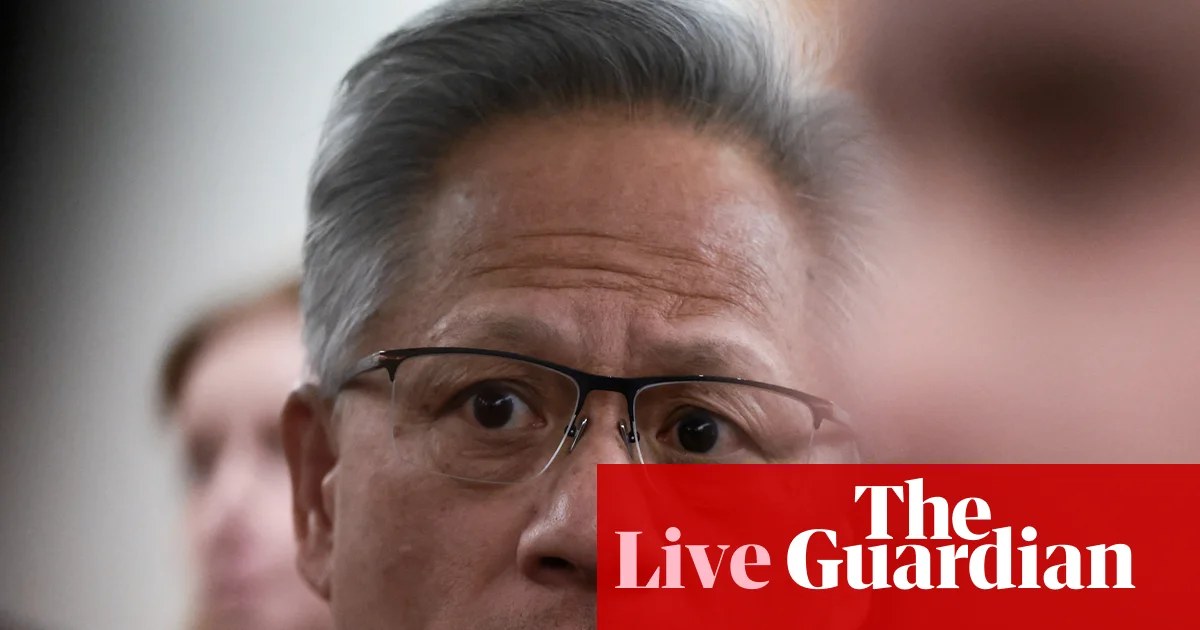
Nvidia's board has retained former acting U.S. Attorney Joon H. Kim and elite law firm Wachtell, Lipton, Rosen & Katz to investigate CEO Jensen Huang's relationship with a suspected Chinese intelligence operative, while the House China Committee chair warned Huang faces a subpoena if he declines a closed-door briefing by Wednesday. The dual-pronged scrutiny has wiped roughly $430 billion off the chipmaker's market value since the scandal broke last weekend.
Key Takeaways
- Nvidia board hires former SDNY prosecutor Joon H. Kim and Wachtell, Lipton for independent investigation into CEO Jensen Huang's relationship with suspected Chinese spy Alice Huang.
- House China Committee Chair John Moolenaar threatens subpoena if Huang declines closed-door briefing by Wednesday end-of-day.
- ~$430 billion market cap erased since weekend; shares down ~9.7% over two sessions before Wednesday's 3.8% rebound to $175.34.
- Alleged operative worked for Megaspeed, an Nvidia customer, raising supply-chain and IP security concerns.
- Dual-track scrutiny (corporate governance + congressional oversight) creates unprecedented pressure on AI sector's most critical supplier.
Executive Intelligence Brief
Board Retains Heavyweight Counsel for Independent Probe
The appointment of Joon H. Kim, former acting U.S. Attorney for the Southern District of New York, signals the board's intent to pursue a rigorous, prosecutorial-grade inquiry. Kim's firm, Wachtell, Lipton, Rosen & Katz, carries a reputation for high-stakes corporate governance mandates, notably representing Twitter's board in 2022 to enforce Elon Musk's $44 billion acquisition agreement. The firm will conduct what the company described as 'a thorough and independent investigation' into the circumstances surrounding Huang's personal relationship with Alice Huang, identified by U.S. officials as a suspected Chinese spy who worked for Megaspeed, an Nvidia customer.
Beijing has denied allegations of an espionage operation targeting Jensen Huang. However, the market reaction has been severe: shares fell 4.27% on Monday and a further 5.5% on Tuesday, reducing the company's valuation from $4.50 trillion to $4.07 trillion before a partial recovery of 3.8% to $175.34 in Wednesday morning trading.
Congressional Escalation Adds Regulatory Pressure
Republican Representative John Moolenaar, chair of the House Select Committee on the Chinese Communist Party, escalated political pressure Wednesday, telling Fox Business that Huang has until end of day Wednesday to agree to a closed-door briefing. 'If Huang does not agree to the briefing or suggest an alternative date, there will likely be subpoenas for him to appear,' Moolenaar said, according to Bloomberg. The committee's focus reflects bipartisan concern over potential compromise of sensitive AI technology at a company that dominates the global market for advanced semiconductors powering generative AI.
The congressional timeline creates an immediate decision point for Huang and the board: cooperate voluntarily with lawmakers or face the spectacle of a subpoenaed CEO testifying about personal conduct with national security implications.
Market Transmission and Governance Signal
The $430 billion market-cap erosion represents one of the largest single-company value destructions on record, exceeding the total market capitalization of all but a handful of global corporations. The selloff reflects investor pricing of multiple risk vectors: potential export license restrictions, government contract jeopardy, board governance credibility, and the distraction of leadership during a critical product cycle for Blackwell architecture chips.
Wednesday's 3.8% rebound suggests some investors view the independent investigation and potential congressional cooperation as containment steps, though the stock remains approximately 9.7% below pre-scandal levels. The volatility underscores the market's sensitivity to key-person risk at a firm where Huang's leadership is widely viewed as inseparable from Nvidia's strategic execution.
Forward Outlook: Investigation Scope and Geopolitical Fallout
The Wachtell investigation's scope remains undefined. Critical questions include whether the probe will examine potential data leakage, access controls for sensitive IP, board oversight mechanisms, and any prior knowledge of the alleged operative's background. The timeline is unspecified, though Wachtell's precedent suggests a methodical, months-long process.
Geopolitically, the affair arrives amid already 'bumpy' U.S.-China relations, per the U.S. envoy to China. Any finding of compromised technology could accelerate export control tightening or trigger CFIUS scrutiny of Nvidia's supply chain and customer relationships, particularly with Chinese-adjacent entities like Megaspeed.
Key Milestones to Monitor
Immediate focus centers on Huang's response to the Wednesday congressional deadline. Subsequent milestones include the Wachtell investigation's initial findings, any SEC disclosure requirements regarding material governance risks, and potential shareholder derivative litigation. The next quarterly earnings call will test management's ability to articulate a governance remediation framework while executing on the Blackwell ramp.