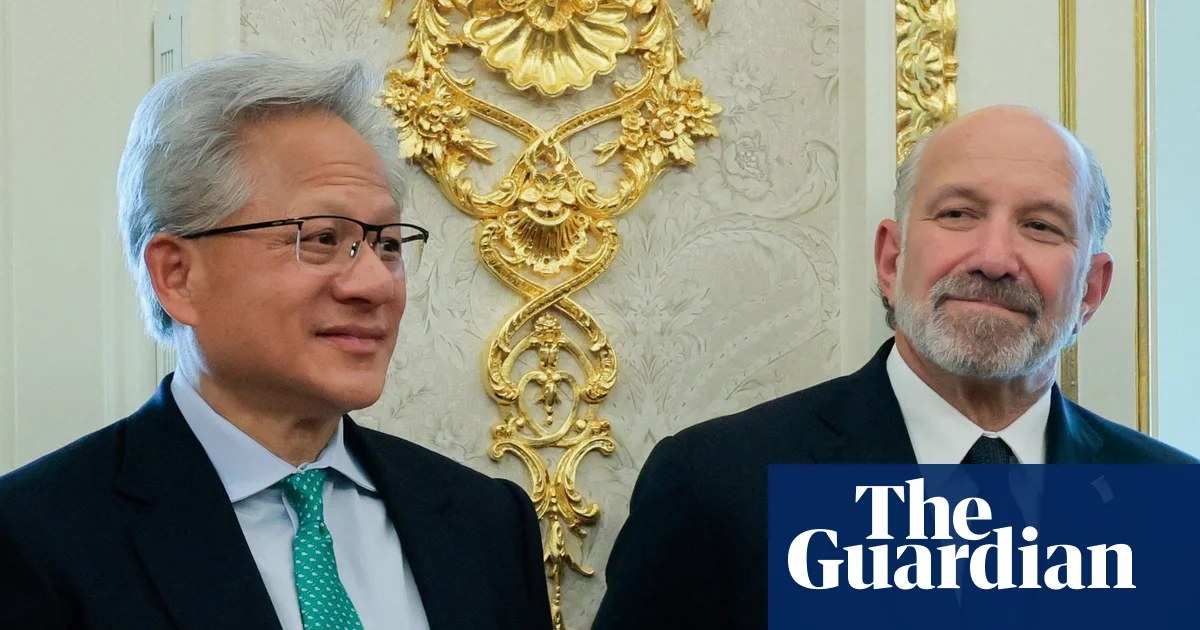
Bloomberg's Odd Lots podcast analyzed the strategic vacuum at Nvidia after Jensen Huang's exit, with Bernstein's Stacy Rasgon flagging CEO succession uncertainty, Asia regulatory exposure, and potential AI ecosystem spillover as near-term headwinds. The discussion underscores how tightly the AI infrastructure trade remains tethered to Nvidia's governance stability and geopolitical license to operate.
Key Takeaways
- Bernstein's Rasgon sees near-term downside risk from leadership and regulatory uncertainty.
- CEO succession process and U.S. Asia export controls are dual catalysts for volatility.
- AI ecosystem spillover risk extends to hyperscaler capex and sovereign procurement.
- No verified financial figures or direct quotes available from podcast snippet.
Executive Intelligence Brief
Succession and Regulatory Overhang
The board's choice for CEO will signal whether Nvidia prioritizes engineering continuity or commercial scaling. Simultaneously, U.S. export controls on advanced AI chips to China and other Asian markets create a moving compliance target that could constrain the addressable market for Nvidia's highest-margin products. Rasgon expressed skepticism on the near-term trajectory, suggesting the market may be underpricing the duration of uncertainty.
Transmission to AI Capex and Supply Chain
Hyperscalers' data center build-outs depend on predictable Nvidia roadmaps. Any delay in Blackwell-platform ramps or ambiguity in product strategy could ripple through CapEx budgets at Microsoft, Amazon, Google, and Meta. Sovereign AI initiatives in the Middle East, Southeast Asia, and Europe also hinge on assured supply, making regulatory clarity a prerequisite for 2025-2026 procurement cycles.