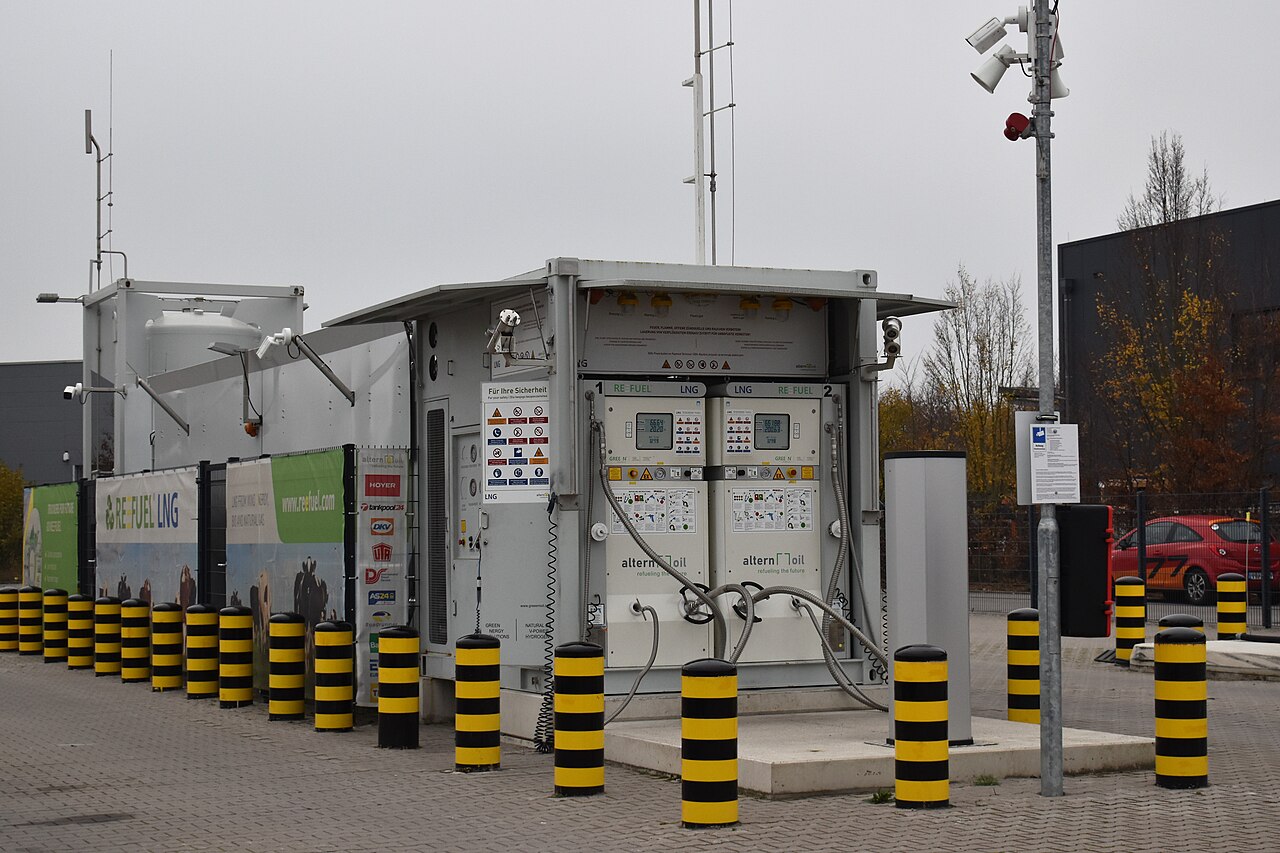
Santos Ltd reported record quarterly production on October 21, 2026, driven by ramp-up at its Moomba CCS and Barossa gas projects, lifting LNG and oil volumes 18% year-over-year and strengthening free cash flow generation amid tightening global gas balances.
Market Impact & Global LNG Context
Santos' production milestone arrives as Asian buyers — particularly China, Japan, and South Korea — secure long-term offtake agreements to hedge against supply disruptions. The company's Moomba carbon capture and storage (CCS) facility, now injecting 1.7 million tonnes of CO₂ annually, positions its LNG as lower-carbon intensity, a growing differentiator in European and Northeast Asian tenders where emissions pricing affects procurement economics. Meanwhile, the Barossa offshore gas project, despite prior cost overruns, delivers high-CO₂ reservoir gas that the CCS infrastructure mitigates, improving project-level returns.
This output surge coincides with structural tightness in global LNG markets. China's hydroelectric shortfall during El Niño cycles has repeatedly forced emergency LNG procurement, lifting spot prices and reinforcing term-market demand. Australian producers benefit from geographic proximity and established shipping logistics, though they face rising competition from U.S. Gulf Coast and Qatar expansion waves post-2027.
"Santos is demonstrating that integrated CCS-LNG projects can deliver both volume growth and carbon-intensity reductions simultaneously — a combination that commands premium pricing in North Asian term contracts. The real test is whether free cash flow conversion sustains at current oil-linked pricing or requires higher JKM benchmarks to fund shareholder returns and debt reduction." — Senior Energy Analyst, Australian Super Fund
Free cash flow generation remains the critical metric for equity holders. With net debt below $3.5 billion and a dividend policy targeting 35-45% of underlying free cash flow, Santos offers a yield proposition rare among growth-oriented energy majors. However, capital intensity for future phases — including potential Dorado oil development and PNG LNG expansion — will test discipline in a sector historically prone to overinvestment at cycle peaks.
Key Takeaways for Energy Investors
- Monitor JKM-TTF spread dynamics; widening arbitrage supports Australian LNG netbacks versus U.S. cargoes diverted to Europe.
- Watch Moomba CCS injection rates as a leading indicator for Barossa full-capacity economics and potential third-train sanctioning.
- Expect dividend per share growth to track free cash flow per share if management maintains payout ratio discipline amid capex decisions.
- Hedge exposure to Australian regulatory risk — particularly Safeguard Mechanism reforms — which could alter project-level carbon costs post-2027.
Frequently Asked Questions
How Does Santos' Moomba CCS Impact LNG Carbon Intensity and Pricing?
Moomba CCS captures reservoir CO₂ from the Barossa gas stream, reducing lifecycle emissions by approximately 25% versus conventional LNG. This enables Santos to market "lower-carbon" cargoes that align with Japanese and South Korean corporate net-zero targets, often securing term premiums of $0.30-$0.50/MMBtu over unabated spot cargoes.
What Drives Santos' Free Cash Flow Sensitivity to Oil vs. Gas Price Divergence?
Roughly 60% of Santos' revenue is linked to Brent crude via legacy oil contracts and condensate streams, while LNG volumes are increasingly indexed to JKM or hybrid oil-gas formulas. A $10/bbl Brent move shifts annual free cash flow by ~$300 million, whereas a $1/MMBtu JKM shift moves it by ~$180 million, making oil the dominant swing factor.