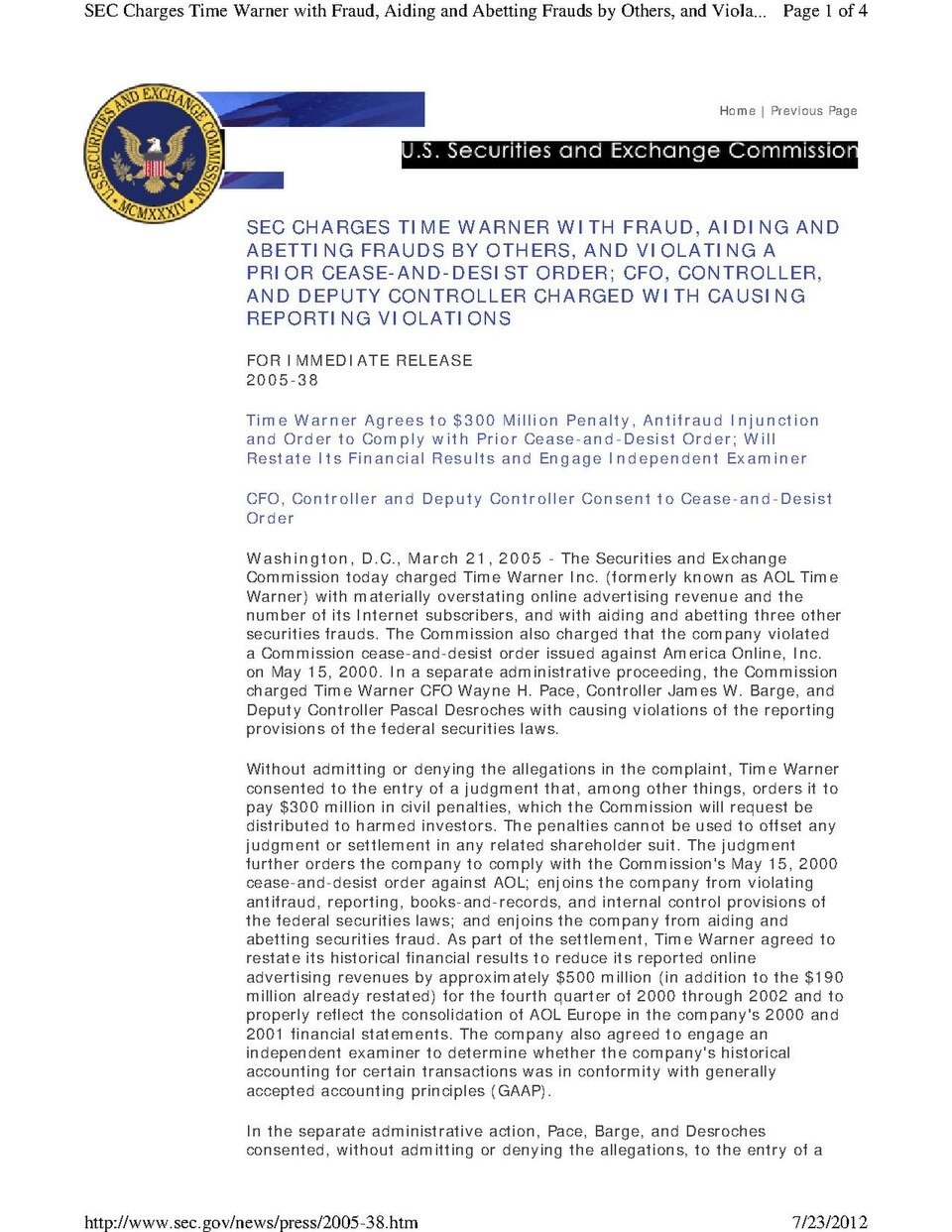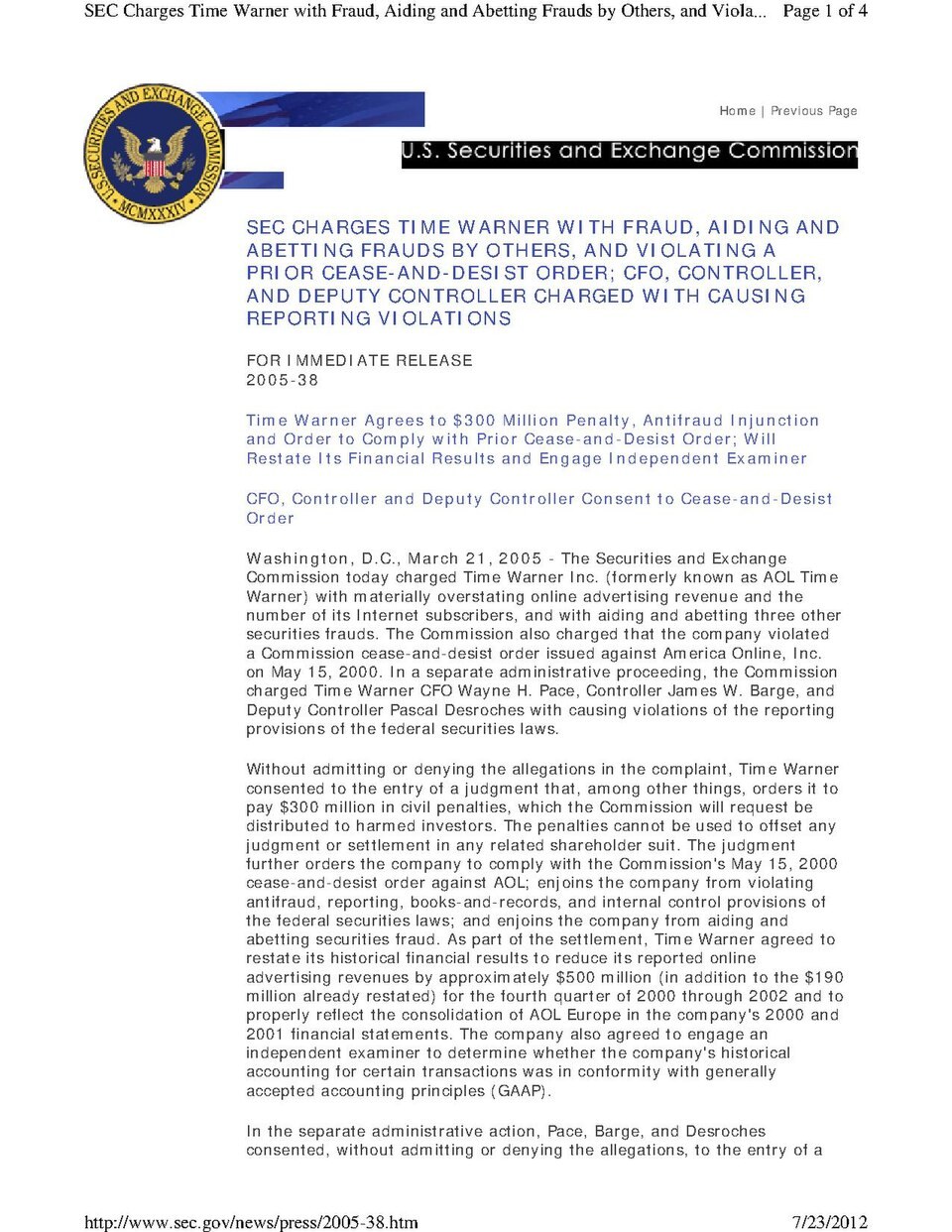
The Securities and Exchange Commission charged Colorado-incorporated entities BG Wealth Sharing Ltd and DSJ Exchange Pty Ltd on Wednesday with orchestrating a $130 million fraud scheme that weaponized false SEC filings to manufacture an appearance of regulatory legitimacy, duping tens of thousands of retail investors across more than 40 U.S. states and territories into a purported crypto 'wealth-sharing program.' According to the complaint filed in the U.S. District Court for the Northern District of California, the scheme operated from at least October 2025 through June 2026.
Key Takeaways
- SEC charges BG Wealth Sharing Ltd and DSJ Exchange Pty Ltd with $130M fraud scheme targeting retail investors across 40+ U.S. states and territories via fake 'wealth-sharing program' promising risk-free crypto returns.
- Defendants weaponized false Form ADV (investment adviser) and Form D (private offering) filings on SEC databases to manufacture false regulatory legitimacy, sharing these public filings with investors as 'proof' of SEC approval.
- Scheme operated Oct 2025–June 2026 using multi-channel outreach (social media, encrypted apps, live videoconferences, mobile app) and Ponzi-like periodic payments to sustain confidence while misappropriating funds.
- SEC seeks permanent injunctions, disgorgement with prejudgment interest, civil penalties; case filed in N.D. Cal. with cooperation from Alberta Securities Commission and 5 U.S. state regulators (TX, UT, HI, WA, WI).
- SEC investor alerts warn that mere presence of Form ADV/Form D in public databases ≠ SEC approval; investors directed to Investor.gov for verification.
Executive Intelligence Brief
Mechanics of the Fraud: False Filings as Legitimacy Props
The complaint alleges that BG Wealth and DSJ Exchange induced investors by promising extraordinary, risk-free returns generated by so-called 'SI-generated signals' for crypto asset trading. BG Wealth falsely claimed to be the world's largest hedge fund, registered with the SEC as an investment adviser, and partnered with a purportedly licensed and secure crypto trading platform, DSJ Exchange. None of these representations were true.
Critically, the defendants created the appearance of legitimacy by submitting false Form ADV and Form D filings to the SEC. These filings are publicly viewable on the SEC's Investment Adviser Public Disclosure (IAPD) database and EDGAR system, respectively. The defendants shared these filings with investors as supposed proof that the SEC had licensed or approved them. The SEC has since removed both the Form ADV filed by BG Wealth and the Form D filed by DSJ Exchange from its website.
Multi-Channel Distribution and Ponzi-Like Dynamics
Laura D'Allaird, Chief of the SEC Enforcement Division's Cyber and Emerging Technologies Unit, described the operation as 'well-planned,' noting the defendants utilized a broad array of communications channels — social media, encrypted messaging apps, weekly live videoconferences, and a dedicated mobile app — to maintain investor engagement. The complaint alleges the defendants displayed fake certificates bearing the SEC's seal and made periodic payments to certain investors, a classic Ponzi-like tactic to sustain confidence while misappropriating the bulk of incoming funds.
Regulatory Violations and Multi-Jurisdictional Cooperation
The complaint charges both entities with violating the antifraud provisions of the Securities Act of 1933 and the Securities Exchange Act of 1934. BG Wealth faces additional charges under Sections 204(a) and 207 of the Investment Advisers Act of 1940. The SEC seeks permanent injunctions, disgorgement with prejudgment interest, civil penalties against both defendants, and conduct-based injunctions against BG Wealth.
The enforcement action reflects significant inter-jurisdictional coordination. The SEC acknowledged assistance from the Alberta Securities Commission and state securities regulators in Hawaii, Texas, Utah, Washington, and Wisconsin, underscoring the cross-border nature of the alleged scheme and the growing role of state-level enforcement in crypto-related fraud.
Investor Protection Gaps and Forward Outlook
The case highlights a systemic vulnerability: the mere presence of a Form ADV or Form D filing in SEC databases does not constitute SEC approval or endorsement, yet fraudsters increasingly exploit this public accessibility to manufacture credibility. The SEC's Office of Investor Education and Assistance has issued specific alerts warning that scammers are using exempt reporting adviser filings to create false impressions of legitimacy.
Litigation will proceed in the Northern District of California. Key milestones to monitor include potential asset freeze motions, the defendants' responses to the complaint, and any parallel criminal referrals. For affected investors, the SEC encourages the use of Investor.gov to verify the background of any investment professional or firm, and to monitor court dockets for future claims processes should disgorgement funds be recovered.