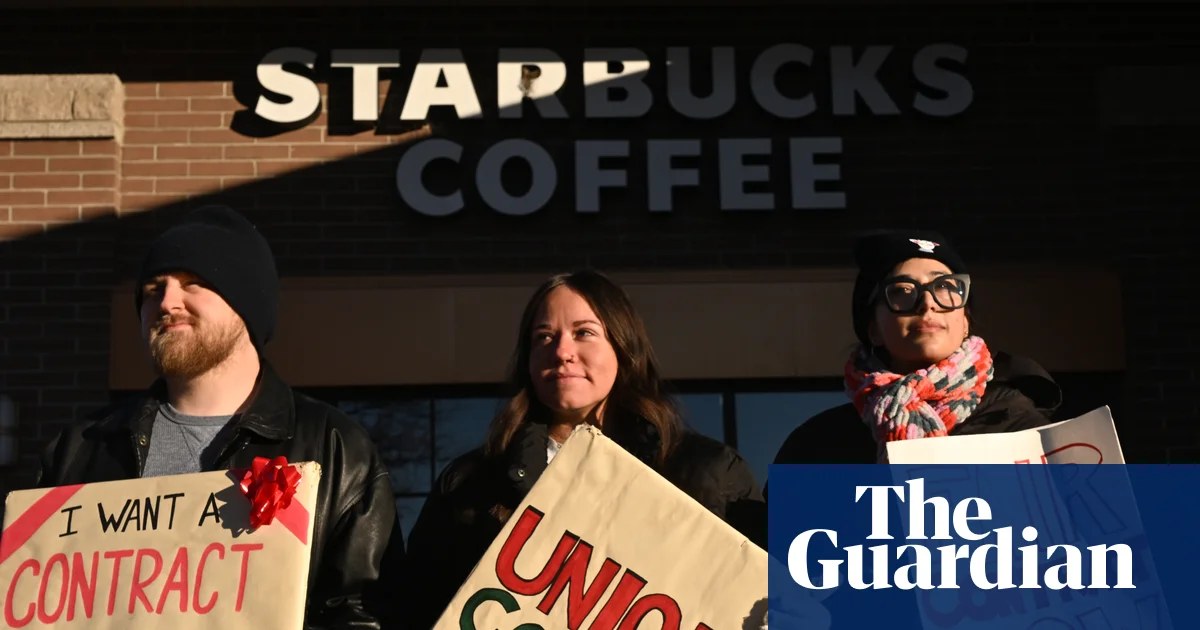
Starbucks Workers United mobilized rallies at over 40 U.S. college campuses Thursday, urging students to boycott the coffee chain as the union presses for a first contract nearly five years after the initial Buffalo store vote. The action targets the critical holiday season, including Red Cup Day on November 17.
Key Takeaways
- 700+ Starbucks stores unionized (12,000+ workers) without a first contract nearly 5 years after Buffalo vote
- Union demands: $17/hr minimum wage, 3-worker minimum staffing, just-cause protections
- 40+ campus rallies target holiday revenue; Cornell, Pomona, UCLA already cut ties
- NLRB found multiple labor law violations; Starbucks spent tens of millions on union avoidance
- Red Cup Day (Nov 17) is key test for operational disruption and consumer sentiment
Executive Intelligence Brief
Union Demands and Negotiation Deadlock
The union represents more than 12,000 baristas across 700-plus unionized stores, yet remains without a collective bargaining agreement since the first election in December 2021. Starbucks Workers United is seeking a $17 hourly minimum wage, minimum staffing of three workers per store, and just-cause job protections to replace at-will employment.
Andrew Trinklein, a barista at the University of Texas at Austin, described the current vulnerability: "Right now it's just a toss-up whether we have a job tomorrow or not. Say they don't like something that we're doing -- say we don't write on a cup. We could be fired for it tomorrow." The union notes that first contracts typically take 450 days, but Starbucks negotiations have stretched to nearly five years.
Campus Pressure Campaign Escalates
The campus strategy began in 2023, urging universities to terminate Starbucks contracts over the company's response to organizing. Cornell University and Pomona College did not renew contracts, while UCLA stopped offering Starbucks products. Thursday's rallies spanned private and public institutions including the University of Pennsylvania, Northwestern, and the University of Washington.
"We're really trying to push and get support from college campus students... in joining the boycott," Trinklein said. The timing coincides with Starbucks' Red Cup Day on November 17, a high-traffic promotional event when customers receive reusable holiday cups.
Regulatory Record and Leadership Change
The National Labor Relations Board has found Starbucks guilty of violating federal labor law in multiple cases related to union-organizing responses. The company has reportedly spent tens of millions on union avoidance consultants, though it has not disclosed the full total.
Negotiations showed progress with a February 2024 framework agreement but broke down after Brian Niccol assumed the CEO role. Niccol previously led Chipotle, which paid a $240,000 settlement over an NLRB ruling that a Maine store closure following unionization was illegal. Chipotle denied wrongdoing.
Company Response and Holiday Outlook
A Starbucks spokesperson stated: "Workers United represents approximately 5% of our US partners, and we believe actions like these divert attention from the work at the bargaining table." The company said it does not expect "any meaningful disruption" during the holidays based on prior similar actions.
With 700 unionized stores and the holiday rush approaching, the standoff tests whether campus pressure and consumer boycotts can force movement at the bargaining table after years of stalemate.