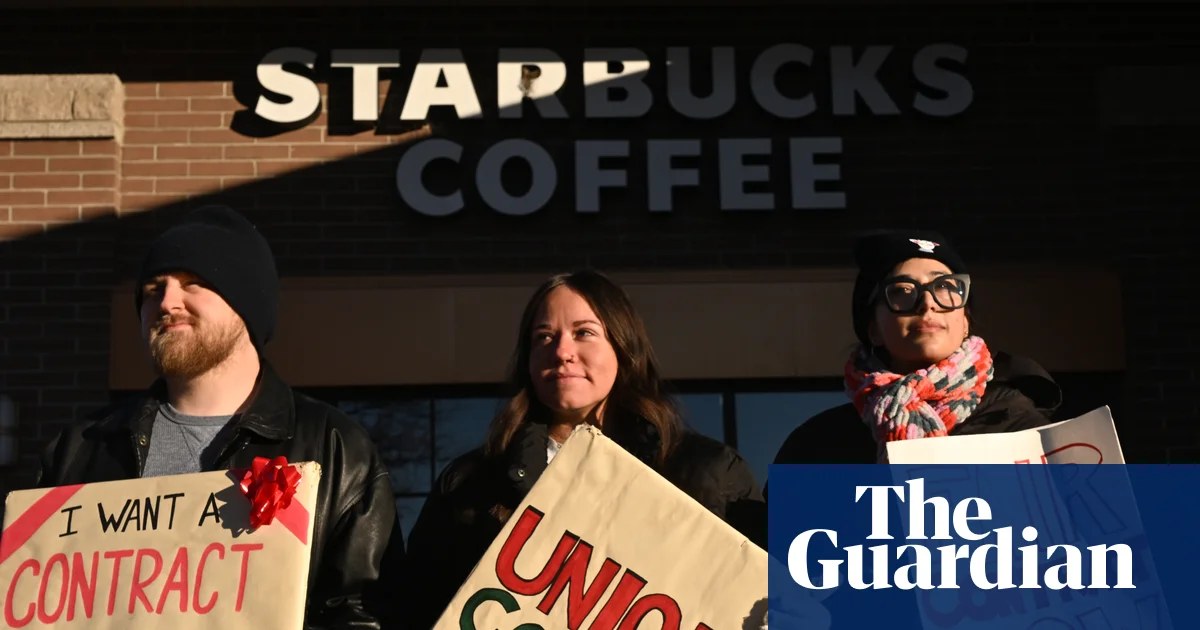
Starbucks Workers United will stage rallies at more than 40 U.S. college campuses Thursday, urging students to boycott the chain as the union presses for a first contract nearly five years after the initial Buffalo store voted to organize. The action targets the critical holiday season and campus licensing revenue.
Key Takeaways
- 700+ stores unionized (12,000+ workers) with zero first contracts after nearly 5 years
- Union demands: $17/hr minimum wage, 3-worker staffing floor, just-cause protections
- Campus boycott strategy has already cost Starbucks contracts at Cornell, Pomona, UCLA
- Negotiations collapsed after Brian Niccol became CEO; NLRB has ruled against Starbucks in multiple cases
- Red Cup Day (Nov 17) is the immediate test of boycott operational impact
Executive Intelligence Brief
Union Demands and the Contract Deadlock
The union represents more than 12,000 baristas across over 700 stores that have voted to unionize since December 2021. Starbucks Workers United is seeking a $17-an-hour minimum wage, a minimum staffing level of three workers per store, and just-cause job protections to replace the current at-will employment status.
Andrew Trinklein, a barista organizing at the University of Texas at Austin, said workers face arbitrary discipline: 'Right now it's just a toss-up whether we have a job tomorrow or not. Say they don't like something that we're doing – say we don't write on a cup. We could be fired for it tomorrow.' The typical timeline for a first contract is over 450 days; Starbucks workers are approaching five years without one.
Campus Pressure as Strategic Leverage
The union's campus strategy, launched in 2023, has yielded tangible results. Cornell University and Pomona College declined to renew their Starbucks contracts, while UCLA stopped offering Starbucks products in campus cafes. Rallies Thursday span private and public institutions including the University of Pennsylvania, Northwestern University, and the University of Washington.
This pressure coincides with Starbucks' Red Cup Day on November 17, a high-traffic promotional event. The union aims to disrupt the holiday narrative and threaten a revenue stream—campus licensing—that carries outsized brand significance.
Breakdown in Negotiations and Legal Exposure
Progress stalled after a February 2024 framework agreement collapsed following Brian Niccol's appointment as CEO. Niccol previously led Chipotle, which paid a $240,000 settlement over an NLRB ruling that it illegally closed a Maine store after it unionized; Chipotle denied wrongdoing.
The NLRB has found Starbucks in violation of federal labor law in multiple cases related to union-organizing responses. The company has challenged these rulings and reportedly spent tens of millions on union-avoidance consultants, though it has not disclosed the full total.
Company Response and Forward Outlook
A Starbucks spokesperson stated the union represents 'approximately 5% of our US partners' and argued the boycott 'divert[s] attention from the work at the bargaining table.' The company said it does not expect 'meaningful disruption' based on prior actions.
Key milestones ahead include Red Cup Day operations on November 17, pending NLRB decisions on unfair labor practice complaints, and the potential for further university contract non-renewals as the campaign expands.