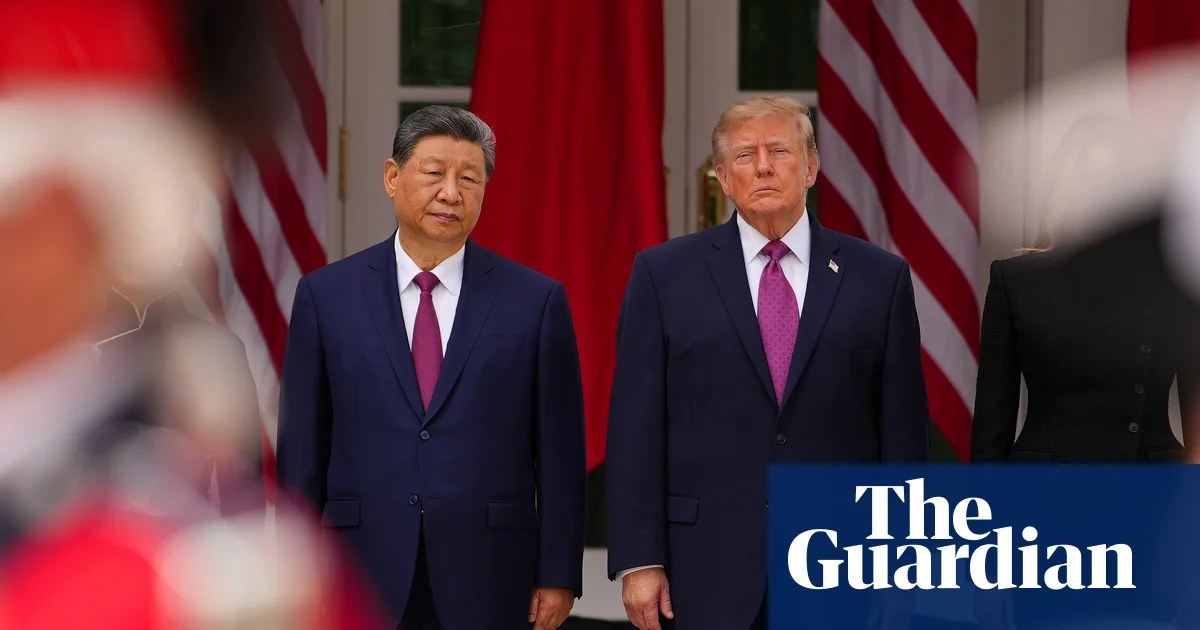
A truce extended until January has cooled the headline-grabbing tariff war between the world's two largest economies, yet the underlying conflict has shifted decisively toward a structural battle for supply chain dominance. Rather than de-escalating, Washington and Beijing are fortifying positions in what analysts describe as a new economic arms race focused on technological self-sufficiency and the ability to throttle an adversary's industrial base.
Key Takeaways
- A US-China trade truce is in effect until January 2027, but structural tensions over technology and critical minerals are intensifying.
- The International Energy Agency estimates a Chinese rare earth magnet export blockade could cost the US and Europe $1.5 trillion annually.
- US strategy has evolved from a targeted 'small yard, high fence' on military tech to broader restrictions slowing China's overall technological progress.
- China retains significant export controls on critical minerals, using them as a retaliatory tool and strategic deterrent.
- Both nations view supply chain dominance as a national security imperative, increasing the probability of renewed economic conflict.
The 'Small Yard, High Fence' Expands
The strategic framework originated in the Biden administration, where National Security Adviser Jake Sullivan articulated a 'small yard, high fence' approach: restricting a narrow set of advanced technologies with military applications — specifically high-end semiconductors and lithography equipment — without severing broader economic ties. However, the evidence indicates this yard has expanded significantly over the last half-decade. Export controls, investment screening, and technology transfer restrictions have proliferated, impacting not only China's military modernization but its broader technological trajectory.
China's Critical Mineral Leverage
Beijing has responded by leveraging its overwhelming dominance in the processing of critical minerals and rare earth elements essential for high-tech civilian and military industries. During the previous trade tensions, China stunned the US administration by throttling exports of rare earths and magnets, a direct retaliation against semiconductor restrictions. While some controls have been relaxed, significant restrictions remain, deployed not only against the US but occasionally against third countries over policy disputes.
The $1.5 Trillion Vulnerability
The stakes are quantified by the International Energy Agency (IEA), which estimates that a total Chinese blockade of rare earth magnet exports to the US and Europe could inflict economic damages of approximately $1.5 trillion per year. This figure underscores the asymmetry of the current interdependence: while the US holds the 'choke points' in chip design and fabrication equipment, China controls the 'choke points' in the physical material inputs required for the green energy transition, defense systems, and consumer electronics.
Strategic Trajectory: Resilience vs. Decoupling
The Trump administration is reportedly directing hundreds of millions of dollars toward domestic mining and processing projects to break this dependency, yet building a resilient supply chain from mine to magnet takes years. Meanwhile, Xi Jinping's directive to 'tighten international production chains' dependence on China' signals a deliberate strategy to make decoupling prohibitively expensive for the West. With the current truce set to expire in January and both sides defining the standoff as a national security priority, the risk of a new round of hostilities — economic or otherwise — remains structurally high.