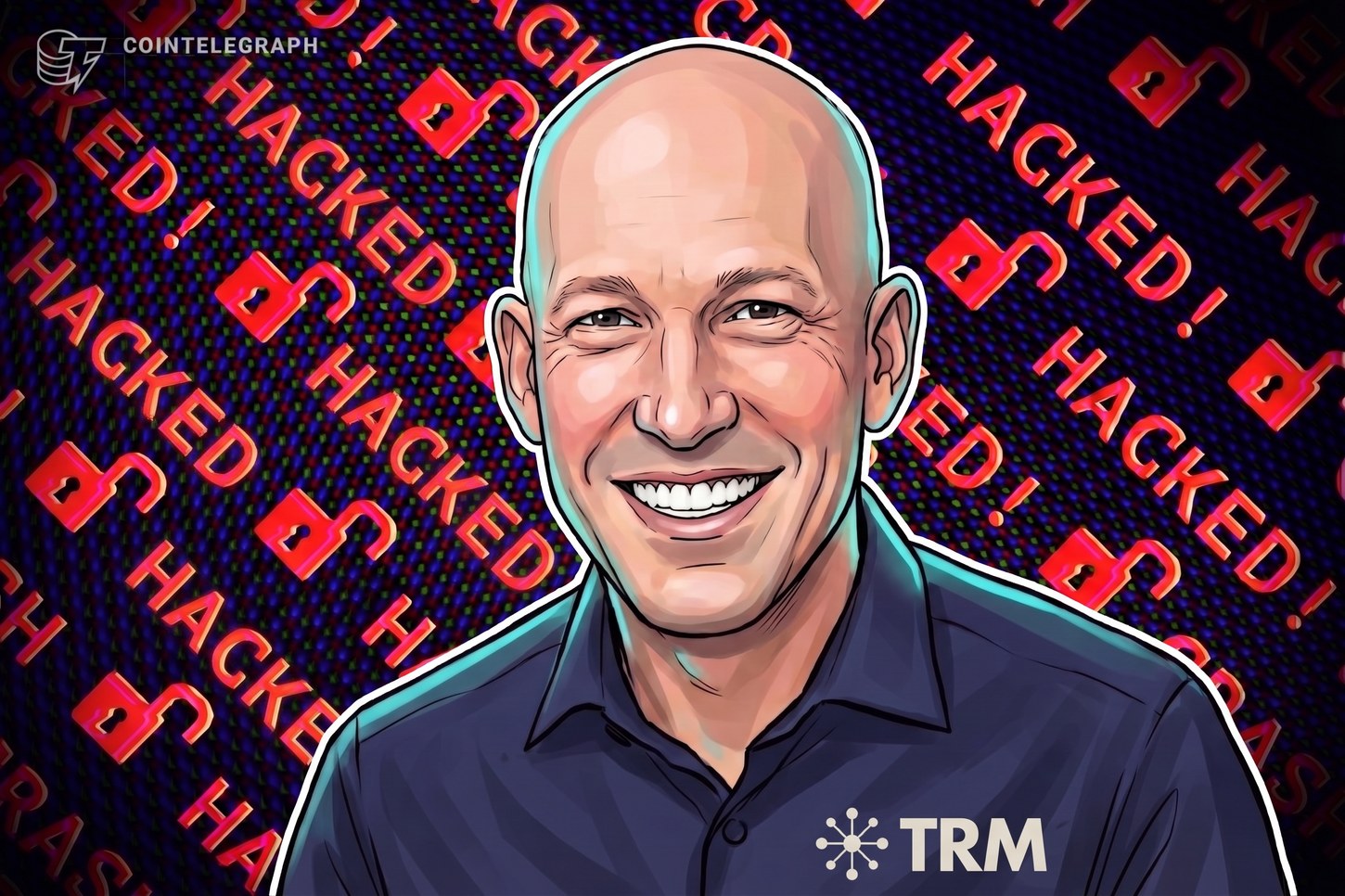
TRM Labs' global head of policy and government affairs, Ari Redbord, characterized the $6.3 billion theft from Binance as "cyber war" and urged governments to conduct offensive cyber operations against North Korean hacking infrastructure, arguing that the industry's unprecedented success in freezing 40% of stolen funds will not deter a regime for which crypto theft constitutes roughly one-third of GDP.
Key Takeaways
- North Korean group TraitorTrader attributed for $6.3B Binance hack (eight-week intrusion via recruiter social engineering and compromised AI tool) and $1.5B Bybit hack in Feb 2025.
- Industry froze ~$2.67B (40% of stolen funds) in unprecedented coordination; Tether froze 971.1M USDT within 37 minutes via TRM Beacon Network.
- Attack equals ~1/3 of North Korea's GDP and 50% of all state-backed crypto theft since 2017 ($12.5B total); Redbord argues defensive freezing alone cannot deter.
- T3 Financial Crime Unit (TRM, Tron, Tether) disbanded Aug 2025 citing coordination failures; Tether continues via Beacon.
- Redbord calls for government offensive cyber operations, AI-enabled defense parity, and action against laundering networks; Fed/OCC reviewing US bank exposure.
Executive Intelligence Brief
Attack Mechanics and Attribution
Binance disclosed in a Nov. 3 post-mortem that attackers posed as recruiters to plant malware on an engineer's work computer, then exploited a compromised internal AI tool to access the exchange's wallet-signing service. The intrusion window spanned eight weeks before the exploit, according to blockchain security firm SEAL. TRM Labs attributed the attack to a North Korean group it tracks as TraitorTrader, citing "indisputable" onchain and offchain evidence. The same group was linked to the $1.5 billion Bybit hack in February 2025.
Redbord noted that North Korea's Oct. 29 theft accounted for half of the $12.5 billion stolen by state-backed hackers since 2017. "Even if attackers recover only $1 billion, the potential payoff remains enormous," he said. "North Korea will keep doing this as long as it's effective."
Unprecedented Industry Coordination
The speed of the industry response marked a turning point. Tether froze 971.1 million USDT within 37 minutes of the main sweep. Combined stablecoin issuer freezes totaled approximately $2.67 billion, representing 40% of the stolen amount. "Nothing like that has ever been done before," Redbord said. "They were able to claw back 40% right out the gate."
Coordination was facilitated by TRM's Beacon Network, an intelligence-sharing system launched in 2025. "Normally I see a few Beacon alerts maybe every day. I've seen, I don't know, hundreds or maybe even a thousand Beacon alerts over the last few days," Redbord said. The network allowed companies to immobilize funds before working to seize them.
Structural Gaps and the T3 Unit Dissolution
Despite the coordination success, structural weaknesses persist. Bloomberg reported Nov. 4 that the T3 Financial Crime Unit — formed by TRM, Tron, and Tether in September 2024 — disbanded in late August 2025, with sources citing slow responses and poor coordination. Tether said it would continue working with TRM through Beacon. The dissolution raises questions about the durability of public-private partnerships absent formal governance.
TRM's capacity gap report found the asymmetry between attackers and defenders widening, driven by hackers' early adoption of frontier technologies such as AI. Redbord argued law enforcement and compliance teams need equivalent AI capabilities to find and patch vulnerabilities at the speed attackers exploit them.
Policy Implications and Forward Outlook
"Every time North Korea hacks, we should be hacking them back," Redbord said, calling for offensive cyber operations and action against laundering networks and banks used for cash-out. The Fed and OCC have reportedly begun checking U.S. banks for exposure following the hack. Regulatory scrutiny of exchange hot-wallet controls and internal AI tool governance is likely to intensify. The TraitorTrader attribution, if confirmed by law enforcement, could trigger sanctions designations and further isolate North Korean financial networks.