Democrats seized decisive control of Congress and key governorships in Tuesday's midterms, propelled by voter backlash against tech billionaire political influence and AI-driven datacenter expansion. The victory immediately threatens Silicon Valley with congressional investigations, subpoenas, and state-level moratoriums on the hyperscale computing infrastructure powering the AI arms race.
Key Takeaways
- Democrats won Congress and key governorships (Texas, Ohio, Georgia) on anti-tech billionaire platform
- State datacenter moratoriums pledged in three states directly threaten AI compute infrastructure expansion
- Congressional investigations launched with record preservation letters to Nvidia and Amazon
- Elon Musk's $450m Republican spending yielded minimal returns; his 'department of government efficiency' conduct is prime investigation target
- AI firms face dual threat: constrained compute supply from moratoriums and elevated regulatory/political risk premiums
Executive Intelligence Brief
The Political Realignment Against Silicon Valley
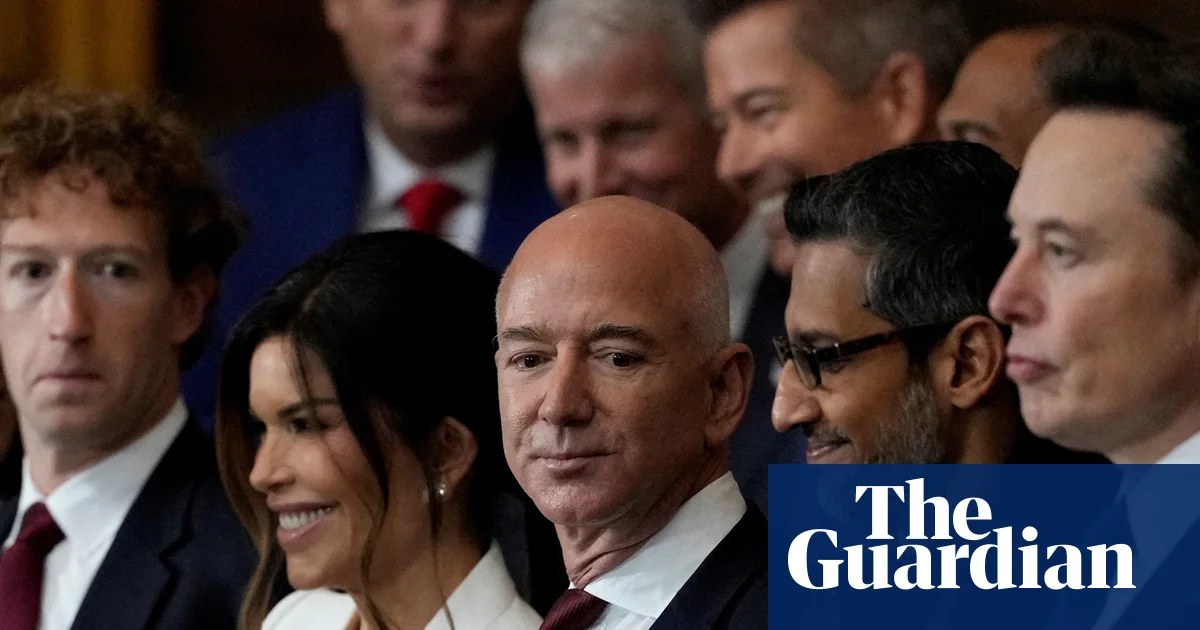
The inauguration photo of Musk, Bezos, and Zuckerberg front-row at Trump's ceremony now operates as a political liability. Democrats flipped seats nationwide, capturing governorships in traditionally Republican strongholds including Texas. Representative Greg Casar of Texas framed the mandate explicitly: 'Voters rejected Republicans in part because they were bought and paid for by AI billionaires. Democrats must hold them accountable instead of cashing their checks.'
Senator Jon Ossoff, re-elected in Georgia, pledged to 'bring big tech to heel,' declaring: 'The titans of Silicon Valley dig bunkers for themselves and warn that the artificial intelligence they're creating risks human extinction.' Senator Ed Markey of Massachusetts warned: 'They are going to need to plant new forests for all of the subpoenas we'll be printing.'
Datacenter Moratoriums Threaten AI Compute Arms Race
The most immediate operational threat targets the physical infrastructure of AI. Newly elected Democratic governors Gina Hinojosa (Texas), Amy Acton (Ohio), and Keisha Lance Bottoms (Georgia) have all pledged pauses on hyperscale datacenter construction. These facilities — massive, resource-intensive complexes filled with semiconductor chips — have fueled the compute demands of major AI firms over the past year.
Voter opposition to datacenters, driven by noise, resource consumption, and surveillance concerns including Flock cameras, proved decisive in multiple races. Democrats campaigned explicitly on moratoriums, positioning themselves as a barrier to the uncontrolled expansion of AI compute capacity.
Investigations Target Musk, Nvidia, and Amazon
Letters demanding record preservation have already been dispatched to Nvidia and Amazon ahead of congressional probes. Elon Musk faces the most acute exposure: he contributed $450 million to Republican candidates, primarily backing Ken Paxton in Texas, who lost by a significant margin. Musk's leadership of the 'department of government efficiency' — which dismantled USAID and broad swaths of the federal bureaucracy — presents what the article describes as a 'political lay-up' for Democrats seeking public accountability spectacles.
Musk remained silent for approximately eight hours as results confirmed the collapse of his political investment strategy.
Forward Outlook: Legislative and Legal Contours
The regulatory offensive will unfold on multiple tracks. Congressional committees will formalize investigations into AI firms' market practices, political spending, and government contracts. State-level datacenter moratoriums will face immediate legal challenges from tech firms and potentially federal preemption arguments. Federal legislation targeting AI compute infrastructure, billionaire political influence, and algorithmic accountability is now probable given Democratic control of both chambers.
For investors, the key transmission mechanisms are clear: constrained compute supply raises marginal costs for AI model training and inference; regulatory uncertainty increases cost of capital for hyperscalers; and political risk premiums must be repriced for companies with visible billionaire founders.