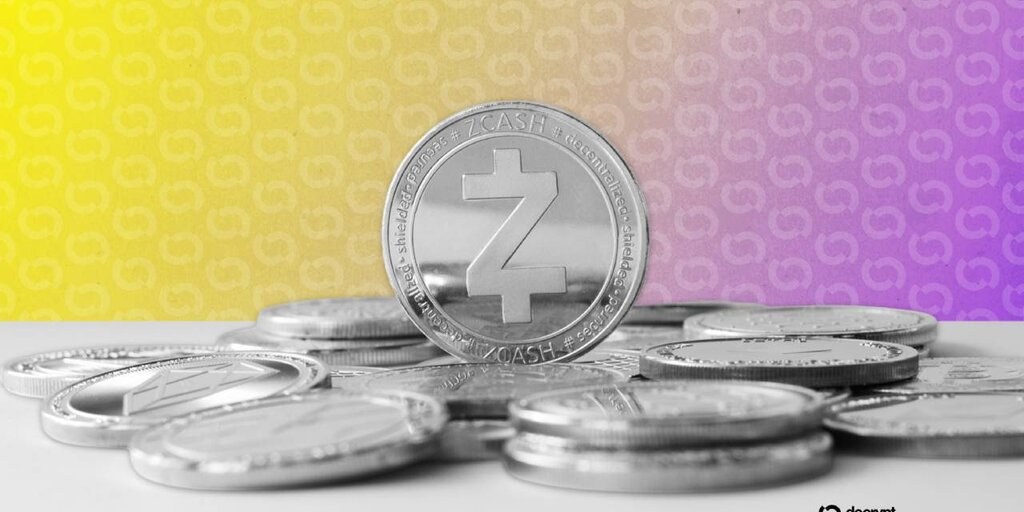
Zcash's NU7 network upgrade went live at block 3,543,405 on Friday, activating the Network Sustainability Mechanism (NSM) that removes 60% of transaction fees from circulation to fund future block rewards starting in 2031, while preserving the protocol's 21 million ZEC supply cap.
Key Takeaways
- NU7 upgrade activated at block 3,543,405 on November 6, 2026, launching the Network Sustainability Mechanism (NSM).
- NSM recycles 60% of transaction fees to fund future block rewards starting 2031, preserving 21M ZEC cap.
- Block target reduced from 75 to 25 seconds; testnet orphan rate 3.43% vs 1.57%, live target <1%.
- Sprout privacy pool retired with ~$16M ZEC locked; private transaction data per block now limited.
- Expedited ZCG governance vote underway: proposals due Nov 8, polls to follow; 50,000 ZEC NSM contribution proposal pending.
Executive Intelligence Brief
Network Sustainability Mechanism Design and Tokenomic Impact
The NSM tackles a structural challenge Zcash inherited from Bitcoin: whether transaction fees alone will sufficiently compensate miners as block subsidies decline through successive halvings. Under the mechanism, 60% of transaction fees are burned and gradually reissued through future block rewards on a smooth curve layered atop the existing halving schedule. Reissuance begins in 2031, effectively creating a forward-looking security budget funded by current network activity.
Shielded Labs, the development organization behind the mechanism, originally proposed replacing Zcash's discrete halvings with a continuous issuance curve — a design dubbed the Zcash Posterity Fund by developer Nate Wilcox. Community panels supported the smooth-curve approach, but coinholders rejected it, leading to the compromise design that preserves the halving schedule while adding the recycled-fee overlay. "We still think the original design was simpler and better, but we respect the process that led us here," said Jason McGee of Shielded Labs. "It should be difficult to change the protocol, and the process should resist capture by any single organization, group, or influential individual."
Protocol Parameter Changes and Network Performance
NU7 also reduces Zcash's target block time from 75 seconds to 25 seconds, a change the Zcash Foundation said aims to improve transaction finality. Faster blocks increase the risk of orphan blocks — valid blocks discarded because another miner's block propagated faster. In a stress test of 80 nodes across 11 regions with blocks full of private transactions, developers measured an orphan rate of 3.43% at 25-second intervals versus 1.57% at 75 seconds. They expect the live network's rate to remain under 1%, given real-world mining concentration and typically emptier blocks.
The upgrade additionally limits the volume of private transaction data per block, reducing the scanning burden on light wallets. NU7 also retires Sprout, Zcash's original 2016 privacy pool, leaving approximately $16 million worth of ZEC locked in the deprecated shielded address format.
Governance Contention: Zcash Community Grants and Dev Fund Allocation
The upgrade arrives amid escalating debate over the future of Zcash Community Grants (ZCG), which receives a slice of block rewards through the Dev Fund. The five organizations coordinating coinholder voting — Project Tachyon, Shielded Labs, Valar Group, the Zcash Foundation, and ZODL — have set an expedited timeline citing "tensions were high" and warning that a drawn-out debate risked "deepening divisions within the Zcash community." Proposals are due by November 8, with polls for coinholders and community panels to follow.
A separate proposal under consideration would require ZCG to contribute 50,000 ZEC from its treasury to seed the NSM, linking the governance outcome directly to the sustainability mechanism's capitalization.
Forward Outlook and Monitorable Variables
Three key developments warrant monitoring: the ZCG governance vote results and their impact on Dev Fund allocation; live orphan block rates under the 25-second target as a stress test of network stability; and the 2031 commencement of recycled-fee reissuance, which will test whether the NSM's smooth curve adequately smooths miner revenue across halving cliffs. The mechanism's success or failure will provide a rare empirical data point on fee-recycling tokenomics for fixed-supply proof-of-work chains.