Democrats seized control of Congress and key governorships in Tuesday's midterms, propelled by voter backlash against tech billionaire influence and AI expansion. The incoming majority has pledged investigations into Musk, Bezos, and Zuckerberg, subpoenas for Nvidia and Amazon, and moratoriums on hyperscale datacenter construction.
Key Takeaways
- Democrats won Congress and key governorships on explicit anti-tech-billionaire platform
- Musk donated $450M to Republicans but saw key ally Ken Paxton lose Texas decisively
- Governors in Texas, Ohio, Georgia pledged hyperscale datacenter construction moratoriums
- Congressional record-preservation letters already sent to Nvidia and Amazon
- Musk's 'department of government efficiency' and USAID dismantling are prime investigation targets
Executive Intelligence Brief
Electoral Rebuke Reshapes Political Calculus
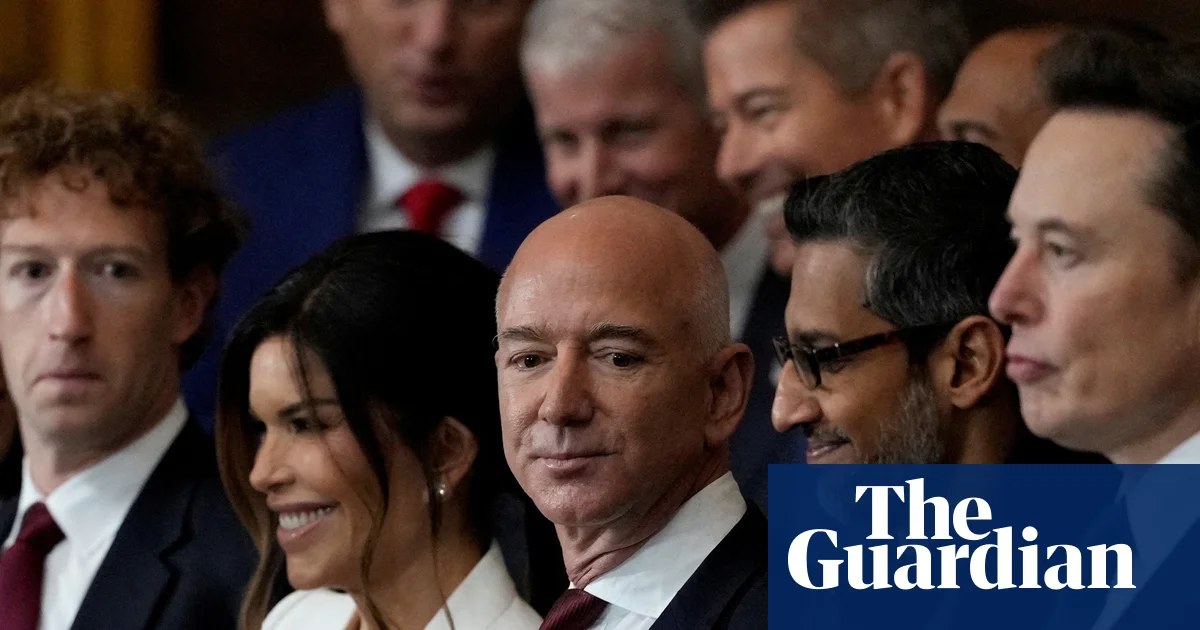
The photo of Silicon Valley centi-billionaires — Musk, Bezos, and Zuckerberg — at Donald Trump's inauguration once symbolized a symbiosis of ultra-wealth and political power. That alliance yielded extraordinary returns: Musk's fortune alone surpassed $1 trillion during the MAGA era. Tuesday's results shattered that calculus. Democrats flipped seats nationwide and captured governors' mansions in Texas, Ohio, and Georgia, campaigns explicitly centered on rejecting 'oligarchs' blatant attempts to create a political environment to their liking.' Texas Representative Greg Casar declared: 'Voters rejected Republicans in part because they were bought and paid for by AI billionaires. Democrats must hold them accountable instead of cashing their checks.'
Datacenter Moratoriums Threaten AI Compute Arms Race
Incoming Democratic governors Gina Hinojosa (Texas), Amy Acton (Ohio), and Keisha Lance Bottoms (Georgia) have all pledged pauses on hyperscale datacenter construction. These facilities — massive, resource-intensive complexes housing semiconductor chips — have fueled the AI compute arms race among major firms. 'Americans hate them,' the reporting notes, and Democrats stand 'firmly in the way of that arms race.' The moratoriums could constrain compute capacity for Nvidia, Amazon, Microsoft, and other hyperscalers at a moment of peak capital expenditure.
Congressional Investigations and Subpoena Power
Letters to preserve records for future investigations have already been sent to Nvidia and Amazon. Senator Jon Ossoff, re-elected in Georgia, pledged to 'bring big tech to heel,' citing Silicon Valley titans who 'dig bunkers for themselves and warn that the artificial intelligence they're creating risks human extinction.' Senator Ed Markey warned: 'They are going to need to plant new forests for all of the subpoenas we'll be printing.' Musk presents a primary target: his $450 million in Republican donations yielded little return — backed candidate Ken Paxton lost Texas by a major margin — while his 'department of government efficiency' dismantled USAID and broad swaths of federal agencies, creating what Democrats call a 'political lay-up' for investigation.
Forward Outlook: Implementation and Legal Contests
The new congressional session will determine the scope and pace of investigations. Datacenter moratoriums face likely legal challenges from hyperscalers and potential federal preemption arguments. Musk's federal contracts — spanning SpaceX launch services, Starlink broadband, and Tesla regulatory credits — represent leverage points. Markets will watch whether regulatory pressure triggers capex reallocation toward 'datacenters in space,' a concept Musk reportedly floated as terrestrial constraints mount. The central uncertainty: whether Democratic unity holds on aggressive tech regulation or fractures under lobbying pressure and bipartisan national security arguments for AI dominance.