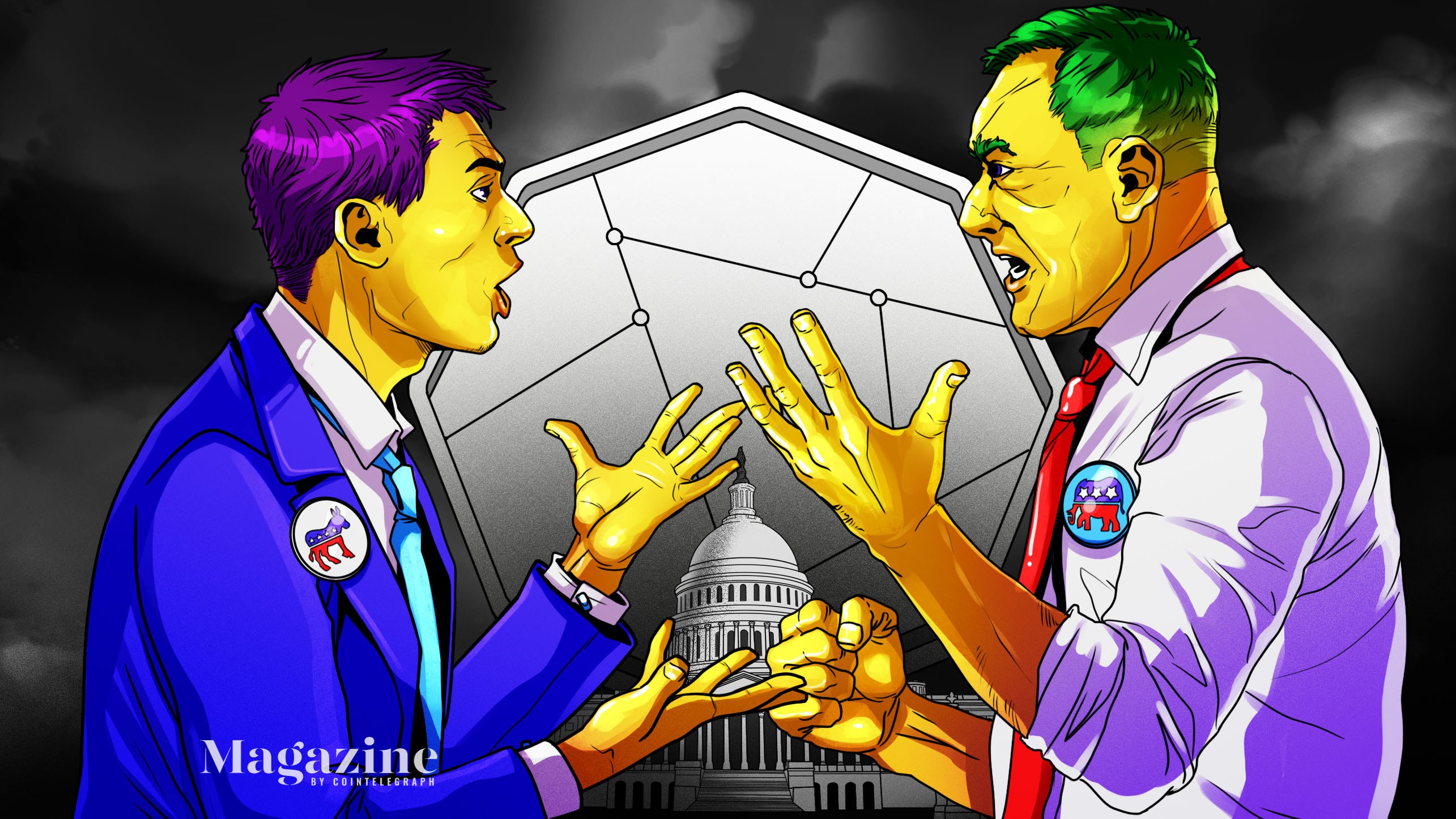
Democrats will control both chambers of Congress starting January after a 2026 midterm sweep that saw the crypto industry spend $233 million on political committees yet fail to unseat longtime skeptic Sen. Sherrod Brown in Ohio. The shift hands Sen. Elizabeth Warren the Senate Banking Committee gavel and empowers House Democrats to rewrite stalled market structure legislation around stricter consumer protections and ethics rules targeting political conflicts.
Key Takeaways
- Democrats won both chambers in 2026 midterms; new Congress convenes January with Warren expected to chair Senate Banking Committee.
- Crypto industry spent $233M on 2026 cycle (Public Citizen) but failed to unseat Sherrod Brown despite $64M in Ohio PAC spending.
- House Democrats preparing broader market structure bill based on Maxine Waters' proposals with stronger consumer protections, expanded SEC role, and ethics rules.
- Trump family memecoin and stablecoin ventures cited as primary obstacle to bipartisan deal; Oversight Chair Robert Garcia planning investigations.
- Industry leaders urge acceptance of bank-grade consumer protection standards as price for durable legislation.
Executive Intelligence Brief
Midterm Results Reshape Legislative Landscape
The crypto industry's $233 million in political contributions during the 2026 cycle, tracked by Public Citizen, failed to prevent a Democratic sweep. In Ohio, crypto-backed PACs spent $64 million attempting to unseat Sen. Sherrod Brown, a vocal industry critic, but he defeated Republican Jon Husted. Brown's victory preserves a key anti-crypto voice in the Senate.
With the new Congress convening in January, Sen. Elizabeth Warren, the most senior Democrat on the Senate Banking Committee and a persistent crypto critic, is expected to assume the chairmanship. In the House, Democrats are reportedly discussing expanding Rep. Maxine Waters' proposals into a broader market structure bill that could strengthen consumer protections, expand the SEC's role, and impose new ethics restrictions on public officials' crypto activities.
Trump Family Ventures Complicate Bipartisan Path
The previous CLARITY Act effort stalled in September amid disagreements over ethics provisions. Industry observers now argue that Trump family crypto ventures, including memecoins and a stablecoin, have become the primary obstacle to bipartisan consensus. Hadley Stern, head of institutions at Silence Laboratories and founder of Fidelity Digital Assets, described a sitting president's family launching such tokens as 'a real governance problem' that is 'poisoning the bipartisan deal.' He noted that similar conduct at a traditional financial institution would result in immediate termination.
Incoming House Oversight Committee Chair Robert Garcia has signaled plans to investigate the Trump family's business dealings and other corporate interests, adding a congressional oversight dimension that could pressure the industry to accept stricter guardrails to distance itself from political controversy.
Industry Confronts Bank-Grade Standards Demand
Paul Brody, founder and CEO of Nightfall Networks and former global blockchain lead at EY, predicts banks will 'come out winners' by pushing for crypto companies to meet the same exacting consumer protection and security standards applied to traditional finance. While the industry has historically opposed such parity, Brody argues a 'wise strategy' would be to 'accept similar conditions,' given that blockchain-native ecosystems remain 'vastly more flexible, programmable and efficient' than legacy infrastructure.
Rep. Shri Thanedar, a Democrat, remains hopeful the CLARITY Act can pass but insists any legislation must include stronger ethics requirements. The industry's challenge is converting its political spending into legislative outcomes while conceding on standards it previously resisted.
From FTX Era to Institutional Infrastructure
Stern notes the 2026 industry differs markedly from 2022, when Democrats last held power and the sector was defined by 'FTX and a bunch of tokens.' Since then, a federal stablecoin law has passed, Treasuries and credit funds have moved onchain, and tokenized equities are approaching. This institutional maturation may strengthen the case for market structure legislation, but only if the industry accepts the consumer protection framework Democrats now demand.
Forward Outlook: Committee Actions and Investigations
The immediate legislative calendar hinges on Senate Banking Committee reorganization under Warren and House Financial Services Committee action on a Waters-led bill. Simultaneously, the Oversight Committee under Garcia will pursue corruption inquiries that could intersect with crypto policy. The industry's ability to negotiate a durable framework depends on whether it accepts bank-grade standards and ethics rules that survive political cycles, or whether the Trump venture controversy continues to block consensus.