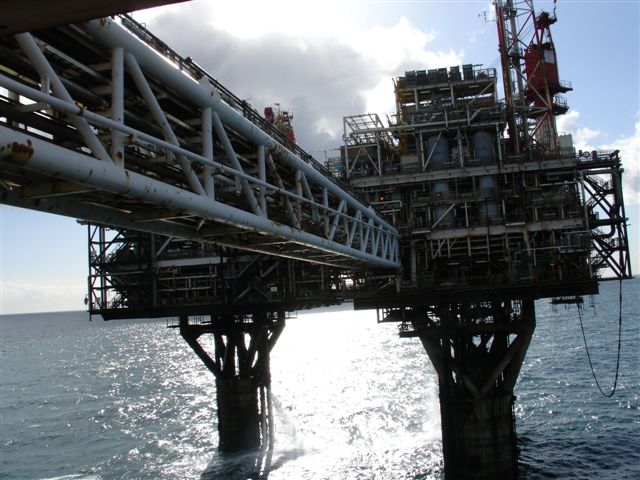
The UK government approved Shell's Jackdaw gas field off Scotland on October 20, 2026, marking the first North Sea extraction project since a 2024 moratorium. The decision signals a policy shift prioritizing domestic energy security over net-zero timelines, lifting sector sentiment amid tight European gas balances.
Jackdaw Market Impact: North Sea Investment & European Gas Security
Jackdaw's greenlight ends a two-year freeze on new North Sea licensing, a pause that chilled upstream capital allocation and accelerated basin decline rates. The field holds an estimated 300 billion cubic feet of recoverable gas — enough to supply roughly 1.4 million UK homes annually — and connects via the Shearwater hub, minimizing infrastructure lead times. For investors, the approval reduces regulatory risk premiums across the UK continental shelf, potentially unlocking stranded contingent resources in nearby clusters like Victory and Catcher.
Macro implications extend beyond the UK. European gas storage ended injection season at 95% capacity, but structural deficits persist after Russian pipeline cuts. Jackdaw's 2027 startup adds marginal but psychologically critical indigenous supply, easing reliance on volatile LNG spot cargoes. This supply-side response complements demand destruction from industrial efficiency gains, narrowing the continent's winter pricing risk premium. The decision also pressures Norway — Europe's largest gas supplier — to maintain high export volumes despite its own field maturity challenges.
"Jackdaw is less about volume and more about signaling. The UK has effectively admitted that managed decline without replacement creates security gaps no renewable build-out can fill this decade. Expect a wave of final investment decisions on deferred projects like Rosebank and Cambo within 18 months."
Capital markets reacted cautiously. Shell shares traded flat, reflecting that Jackdaw was largely priced in post-consultation. However, mid-cap explorers with North Sea exposure — Harbour Energy, Serica, Ithaca — outperformed the FTSE 350 Oil & Gas index by 2-3%, suggesting the market is repricing the probability of further licensing rounds. Credit spreads on North Sea producers tightened 15-20 basis points, a tangible reduction in perceived regulatory risk.
Transmission channels into fixed income are indirect but measurable. Lower European gas price volatility reduces upside risks to Eurozone inflation forecasts, supporting ECB rate-cut expectations. This dynamic mirrors patterns seen when US Treasuries rallied on oil price declines, illustrating how energy supply shocks propagate across asset classes via inflation expectations. Similarly, bond yields across major currencies tend to decompress when energy-driven CPI components soften.
Key Takeaways for Energy Infrastructure Investors
- Monitor UK North Sea Transition Authority licensing cadence for signals on Rosebank, Cambo, and other deferred mega-projects.
- Watch European TTF gas forward curves for structural backwardation easing as Jackdaw volumes enter supply stacks post-2027.
- Expect accelerated M&A among UK-focused independents as regulatory clarity improves reserve booking economics.
- Hedge regulatory reversal risk via diversified exposure to Norwegian and Dutch North Sea assets with stable fiscal frameworks.
Frequently Asked Questions
Will Jackdaw Materially Lower UK Household Energy Bills?
Jackdaw's output represents roughly 5% of current UK gas demand — meaningful for supply diversity but insufficient to move wholesale prices significantly. Bills are driven more by global LNG competition and carbon costs than marginal domestic production.
Does This Approval Undermine UK Net-Zero 2050 Commitments?
The government argues Jackdaw aligns with net-zero by displacing higher-emission LNG imports and providing grid stability for renewables. Critics contend it locks in fossil infrastructure. The Climate Change Committee's 2025 assessment allows limited new gas with carbon capture, a condition not yet attached to Jackdaw.