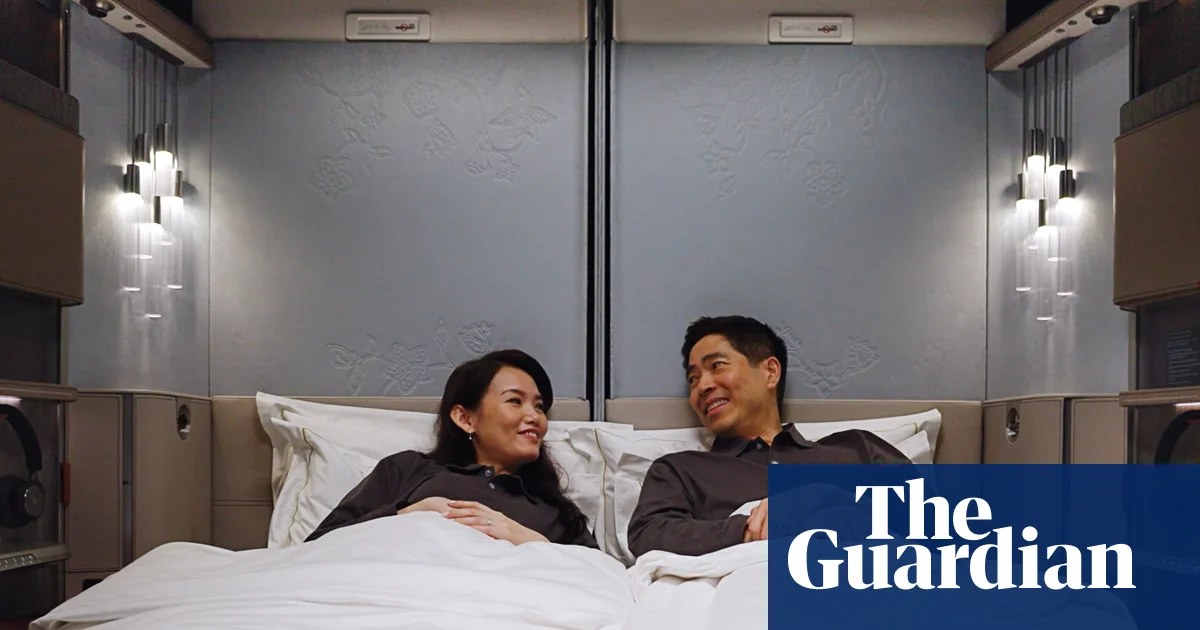
Singapore Airlines will invest S$2 billion (£1.2 billion) to retrofit its fleet with new first-class suites featuring a 203cm-by-152cm double bed, business-class seats that convert into double beds, and fleet-wide Starlink connectivity, targeting the ultra-premium leisure segment where one-way fares exceed £10,000.
Key Takeaways
- Singapore Airlines commits S$2bn (£1.2bn) for cabin retrofit launching H2 2027.
- First-class double bed measures 203cm x 152cm, marketed as largest in commercial aviation.
- Starlink satellite internet to be installed fleet-wide across all cabin classes.
- Rivals Emirates ($5bn), Air France (La Première), and British Airways (A380) driving competitive upgrades.
- Asia-Europe direct routing gains provide revenue tailwind amid Middle East fuel-price pressure.
Executive Intelligence Brief
Suite Specifications and Cabin Features
The centrepiece of the upgrade is a first-class double bed spanning two adjoining seats, measuring 203cm (80 inches) long and 152cm (60 inches) wide — exceeding a standard UK double mattress (190cm by 135cm). The bed includes a mattress topper from German luxury bedding manufacturer Paradies, a duvet, and a pillow menu. Business-class passengers will also gain seats convertible into double beds, while all cabins receive curved sliding doors for privacy and 4K ultra-high-definition touchscreens.
Competitive Context: The Race to the Top
The investment responds to aggressive cabin spending by rivals. Emirates launched a $5 billion fleet-wide retrofit in 2022, refreshing first-class suites with expanded space and updated technology. Air France debuted 'La Première' this year, marketing a private-jet-style experience, while British Airways is developing a new first-class product for its Airbus A380 fleet. Singapore Airlines, ranked world's best airline by Skytrax in 2024, acknowledged it has lost market share to carriers that invested earlier in cabin upgrades.
Macroeconomic Tailwinds and Routing Shifts
The industry faces elevated fuel prices driven by Middle East conflict, pushing up fares across cabins. However, Singapore Airlines has benefited from a structural shift: more passengers are routing directly between Asia and Europe on its network rather than connecting through Gulf hubs. This traffic capture supports yield premiums on the carrier's flagship routes and underpins the capital commitment to premium cabins.
Fleet-Wide Connectivity and Economy Enhancements
Beyond the premium cabins, the airline confirmed economy passengers will receive increased legroom and a redesigned personal-item storage layout. All passengers gain an expanded meal selection, upgraded in-flight entertainment, and satellite internet via SpaceX's Starlink constellation — a significant bandwidth upgrade over legacy geostationary systems.
Rollout Timeline and Monitoring Points
The new cabins enter service from the second half of 2027. Key variables to monitor include the specific aircraft types prioritised for retrofit, the capital allocation split across cabin classes, and whether the premium revenue yield justifies the S$2 billion outlay amid volatile fuel costs and potential global demand softness.