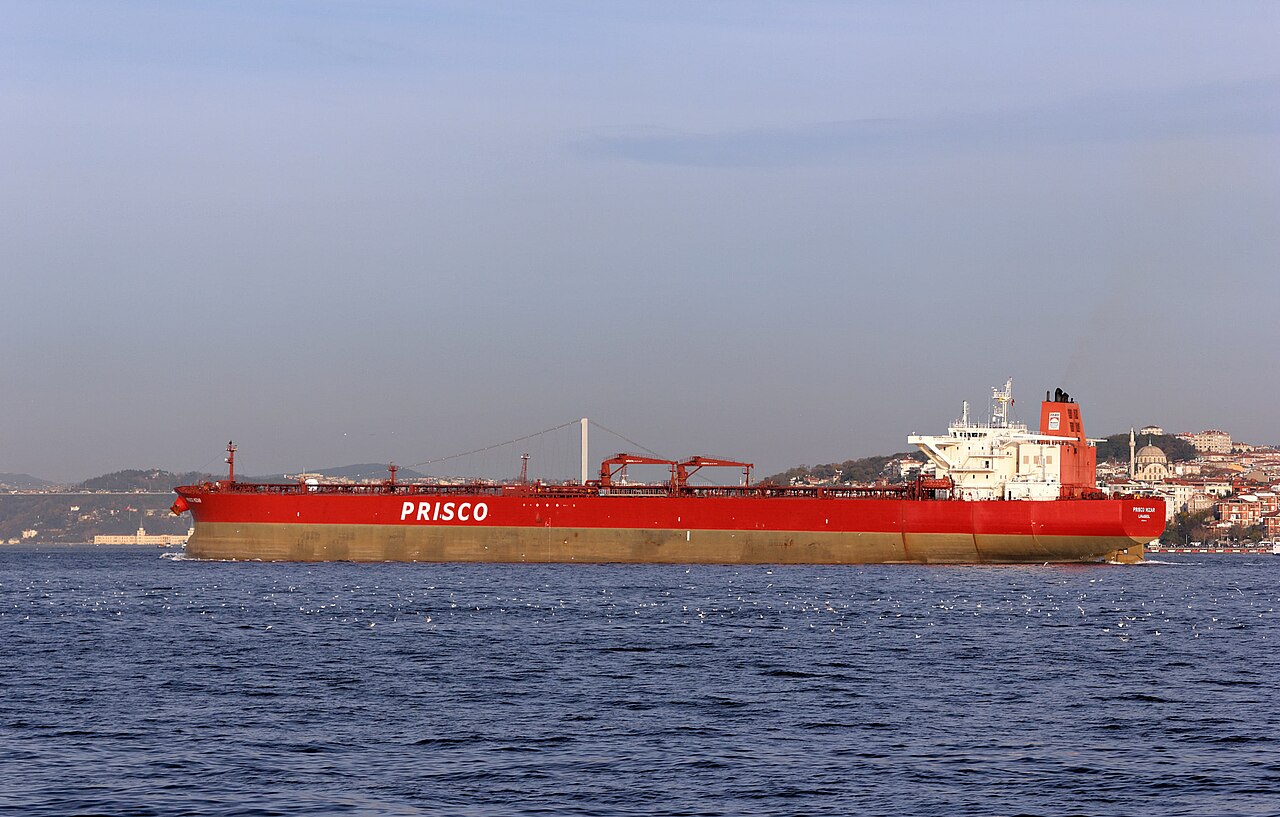
Strait of Hormuz Tanker Risks Triple Freight Rates → Global Oil Supply Strains
Shipping operators continue transiting the Strait of Hormuz on October 15, 2026, despite escalating tanker attacks that have tripled freight rates, injecting a steep geopolitical risk premium into global oil supply chains and pressuring major energy importers worldwide.
Strait of Hormuz Risk Premium Reshapes Tanker Economics and Oil Flows
The surge in very large crude carrier (VLCC) rates — now exceeding $150,000 per day for Middle East Gulf to Asia routes — reflects a structural repricing of Persian Gulf logistics rather than a transient spike. War-risk insurance premiums have jumped tenfold, adding $1–2 per barrel to delivered crude costs for Asian refiners who depend on the chokepoint for 60% of their intake. This dynamic echoes the 2019–2020 tanker crisis but with a critical difference: the Red Sea diversion has already stretched the global fleet, leaving minimal spare capacity to absorb Hormuz disruptions.
"The tripling of VLCC rates reflects a structural repricing of Persian Gulf logistics, not merely a temporary spike. Insurers are now pricing in a persistent threat environment that could sustain elevated costs well beyond any single incident."
— Senior Energy Logistics Analyst, Global Commodity House
European refiners face a dual squeeze: higher freight from the Middle East and reduced Russian volumes under sanctions. The resulting arbitrage has boosted West African and U.S. Gulf Coast crude exports to Europe, widening the Brent-Dubai spread and altering global trade flows. Meanwhile, Saudi Arabia and the UAE are maximizing pipeline capacity through Petroline and the Abu Dhabi Crude Oil Pipeline to bypass the strait, though combined spare capacity covers only ~6.5 million bpd — a fraction of the 17–18 million bpd that normally transit Hormuz.
Key Takeaways for Energy Traders and Shipping Investors
- Monitor VLCC earnings reports for sustained rate strength above $100,000/day, signaling a new floor for Middle East freight economics.
- Watch insurance war-risk clause renewals in November; further premium hikes will directly lift delivered crude costs for Asian buyers.
- Expect Saudi and UAE to maximize alternative export routes, but recognize pipeline bottlenecks limit bypass capacity to roughly one-third of normal Hormuz flows.
- Hedge energy portfolios against prolonged chokepoint volatility using Brent-Dubai spread options and freight forward agreements (FFAs).
Frequently Asked Questions
How Do Strait of Hormuz Tanker Attacks Affect Global Oil Prices?
Attacks raise the geopolitical risk premium embedded in Brent crude, typically adding $3–5 per barrel during acute phases. Higher freight and insurance costs are passed through to refiners, lifting crack spreads and ultimately consumer fuel prices, especially in Asia where Hormuz dependence is highest.
What Alternative Routes Exist for Persian Gulf Oil Exports?
Saudi Arabia's East-West Petroline pipeline (capacity ~5 million bpd) and the UAE's Abu Dhabi Crude Oil Pipeline (1.5 million bpd) offer limited bypass options. However, combined spare capacity covers only ~6.5 million bpd versus 17–18 million bpd normally shipped through Hormuz, making full substitution impossible.