President Donald Trump's job approval rating sits at 32%, one point above a record low, according to a Reuters/Ipsos poll released Monday on the eve of the November 3 midterm elections. Democrats hold a 46% to 38% advantage on the generic congressional ballot, signaling substantial risk to Republican majorities in the House and Senate.
Key Takeaways
- Trump approval at 32% (Reuters/Ipsos), up 1 point from two weeks ago but near record low
- Democrats lead generic congressional ballot 46% to 38%, an 8-point advantage
- US-Israel war on Iran (launched Feb 28) cited as driver of inflation anxiety and approval decline
- Lincoln Memorial Reflecting Pool renovation completed at >10x original cost with liner defects
- Midterm elections November 3 will determine House/Senate control and potential impeachment risk
Executive Intelligence Brief
Polling Dynamics and Presidential Drag
The Reuters/Ipsos survey shows Trump's approval essentially flat, ticking up a single percentage point from two weeks prior but remaining mired near the nadir of his presidency. The 32% figure reflects a steady decline that polls suggest accelerated after the February 28 launch of the US-Israel war on Iran, a conflict that has driven up petrol and diesel prices and amplified consumer anxiety over inflation and the broader economy.
The generic congressional ballot — a key barometer for House control — shows Democrats leading by 8 percentage points, 46% to 38%. While generic ballot leads do not translate perfectly into seat counts due to districting and turnout dynamics, a sustained gap of this magnitude historically correlates with a change in chamber control.
Campaign Blitz and the Midterm Curse
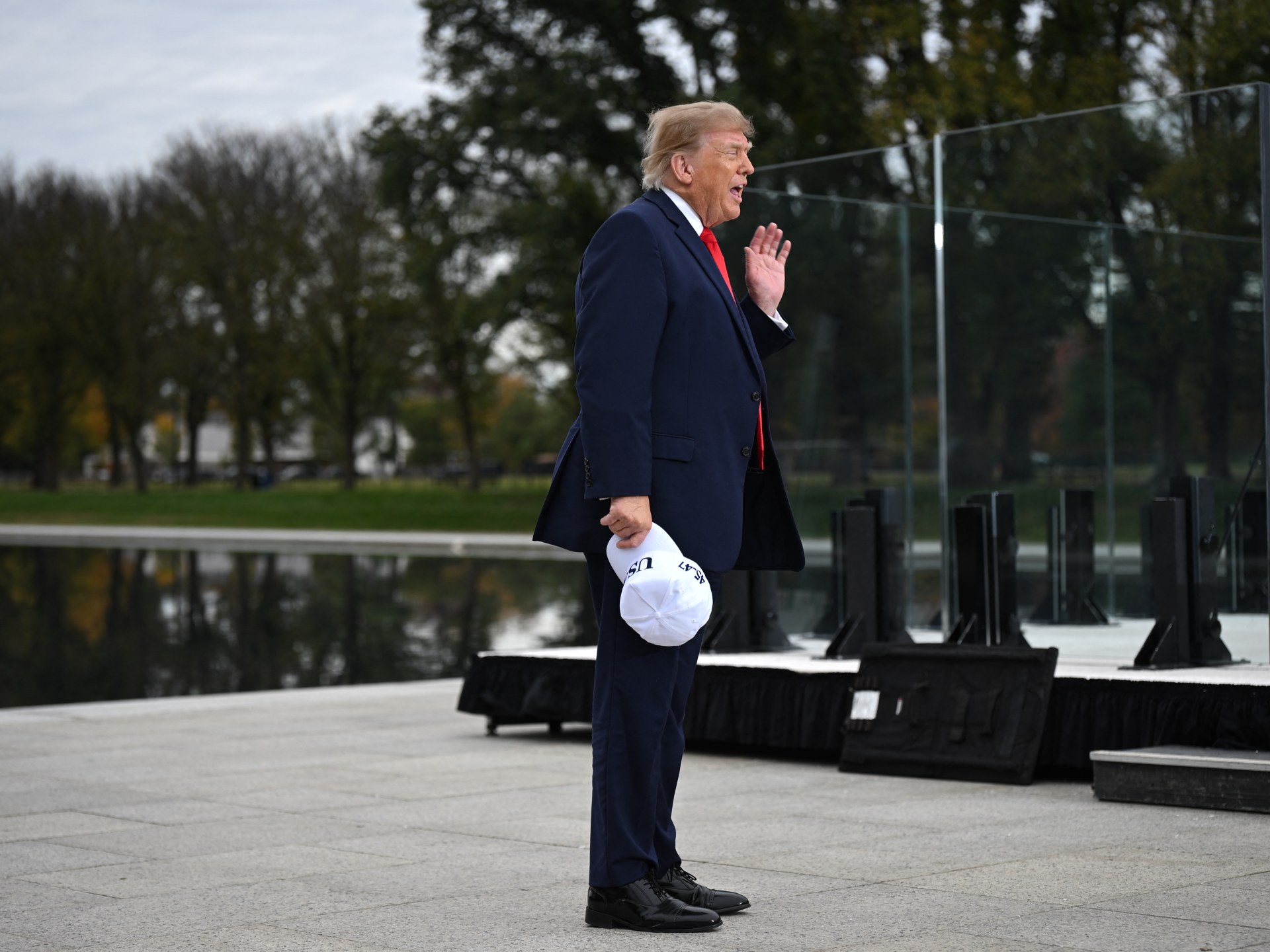
Trump embarked on a nearly month-long campaign blitz to shore up Republican candidates, culminating in a Monday rally at the Lincoln Memorial Reflecting Pool. At the event, the president acknowledged the historical pattern working against his party.
"For some reason, the sitting president doesn't win the midterms," Trump said. "But we gave this a very strong shot."
The president has framed the election as a referendum on his tenure, warning supporters that a Republican loss could prompt Democrats to pursue a third impeachment. Trump himself is not on the ballot, but he has repeatedly told voters to cast ballots as if they were voting for him directly.
Infrastructure Projects and Cost Overruns
The rally venue itself underscored a sub-theme of Trump's domestic messaging: the renovation of Washington, DC. The Lincoln Memorial Reflecting Pool project ran months behind schedule and cost more than 10 times its original estimate. A special liner for the pool, touted by Trump, began peeling away soon after installation.
"It was a work of art that never worked, but now it will work," Trump said at the rally. He also highlighted plans for a "Triumphal Arch," which is currently facing legal challenges. The project's cost overruns and execution issues have drawn scrutiny as a microcosm of federal project management.
Forward Outlook: Legislative and Oversight Stakes
Control of the House and Senate will determine the legislative viability of Trump's second-term agenda, including potential tax extensions, trade policy authority, and federal spending priorities. A Democratic majority in either chamber would likely launch aggressive oversight investigations into the Iran conflict execution, the Reflecting Pool renovation contracts, and administration personnel decisions.
Trump's explicit warning about a third impeachment attempt — while politically charged — reflects a genuine procedural possibility should Democrats secure a House majority, as impeachment originates in the lower chamber. The Senate would then conduct any trial, requiring a two-thirds supermajority for conviction.