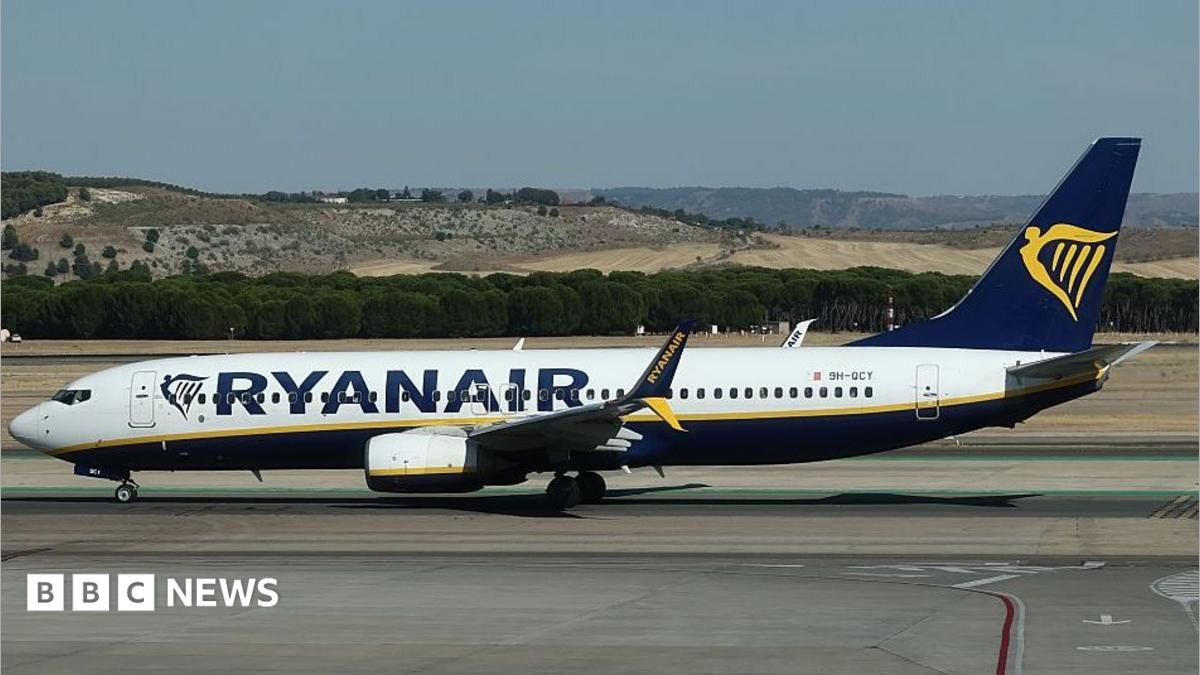
Ryanair has warned passengers to expect 'materially higher' fares next summer and flagged a potential staff pay freeze from April 2025, citing a €2bn jump in fuel costs driven by the US-Israel conflict with Iran. The airline reported a 16% drop in first-half pre-tax profit to €2.4bn.
Key Takeaways
- Ryanair forecasts €2bn higher fuel bill due to Middle East conflict disrupting Gulf refined product supply.
- Double-digit fare increases expected across Europe for summer 2027; O'Leary targets up to 20% but acknowledges uncertainty.
- Potential staff pay freeze from April 2025 contested by Unite, which cites binding multi-year deals independent of company performance.
- Winter capacity cuts extending into summer 2027; short-haul supply constrained into early 2030s.
- H1 pre-tax profit fell 16% to €2.4bn as fuel costs rose 15%; 80% hedge ratio insufficient to fully offset spike.
Executive Intelligence Brief
Fuel Shock Drives Cost Forecast Revision
Ryanair said its fuel bill is forecast to be €2bn (£1.6bn) higher in the short term because aviation fuel prices have surged following the US-Israel war with Iran, which has 'dramatically reduced the supply of refined products coming from the Gulf'. Chief Executive Michael O'Leary said the airline expects fuel prices to remain high 'well into 2027' unless there is a 'swift resolution' to the conflict.
Although 80% of the carrier's fuel requirement was hedged — bought in advance at fixed prices — the cost of the unhedged remainder was elevated, pushing overall fuel costs up 15% in the six months to September. O'Leary reiterated earlier forecasts that a 20% fare increase would be needed to cover jet fuel costs, though he conceded: 'I'm not sure we'll get to 20%. But we're certainly looking at double-digit fare increases across Europe from all airlines in 2027.'
Labour Cost Containment and Union Pushback
With multi-year wage deals expiring, Ryanair is weighing a temporary pay freeze from April 2025 and a slowdown in hiring. The move triggered immediate resistance from Unite, the union representing Ryanair staff. National officer Oliver Richardson said the union 'hasn't been advised of any such proposals' and noted that existing multi-year pay agreements 'cover next year' and were 'not attached to, nor dependent on company performance'. Richardson added: 'This was something that Ryanair was at pains to emphasise. As such we would expect it to be honoured.'
Structural Capacity Constraints Through 2030s
Beyond immediate cost pressures, O'Leary signalled a prolonged supply-side contraction. Ryanair has already cut winter flights and said 'more to come', a trend he said is happening 'across the airline industry, particularly with short-haul carriers'. He projected cuts will 'continue into the summer of 2027' and that 'short-haul capacity will remain constrained out to the early 2030s'. The airline also plans to increase use of artificial intelligence in back-office and support functions to improve efficiency.
Earnings Context and Hedging Limits
The first-half results underscore the limits of hedging in a sustained price shock. Pre-tax profit fell 16% to €2.4bn despite the 80% hedge ratio. The remaining 20% exposure, combined with higher hedging costs for future periods, compresses margins. O'Leary's fare outlook implies the carrier intends to pass through the bulk of the cost increase to consumers, testing demand elasticity in a market where capacity is simultaneously shrinking.