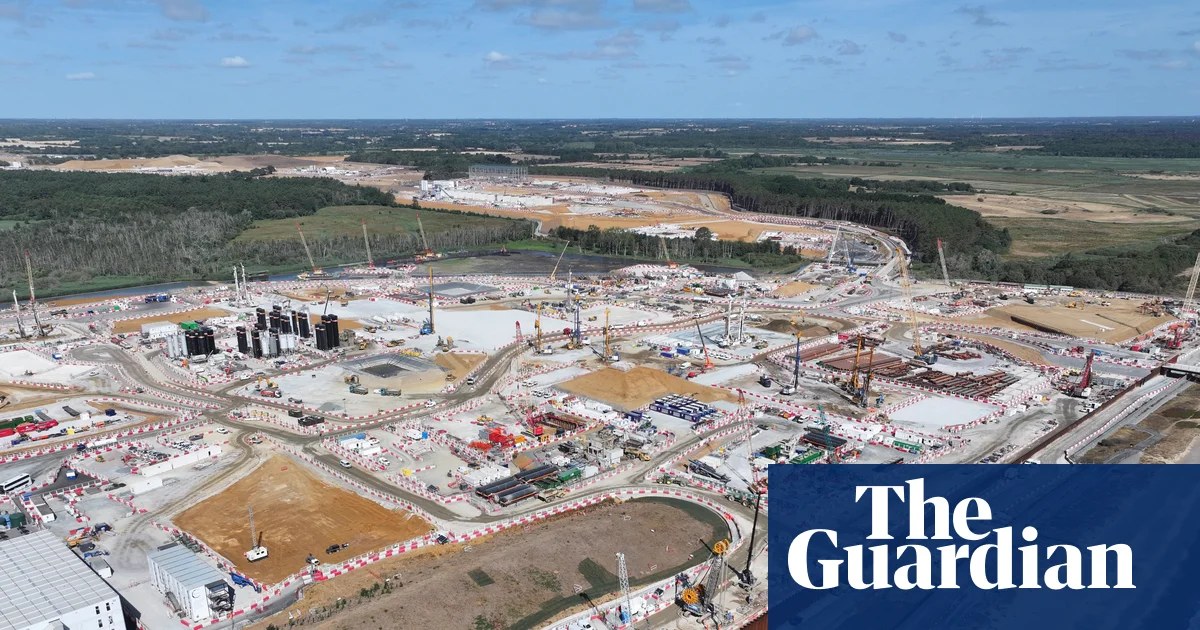
The Public Accounts Committee has warned that the UK government's 44.9% stake in the Sizewell C nuclear plant exposes taxpayers to nearly £22bn in potential construction and operating cost overruns, while private investors face a capped £30m liability.
Key Takeaways
- PAC warns Sizewell C costs could hit £48bn; taxpayers liable for £21.8bn in potential overruns (£9.8bn construction + £12bn operations).
- Government holds 44.9% equity after buying out CGN; private investors' additional liability capped at £30m.
- Hinkley Point C precedent: costs doubled and schedule slipped 7+ years; Sizewell C projected 2039–2043 completion.
- Government claims £2bn/year system savings post-operation; critics say abandonment cheaper than 60-year bill liability.
- Government must deliver cost scenario analysis within 3 months and six-monthly progress reports.
Executive Intelligence Brief
Asymmetric Risk Allocation Draws Parliamentary Condemnation
MPs on the Public Accounts Committee (PAC) have delivered a scathing verdict on the funding structure for Sizewell C, the proposed 3.2 GW nuclear power station in Suffolk intended to replicate the Hinkley Point C design. The committee projects total costs between £40.5bn and £47.7bn, with construction completing between 2039 and 2043.
Under the current equity split, the UK government holds 44.9%, French state-owned EDF retains 12.5%, Centrica owns 15%, Canada's La Caisse holds 20%, and Amber Infrastructure holds 7.6%. The state's stake swelled after it bought out China General Nuclear (CGN) on national security grounds, leaving the public purse as the dominant equity holder.
Crucially, the PAC highlighted that while taxpayers and consumers face open-ended liability for overruns — estimated at £9.8bn before 2040 and a further £12bn over the plant's 60-year operating life — private investors' additional exposure is contractually capped at just £30m.
Precedent of Hinkley Point C and the RAB Model
The criticism echoes long-standing concerns over the Regulated Asset Base (RAB) funding model and Contract for Difference (CfD) mechanisms used for new nuclear. Hinkley Point C, the reference project, has seen costs balloon to £34bn–£35bn from an initial £18bn estimate, with completion delayed to 2029–2031. Sizewell C was intended to benefit from 'first-of-a-kind' learning rates, but the PAC finds the risk transfer to the public balance sheet 'extraordinary'.
Sir Geoffrey Clifton-Brown, PAC Chair, stated: 'The high level of risk borne by taxpayers and consumers for the construction of Sizewell C is extraordinary. Private investors look set for significant returns on their investments, while customers are likely to be saddled with higher energy bills.'
Government Defence and Industry Counter-Arguments
The government rejected the PAC's framing, arguing the report 'completely ignores that investors are incentivised to complete construction as cheaply and quickly as possible' through the deal terms. A spokesperson claimed operational savings of £2bn annually across the energy system and cited 2,000 workers currently on site as evidence of progress.
The Nuclear Industry Association (NIA) backed the project, with CEO Tom Greatrex emphasizing 'clean, reliable and constantly available power' that could offset grid balancing costs — currently £2.8bn year-to-date for curtailment and gas backup.
Critics Urge Abandonment and Model Reform
Alison Downes of Stop Sizewell C and Prof Steve Thomas of Greenwich Business School, who gave joint evidence to the committee, argued abandonment costs today would be 'lower than the cost of paying inflated energy bills over 60 years multiple times over'. They called for the government to rule out this funding model for future nuclear projects, calling it 'a free ride for investors and financial pain for households'.
Compliance Timelines and Next Decisions
The PAC has mandated two concrete deliverables: the government must publish the scenario analysis underpinning its cost estimates within three months, and provide progress updates every six months. These reporting requirements aim to impose discipline on a project whose final cost and schedule remain highly uncertain, with the 2039–2043 completion window spanning a full parliamentary cycle.