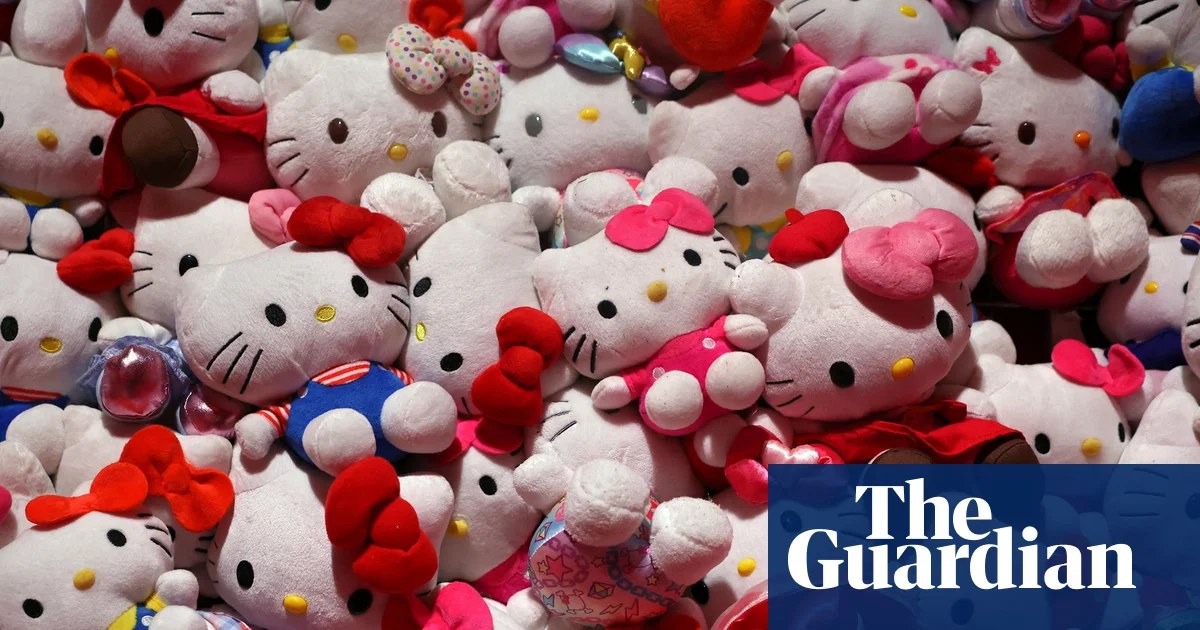
Sanrio, the Japanese owner of the Hello Kitty franchise, has terminated its commercial partnership with the hit TBS spy drama 'Vivant' following a fierce backlash from Chinese state media and netizens over the show's depiction of Chinese agents torturing Japanese characters. The company cited elements 'inconsistent with Sanrio's core values' in a Weibo statement, apologizing and pledging stricter review of future collaborations.
Key Takeaways
- Sanrio terminated 'Vivant' partnership after Global Times labeled torture scenes a 'deliberate smear' invoking WWII atrocities.
- China generated $117m (781m yuan) for Sanrio in H1 2026, up 40% YoY — the key commercial lever forcing compliance.
- Incident follows PM Takaichi's Taiwan remarks (Nov 2025) and Mbappé brand drops, reinforcing pattern of cultural nationalism as market risk.
- Sanrio pledged stricter content review, setting precedent for Japanese IP holders navigating China market access.
- Monitor Sanrio Q3 2026 China revenue and broader Japanese entertainment sector self-censorship trends.
Executive Intelligence Brief
Trigger: Vivant Season 2 Depiction Sparks Outrage
The controversy erupted after the October 4 episode of 'Vivant' Season 2, in which a Chinese agent is shown cutting off the fingers of a Japanese intelligence officer and stabbing him in the abdomen. Chinese state-run tabloid Global Times said the scenes 'bear striking similarities to the torture inflicted on Chinese nationals by invading Japanese troops' during World War II, accusing the drama of distorting truth by 'attributing these atrocities to modern Chinese characters'.
The backlash marks a sharp escalation from the drama's first season, set in a fictional Central Asian country, which avoided similar controversy. The second season's focus on Japan-China espionage tensions arrived amid deteriorating bilateral relations.
Geopolitical Context: Fractious Japan-China Relations
Relations between Tokyo and Beijing have worsened significantly. Prime Minister Sanae Takaichi triggered a diplomatic row in November 2025 by stating a Chinese attack on Taiwan could trigger deployment of Japan's Self-Defence Forces. Takaichi herself added fuel to the cultural fire earlier this month by revealing she had recorded 'Vivant' episodes to watch over the holidays.
The incident follows a pattern of Chinese consumer nationalism targeting foreign brands and celebrities perceived as insulting national dignity, most recently French footballer Kylian Mbappé, who was dropped by Chinese brands after referring to Mao Zedong as a 'dictator'.
Financial Exposure: China as Critical Growth Engine
China represents a crucial and rapidly expanding market for Sanrio. The Tokyo-based company generated 781 million yuan ($117 million) in revenue from the Chinese market in the first half of 2026, up more than 40% from the same period last year. Characters featured in the 'Vivant'-themed merchandise, including My Melody and Cinnamoroll, are key drivers of this growth.
The speed of Sanrio's capitulation — ending the tie-up within days of the Global Times critique — underscores the asymmetry of commercial leverage. For Sanrio, the cost of losing the 'Vivant' partnership is negligible compared to the existential risk of a sustained consumer boycott in its fastest-growing major market.
Forward Outlook: Precedent for Content Compliance
Sanrio's pledge to 'strengthen review processes for all future collaborative projects' signals a new compliance baseline for Japanese entertainment IP holders. The incident establishes a de facto censorship mechanism: Chinese state media criticism triggers immediate corporate pre-emption to protect market access.
Investors should monitor Sanrio's Q3 2026 results for any sign of revenue deceleration in China, and watch whether other Japanese content producers (anime, gaming, streaming) pre-emptively sanitize scripts involving Chinese antagonists. The next diplomatic inflection point will be any scheduled Japan-China high-level dialogue, where cultural friction may be raised officially.