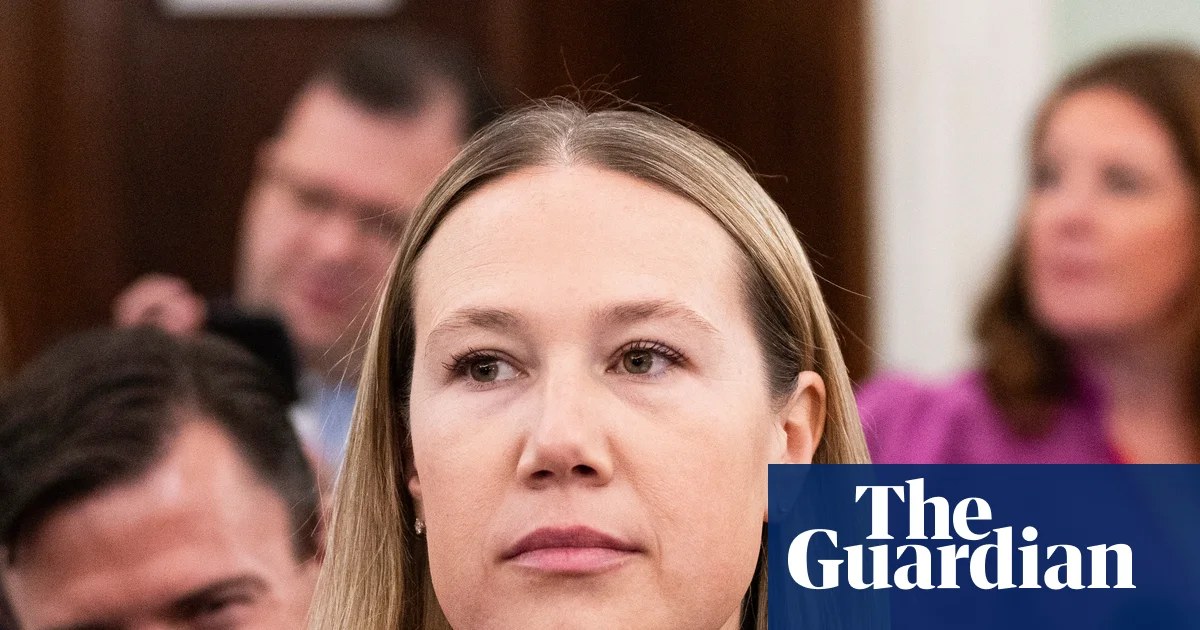
Senate Democrats aggressively questioned FCC commissioner nominee Danielle Thumann on Tuesday over Chairman Brendan Carr's unprecedented early license renewal order targeting ABC stations, which followed presidential criticism of late-night host Jimmy Kimmel. Thumann, Carr's senior counsel, declined to criticize the actions or detail her involvement.
Key Takeaways
- FCC nominee Danielle Thumann declined to criticize Chairman Carr's early license renewal order against ABC stations during Senate confirmation hearing
- Democrats allege Carr's actions constitute a 'censorship agenda' triggered by presidential criticism of Jimmy Kimmel
- Thumann stated she was not involved in media-related decisions and affirmed First Amendment protections for editorial content
- Democrats threaten monthly oversight hearings and subpoena authority when they take Senate control in January 2027
- FCC partisan composition remains contentious with only one Democratic commissioner whose term has expired
Executive Intelligence Brief
Democrats Target Carr's 'Censorship Agenda' at Confirmation Hearing
Senator Ben Ray Luján of New Mexico led the Democratic offensive, repeatedly asking Thumann whether she supports what he termed Carr's 'illegal campaign to remove Jimmy Kimmel from the nation's airways.' The questioning centered on an April 2025 FCC order forcing ABC to apply early for renewal of its local station licenses — a move that immediately followed criticism of Kimmel by President Trump and First Lady Melania Trump. Carr was also accused of pressuring ABC affiliates to drop Kimmel's show the previous fall.
Thumann responded that she had 'not worked with the chairman on any media-related issues' and was 'not familiar with all of the details regarding the investigation of ABC or the early license renewal of their licenses.' She further stated she had not been involved in 'any of those conversations regarding any of their practices or regarding Jimmy Kimmel.' When pressed by Luján to name an issue she has disagreed with Carr on, Thumann demurred.
Constitutional Limits and First Amendment Concerns
Senator Ed Markey of Massachusetts framed the issue as a constitutional test, asking whether 'the FCC has the authority to punish a broadcaster because the president disagrees with its news coverage.' Markey asserted that 'the FCC cannot punish a broadcaster simply because the president doesn't like his coverage. Yet Chairman Carr, your boss right now, has threatened to do exactly that.' He accused Thumann of choosing to 'evade' questions, stating that any FCC commissioner 'must be willing to stand up to such threats and to defend the first amendment.'
Senator Tammy Duckworth also questioned whether Thumann would yield to political pressure. While Thumann acknowledged the commission must address complaints against regulated networks, she affirmed that 'editorial decision-making is protected by the first amendment for broadcasters' and added: 'I don't think that a decision [about a station's license] should be based purely on someone's discontent with the content that's being aired.'
Partisan Composition and Upcoming Power Shift
The hearing highlighted the FCC's partisan composition. The commission currently has only one Democratic-nominated commissioner, Anna Gomez, whose term has technically expired. Democrats argued it was inappropriate to hold the confirmation hearing without simultaneously nominating a Democratic commissioner, per past precedent. Republicans control both chambers, making Thumann's confirmation likely.
However, Luján issued a direct warning to Carr, noting Democrats will take Senate control in January 2027: 'Mr Carr, if you're listening now, know you're going to be in this body once a month, if not more, and in the House of Representatives as well, answering questions, and you don't have the protection of the gavel any longer. Subpoena authorities that you have to respond to so we can get to the bottom of the nonsense and the cover-ups that have been taking place.'
Regulatory Precedent and Broadcast Licensing Authority
The FCC's early renewal order for ABC stations represents a rare regulatory escalation. Broadcast licenses are typically renewed on an eight-year cycle, and early renewal proceedings are generally reserved for serious rule violations. The timing — immediately following presidential criticism of a specific broadcaster's content — has raised concerns about political interference in licensing decisions. The Communications Act prohibits the FCC from censoring broadcast content or infringing on First Amendment protections, though the agency retains authority to enforce public interest obligations.
Forward Outlook: Oversight and Institutional Confrontation
With Thumann's confirmation expected before year-end, the FCC will maintain a Republican majority. However, the January 2027 Democratic Senate takeover fundamentally alters the oversight landscape. The Senate Commerce Committee, under Democratic leadership, can compel testimony, issue subpoenas, and hold regular hearings. Carr's pledge to appear 'once a month, if not more' suggests an institutional confrontation over the boundaries of FCC authority and political independence that will likely define communications policy through 2027.