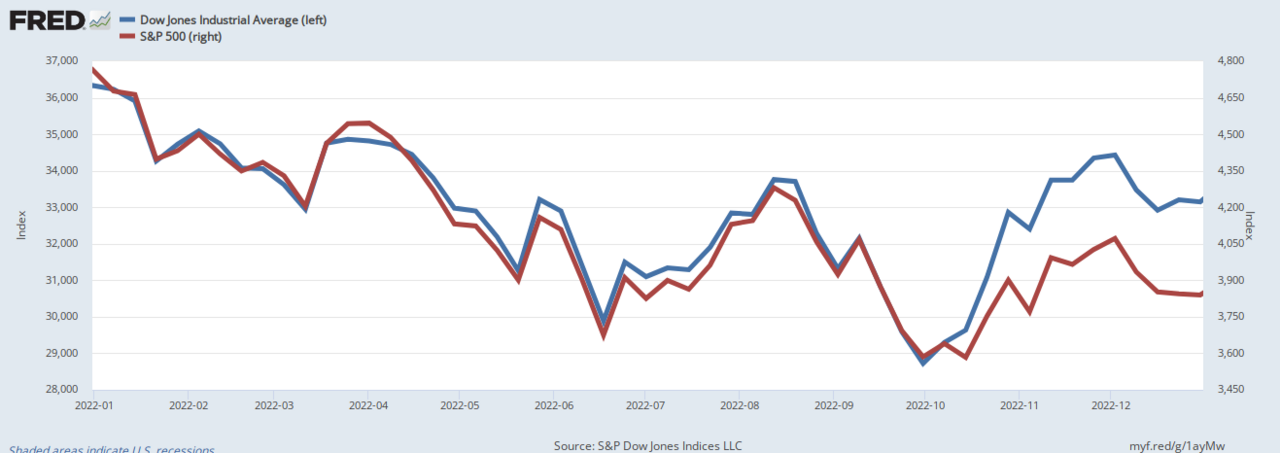
Federal Reserve rate hikes have pushed money market fund yields above 5% in October 2026, creating a rare haven for cash investors while pressuring equity and bond valuations. This divergence highlights a structural shift where short-term instruments outperform risk assets amid restrictive monetary policy.
Market Impact & Global Context
The current rate environment has triggered a massive reallocation toward money market funds, which now hold over $6.5 trillion in assets globally. This capital migration reflects a fundamental reassessment of the equity risk premium: when risk-free returns approach 5.5%, the hurdle rate for equities rises correspondingly, compressing valuation multiples across growth-oriented sectors.
Technology heavyweights in the Nasdaq 100 face particular headwinds as higher discount rates disproportionately reduce the present value of distant cash flows. Simultaneously, elevated oil prices and massive AI capital expenditure commitments are squeezing margins, creating a dual pressure on profitability and valuation.
"The 5% money market yield isn't just a parking spot — it's a new benchmark that forces every asset class to justify its risk premium. We're seeing a structural repricing where duration risk in both bonds and growth equities gets penalized until the Fed signals a definitive pivot."
European markets mirror this dynamic, with OMX technology shares experiencing similar rotation pressures as investors favor energy and financial sectors that benefit from higher rates and commodity strength. The transmission channel operates through both discount rate mechanics and sector-specific earnings sensitivity.
Fixed income markets face their own recalibration. Long-duration bonds suffer mark-to-market losses while short-term instruments offer compelling risk-adjusted returns. This inversion of the traditional risk-return relationship has persisted longer than historical norms, suggesting a regime change rather than a cyclical fluctuation.
Key Takeaways for Income Investors
- Monitor Fed forward guidance for pivot signals — the terminal rate trajectory matters more than the current level for duration positioning.
- Watch money market fund flow data weekly — sustained inflows above $50 billion signal continued defensive positioning by institutional allocators.
- Expect continued sector rotation favoring energy, financials, and value factors over growth and duration-sensitive equities.
- Hedge equity exposure using short-duration fixed income overlays rather than cash alone to capture carry while maintaining liquidity.
Frequently Asked Questions
Will Money Market Yields Stay Above 5% Through 2027?
Yields will remain elevated as long as the Fed holds rates restrictive and inflation stays above the 2% target. Market pricing suggests the first cut may not arrive until mid-2027, supporting 5%+ cash returns for several quarters.
How Do High Cash Yields Affect Stock Market Valuations?
Higher risk-free rates raise the discount rate applied to future earnings, compressing price-to-earnings multiples. Growth stocks with distant cash flows suffer disproportionately, while value sectors with near-term earnings prove more resilient.