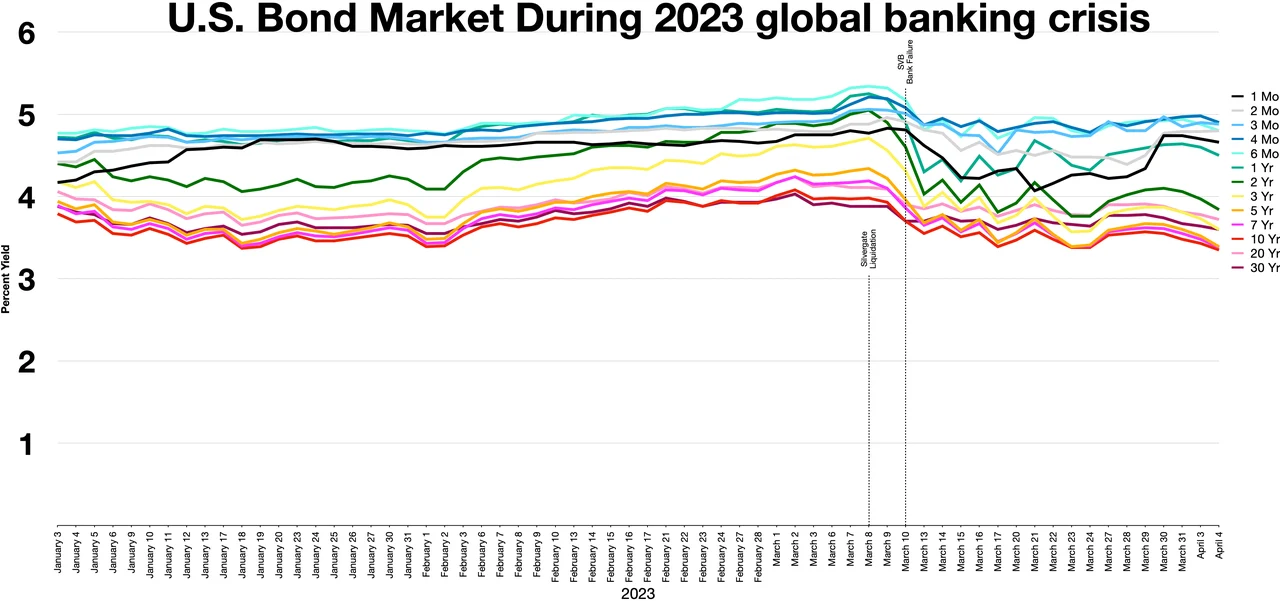
Major Treasury buyers including money-market funds and hedge funds have grown increasingly selective at recent auctions, Bloomberg reported October 21, 2026, driving wider bid-to-cover tails and pushing 10-year yields higher as liquidity providers demand richer compensation for duration risk.
Treasury Market Structure Shift: Non-Bank Intermediaries Redefine Price Discovery
The U.S. Treasury market's intermediary layer has undergone a structural transformation since the 2020 pandemic shock. Traditional primary dealers — constrained by supplementary leverage ratio (SLR) requirements and balance-sheet costs — have ceded market-making share to non-bank entities: government money-market funds now holding $6.2 trillion in assets, and hedge funds executing cash-futures basis trades at record notional. These new power brokers operate with different risk tolerances and regulatory incentives, creating a more price-sensitive marginal buyer.
Unlike banks that historically absorbed supply as a public-utility function, money funds face daily redemption risk and yield-chasing investors. Their demand curve kinks sharply when overnight reverse repo facility (ON RRP) yields compete with bill returns. Simultaneously, hedge fund basis trades — long cash Treasuries, short futures — unwind violently when repo financing costs spike or volatility widens futures basis. This dual dynamic explains why recent 10- and 30-year auctions have printed tails exceeding 2 basis points, a level unseen since the 2022 quantitative tightening onset.
"The marginal price-setter in Treasuries has shifted from a regulated bank with implicit franchise value to a money fund with explicit redemption gates and a hedge fund with prime-broker margin calls. That structural handoff embeds a higher term premium because the new intermediaries cannot warehouse duration risk without immediate mark-to-market discipline." — Senior Rates Strategist, Global Macro Hedge Fund
Foreign official sector participation has also declined as a share of auction uptake, falling below 15% for indirect bidders in recent 10-year sales versus a 25% pre-pandemic average. Reserve managers are diversifying into agency MBS and high-grade corporates, reducing the captive bid that once anchored auction metrics. The combined effect: a market where each incremental billion of supply requires a steeper yield concession, amplifying convexity hedging flows and increasing yield volatility per unit of issuance.
This dynamic mirrors sovereign funding stress observed in emerging markets, where auction failures trigger abrupt repricing. India's RBI recently rejected all T-bill bids amid liquidity scarcity, and the Indian yield curve steepened sharply as local banks refused supply at prevailing levels. While the U.S. benefits from reserve-currency depth, the mechanistic parallel — marginal buyer exhaustion forcing yield concessions — is instructive for term premium modeling.
Key Takeaways for Fixed Income Portfolio Managers
- Monitor ON RRP take-up versus bill auction bid-to-cover ratios as a real-time gauge of money-fund demand elasticity.
- Watch hedge fund basis trade positioning via CFTC data; large net-long cash Treasury positions signal unwind risk during repo stress.
- Expect elevated auction tails to persist until primary dealer balance-sheet capacity expands or Fed QT pace decelerates materially.
- Hedge long-duration exposure with receiver swaptions or curve steepeners to capture convexity benefits from volatile auction cycles.
Frequently Asked Questions
Why Are Treasury Auction Metrics Deteriorating in 2026?
Auction metrics are weakening because the marginal buyer has shifted from banks with regulatory absorption capacity to price-sensitive non-bank intermediaries. Money-market funds compare bill yields to ON RRP rates daily, while hedge funds require positive carry on basis trades. Both withdraw bids when compensation for duration and financing risk falls below internal hurdles, widening tails and reducing bid-to-cover ratios.
How Does Selective Buying Affect the Fed's Monetary Policy Transmission?
Selective buying steepens the term premium component of long-term yields independent of the Fed's policy rate path. This tightens financial conditions through higher mortgage rates and corporate borrowing costs even if the federal funds rate holds steady. The Fed may need to adjust QT runoff caps or communicate tolerance for higher term premiums to prevent disorderly tightening that undermines the intended policy stance.