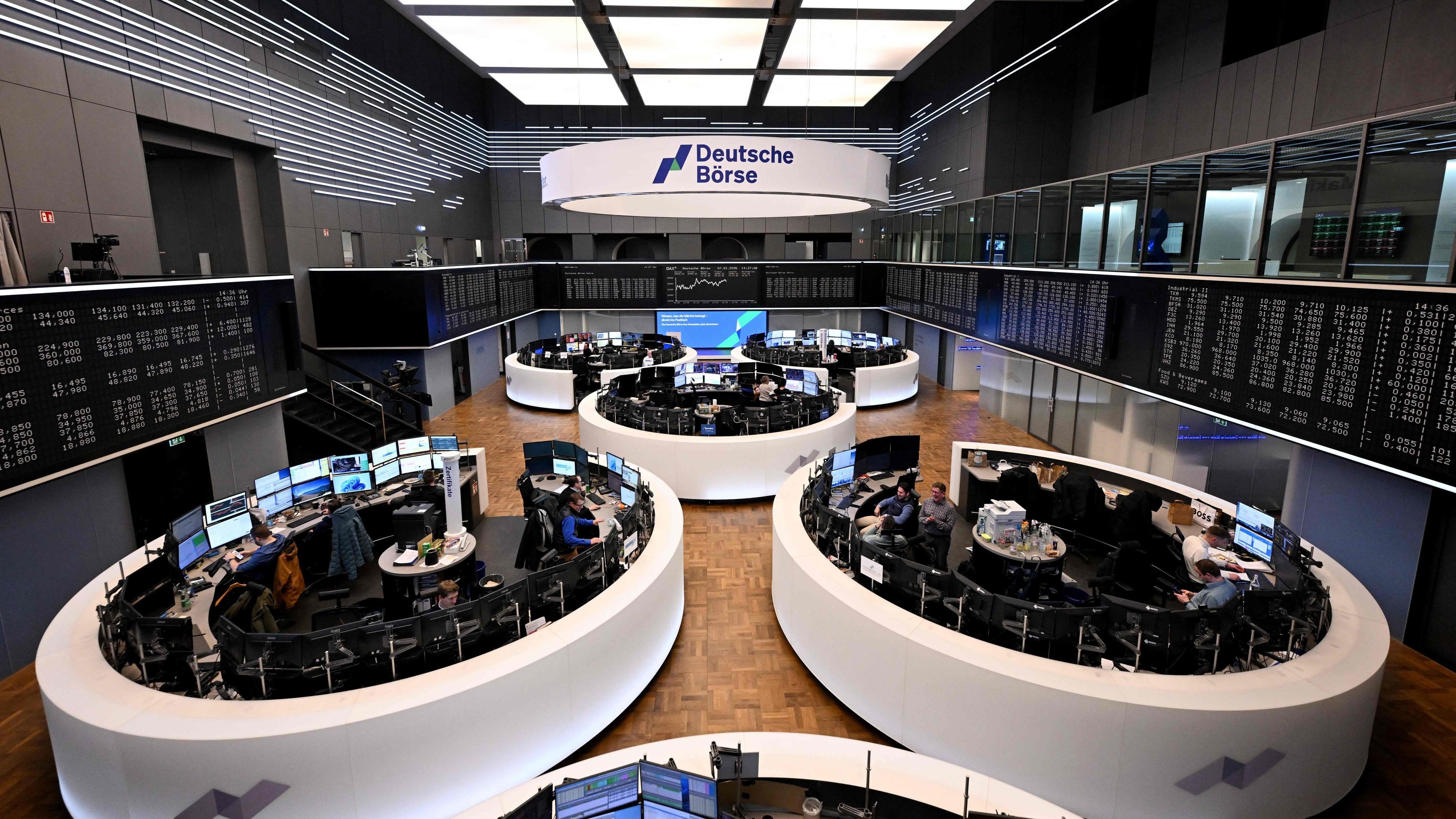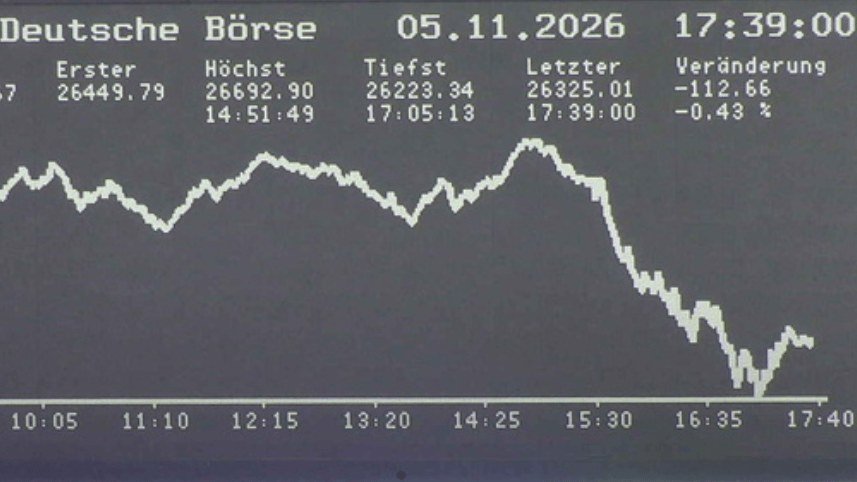
Germany's DAX index tumbled 2.3% to 25,730 points on Friday morning, surrendering nearly 600 points as a global risk-off wave from Wall Street triggered aggressive profit-taking after the benchmark rallied more than 1,800 points over the prior month. The selloff erased Thursday's record peak of 26,685, though semiconductor shares including Infineon, Siltronic, and Süss MicroTec bucked the decline.
Key Takeaways
- DAX fell 2.3% (~600 pts) to 25,730 Friday, erasing Thursday's record high of 26,685
- Drop driven by profit-taking after 1,800-point monthly rally and Wall Street spillover
- Infineon (+3.1%), Siltronic, Süss MicroTec rose despite broad selloff, reversing Thursday's 8-14% chip decline
- Consorsbank's Stanzl: 'Reflex is understandable' — AI-heavy portfolios triggered de-risking
- Key watch: U.S. CPI Nov 13, DAX earnings, technical support at 25,500
Executive Intelligence Brief
Wall Street Spillover Triggers Profit-Taking
The Friday rout originated from Thursday afternoon's selloff on Wall Street, which transmitted negative sentiment across global equity markets overnight. Despite Thursday's supportive backdrop — midterm election clarity, hopes for diplomatic progress in the Middle East, falling energy prices and bond yields, and positive corporate earnings — the DAX's intraday record of 26,685.23 proved short-lived.
Jochen Stanzl, chief market economist at Consorsbank, framed the move as a natural correction: 'After the index rose over 1,800 points on a monthly basis, investors are taking profits. The reflex is understandable. Anyone invested in the DAX likely also holds AI stocks.' The comment underscores the index's heavy correlation with the global technology trade.
Semiconductor Divergence Signals Sector Rotation
In a notable decoupling, German chip stocks stabilized Friday after Thursday's 8-14% plunge. Infineon led the rebound with a 3.1% gain, while MDAX-listed Siltronic and Süss MicroTec also advanced. The divergence suggests institutional buyers are distinguishing between broad index risk and structural demand for semiconductor equipment and memory chips tied to AI infrastructure buildout.
Thursday's chip selloff likely reflected positioning adjustments ahead of key U.S. tech earnings and macro data, rather than fundamental deterioration. Friday's recovery indicates persistent bid interest at lower levels, particularly for companies exposed to silicon carbide, wafer fabrication, and lithography supply chains.
Technical Damage and Support Levels
The 600-point drop represents a 2.3% single-session reversal from an all-time high, a move that technically constitutes a 'key reversal day' if the index closes near its low. The 25,500 level — roughly the 50-day moving average — now serves as immediate support. A break below could trigger algorithmic selling and bring the 25,000 psychological threshold into play.
Volume data was not disclosed in the morning report, but the speed of the decline suggests participation from systematic trend-following strategies and risk-parity funds reducing equity exposure amid rising cross-asset volatility.
Macro Calendar and Earnings Drive Next Moves
Next week's U.S. CPI release (November 13) will dominate sentiment, as it shapes Federal Reserve rate-cut expectations for December and 2025. In Europe, the remaining DAX Q3 earnings — including Siemens, Deutsche Telekom, and Allianz — will test whether corporate fundamentals can reassert themselves over macro noise.
Bond market stability is equally critical: Thursday's rally was partly fueled by falling Bund yields. Any resurgence in term premium or inflation expectations would undermine the valuation framework supporting the DAX's recent 1,800-point ascent.