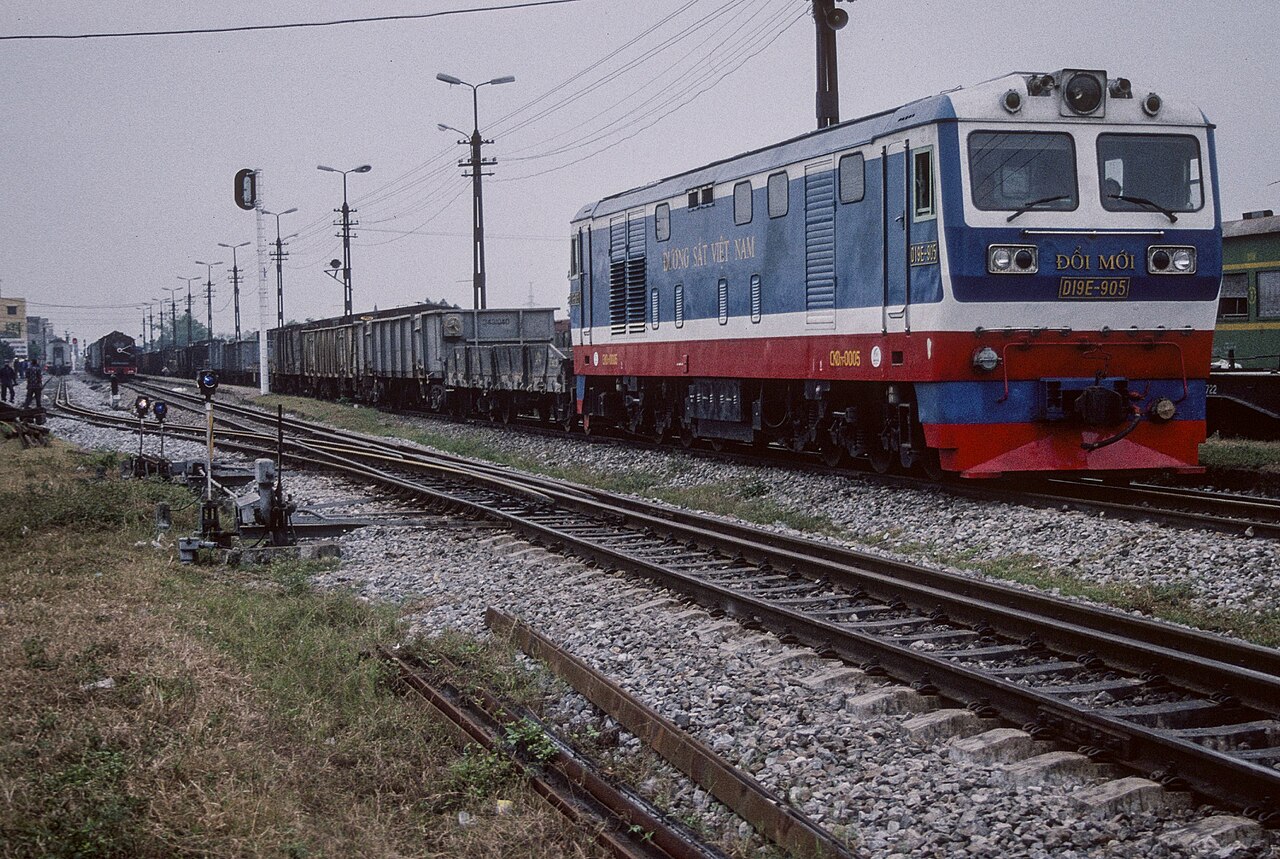
Maersk and Vietnamese conglomerate Hateco announced a $3.5 billion rail freight project in Vietnam on October 20, 2026, targeting a strategic north-south corridor to bypass congested ports. The venture signals accelerating supply chain diversification toward Southeast Asia as global shippers seek alternatives to China-centric routes.
Maersk Vietnam Rail Impact: Supply Chain Diversification Accelerates
The Maersk-Hateco partnership targets a 1,500-kilometer standard-gauge railway linking Hanoi to Ho Chi Minh City, designed to handle 20 million tons of cargo annually. This directly addresses Vietnam's logistics bottleneck where trucking dominates 77% of domestic freight despite higher costs and emissions. For Maersk, the investment extends its integrated logistics model beyond ocean shipping into critical inland infrastructure, capturing margin across the full supply chain.
Vietnam's manufacturing export growth — averaging 12% annually since 2020 — has outpaced port capacity at Cat Lai and Hai Phong. Rail freight costs per ton-kilometer run 40-60% below trucking, offering a structural cost advantage for electronics, textiles, and automotive components moving between northern industrial zones and southern export hubs. The project aligns with Vietnam's Power Development Plan VIII and its net-zero 2050 commitment, positioning rail as a decarbonization lever for Scope 3 emissions.
"This isn't just a railway — it's a strategic hedge against single-country manufacturing concentration. Maersk is locking in land-side capacity before the next wave of China-plus-one relocation hits Vietnam's infrastructure ceiling. The $3.5 billion price tag reflects first-mover advantage in a corridor where right-of-way acquisition gets exponentially harder with each passing year."
Regional implications extend beyond Vietnam. Thailand's delayed high-speed rail links to Laos and China, Malaysia's East Coast Rail Link recalibration, and Indonesia's Jakarta-Bandung HSR all face financing or land acquisition hurdles. A operational north-south Vietnamese corridor could become the backbone of a future trans-ASEAN rail network, redirecting intra-regional cargo from feeder vessels to lower-cost rail. Investors should monitor ASEAN Connectivity Master Plan 2025 milestones for cross-border interoperability standards.
Key Takeaways for Infrastructure Investors
- Monitor Vietnam's public-private partnership framework for revenue risk allocation — Hateco's local political capital complements Maersk's balance sheet but land compensation disputes remain the primary execution risk.
- Watch for sovereign wealth fund co-investment signals; Temasek and GIC have historically anchored Southeast Asian logistics infrastructure at 15-20% equity stakes.
- Expect freight forwarder consolidation as rail access creates scale advantages — mid-sized NVOCCs without block train capacity may face margin compression on Vietnam lanes.
- Hedge currency exposure via VND-denominated revenue streams; the dong's managed float against a basket limits upside but provides stability versus frontier market peers.
Frequently Asked Questions
How Does the Maersk-Hateco Rail Project Compare to China's Laos Railway Model?
The Laos-China railway was state-funded with Chinese policy bank lending at concessional rates, whereas Maersk-Hateco relies on commercial project finance with revenue risk shared between strategic partners. Vietnam's higher GDP per capita and existing industrial base suggest stronger organic cargo demand versus Laos's transit-dependent model.
What Are the Implications for Container Shipping Rates on Intra-Asia Lanes?
Modal shift from feeder vessels to rail could reduce intra-Asia container demand by 8-12% on north-south Vietnam corridors by 2030, pressuring short-sea freight rates. However, released vessel capacity may be redeployed to growing Cambodia-Myanmar routes where rail infrastructure remains absent.