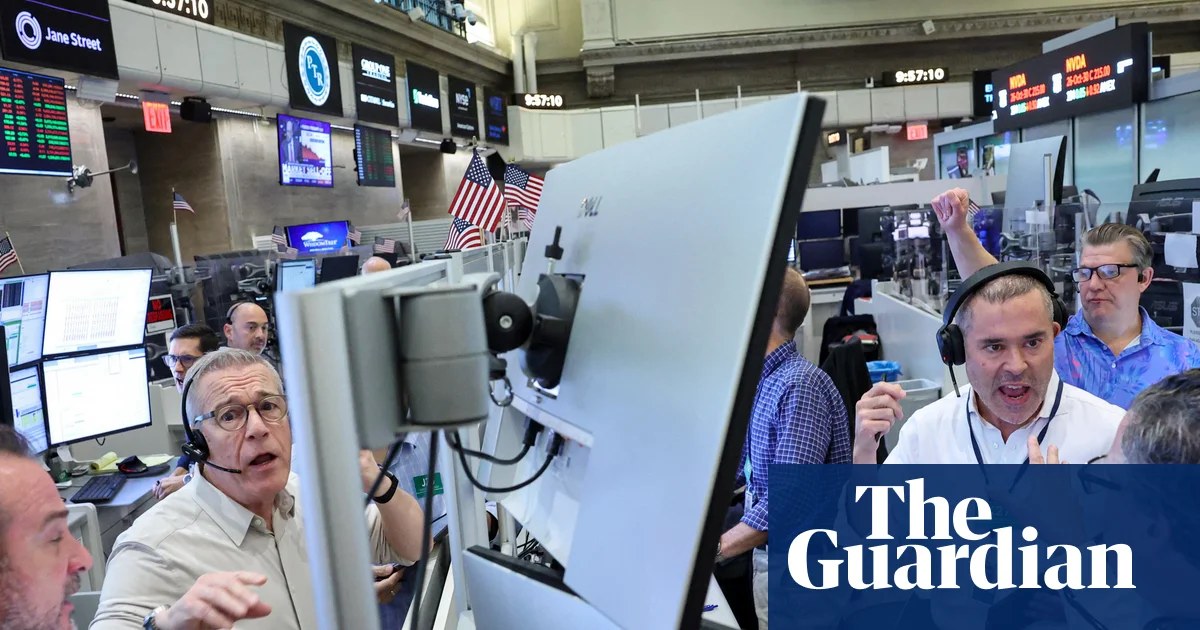
A cascade of disappointing earnings from Alphabet, Amazon, and Intel drove the Nasdaq 100 down 5.8% in October, wiping nearly $1 trillion in a single week and roughly $2 trillion for the month as investors questioned whether massive AI infrastructure spending can generate adequate returns.
Key Takeaways
- Nasdaq 100 down 5.8% in October; ~$2 trillion monthly loss, ~$1 trillion weekly loss.
- Alphabet -12% ($500B market cap wipeout), Intel -30% (worst day since 1974), Amazon -1.8%, Nvidia -3.1%.
- Core driver: Hyperscalers (Meta, Alphabet, Amazon) raising AI capex forecasts while near-term profitability disappoints.
- S&P 500 erased October gains; breadth data shows concentrated selling in mega-cap tech.
- Next catalysts: Microsoft/Meta earnings this week, Nvidia November report, Fed financial stability assessment.
Earnings Catalysts and Immediate Market Reaction
Alphabet shares plunged more than 12% on Thursday, erasing $500 billion in market capitalization in their worst day on record after the company disclosed it burned significantly more cash in the summer quarter than in the spring due to AI data-center outlays. Amazon fell 1.8% Friday after reporting weaker-than-expected summer profit and higher-than-anticipated capital expenditure. Intel tumbled nearly 30%, flirting with its worst session since 1974, despite a stronger-than-expected Q3 profit, because its Q4 forecast fell far short of consensus.
The selling pressure radiated across the semiconductor complex. Nvidia, previously valued around $5 trillion and the poster child of the AI boom, slid 3.1%, acting as the heaviest single drag on the S&P 500, which declined more than 1%. The Nasdaq Composite dropped over 3%, while the Dow Jones Industrial Average fell less sharply. The S&P 500 was roughly evenly split between gainers and losers, underscoring the concentrated nature of the rout.
AI Capital Intensity vs. Return Horizon
The sell-off reflects a fundamental reassessment of the AI investment thesis. Meta Platforms, Alphabet, and Amazon have all raised spending forecasts this quarter as they race to expand GPU clusters and data-center capacity. Yet the market is no longer rewarding capex intensity without clearer line-of-sight to incremental revenue and margin expansion. Worries are rising about whether hundreds of billions of dollars in outlays will produce enough profit and productivity to justify current valuations.
Simultaneously, concerns that restrictive interest rates may slow the further build-out of data centers have pressured the broader semiconductor supply chain, creating a pincer movement on both the demand and financing sides of the AI infrastructure trade.
Sector Exposure and Concentration Risk
The episode highlights the extreme concentration of the S&P 500's 2024 gains in a handful of mega-cap technology names. With the index having set an all-time high earlier in October only to erase the month's advance, the market's dependence on AI-driven earnings momentum is laid bare. Chipmakers, cloud providers, and data-center equipment vendors all face revised growth assumptions if hyperscalers moderate capex trajectories.
Forward Outlook and Key Milestones
Immediate focus shifts to Microsoft and Meta earnings due this week for further evidence on whether capex guidance is peaking. The Federal Reserve's next policy meeting and any commentary on financial stability risks from concentrated equity declines will be monitored. Nvidia's November results will provide the most direct read-through on data-center demand sustainability. Absent a positive catalyst, the market may continue to de-rate the AI premium embedded in mega-cap multiples.