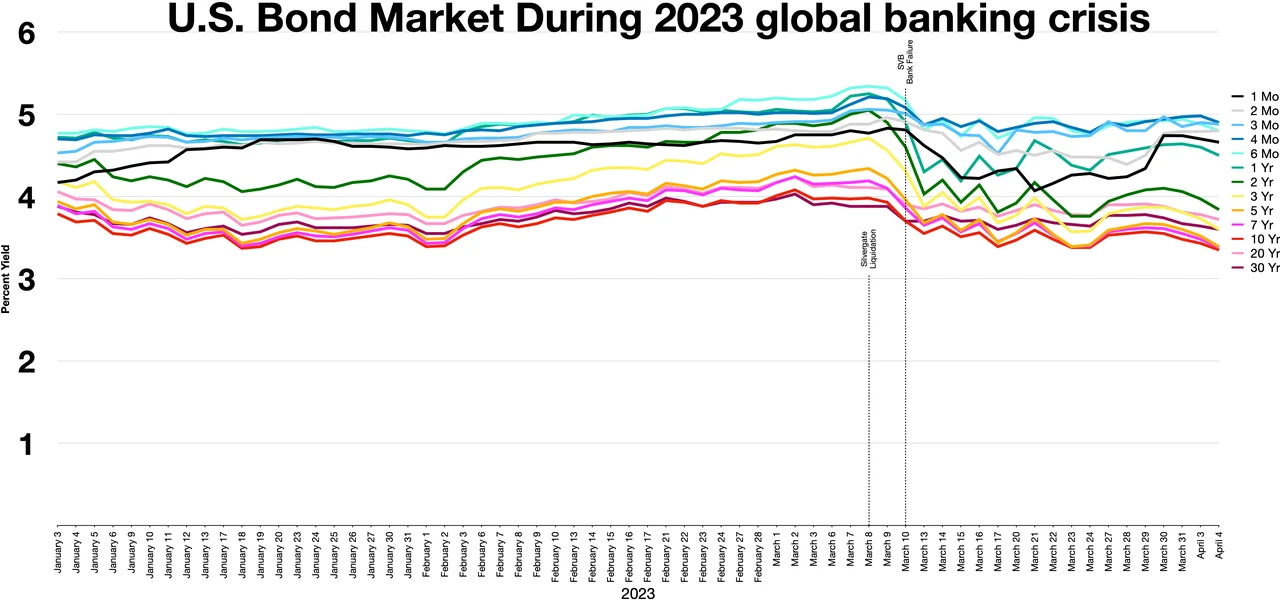
Bond investors dismissed political gridlock as a deficit solution on October 27, 2026, driving 10-year Treasury yields up 8 basis points as fiscal sustainability fears outweighed hopes for spending restraint. The selloff steepened the yield curve, signaling rising term premium demands.
US Treasury Market Impact: Fiscal Sustainability vs. Political Paralysis
The Bloomberg report highlights a critical shift: fixed income markets no longer price divided government as a fiscal discipline mechanism. Historically, gridlock implied legislative inertia that capped spending growth. Today's structural deficits — driven by mandatory entitlements and debt service — render that thesis obsolete. The 10-year yield climb reflects repricing of term premium rather than inflation expectations, as evidenced by stable breakeven rates.
This dynamic pressures long-duration assets disproportionately. Pension funds and insurers extending duration to match liabilities face mark-to-market losses, while leveraged basis trades unwind. The Fed rate hike trajectory compounds the strain: restrictive policy raises debt service costs, widening the deficit further in a self-reinforcing loop. Emerging market sovereign debt faces contagion risk as global term premium rises.
"Markets have finally internalized that political stalemate cannot solve a mathematical problem. The deficit is now a function of demographics and interest compounding, not discretionary appropriations. Gridlock merely prevents the revenue side of the ledger from adjusting." — Senior Rates Strategist, Global Macro Desk
Corporate credit spreads have widened modestly, but the real signal sits in swap spreads. The 10-year swap spread turning more negative indicates dealer balance sheet constraints absorbing Treasury supply. This plumbing issue, separate from fiscal fundamentals, amplifies volatility. The Fed's quantitative tightening reduces the natural buyer base precisely as issuance accelerates.
Key Takeaways for Fixed Income Investors
- Monitor term premium decomposition via ACM models to separate fiscal risk from monetary policy expectations.
- Watch primary dealer positioning in weekly Treasury auction allotments for signs of absorption capacity stress.
- Expect continued yield curve steepening in 10s30s as long-end convexity hedging accelerates.
- Hedge duration exposure with receiver swaptions rather than outright short positions to limit carry cost.
Frequently Asked Questions
Will Political Gridlock Reduce the US Budget Deficit in 2027?
No. Mandatory spending and net interest now exceed 70% of federal outlays. Gridlock prevents legislative action on either revenue or discretionary cuts, locking in structural deficits regardless of election outcomes.
How Does Rising Term Premium Affect Corporate Bond Issuance?
Higher term premium raises the risk-free benchmark for all credit spreads. Investment-grade issuance typically slows when 10-year yields breach 4.5%, as CFOs delay refinancing. High-yield markets face tighter financial conditions and higher default risk.