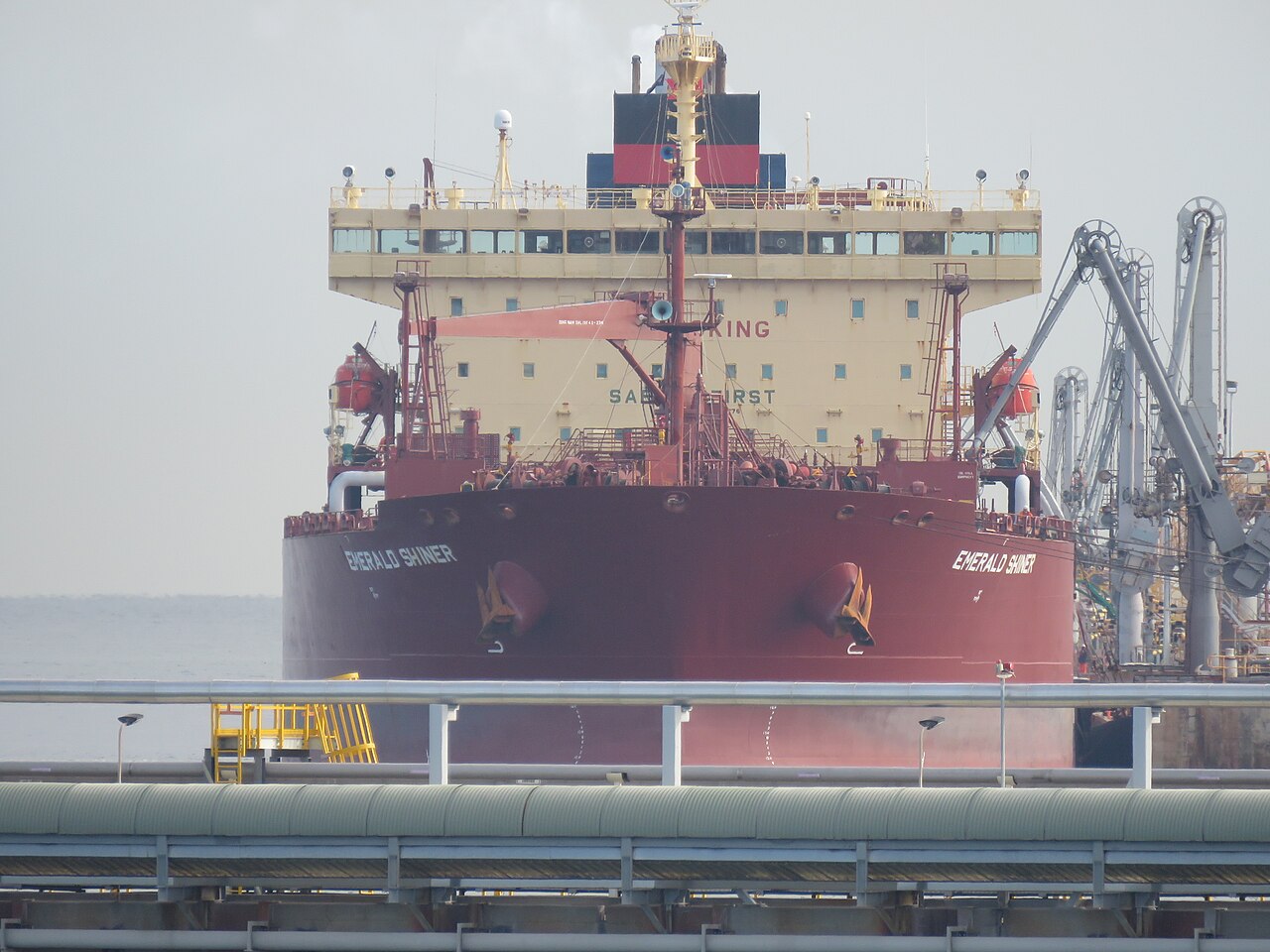
VLCC spot rates on the US-China route surged to $60 million per voyage in late October 2026, Bloomberg reports, as geopolitical risk premiums and fleet scarcity squeeze charter economics. The cost spike is forcing Chinese refiners to cancel cargoes, redirecting crude flows toward Middle Eastern suppliers and reshaping global tanker utilization patterns.
VLCC Market Impact: US-China Route Rate Spike Reshapes Crude Flows
The $60 million fixture for a very large crude carrier (VLCC) on the transpacific route represents a 300% premium over standard Middle East-China voyages, reflecting a structural fracture in tanker logistics. Sanctions enforcement on Russian and Iranian barrels has segmented the global fleet into "clean" and "shadow" pools, removing an estimated 15-20% of VLCC capacity from mainstream trade. Simultaneously, the orderbook-to-fleet ratio sits at a multi-decade low of 6%, while scrubber-fitted eco-tonnage commands a growing premium as FuelEU Maritime regulations tighten.
Chinese independent refiners — known as "teapots" — bear the brunt. Their procurement models rely on spot arbitrage between US Gulf Coast grades (WTI Midland, Mars) and Middle Eastern benchmarks (Murban, Upper Zakum). At $60 million round-trip, the freight component alone adds $4-5/bbl to delivered cost, eliminating the price advantage of US crude. State-owned majors like Sinopec and PetroChina can absorb higher freight via term contracts and integrated logistics, but teapots lack such buffers, accelerating a shift toward term-linked Middle East supply.
"The $60 million fixture reflects a perfect storm of sanction-driven fleet segmentation, minimal spare capacity, and Chinese refiners' inelastic demand for specific crude grades — rates this high fundamentally break the economics of transpacific arbitrage," said a senior tanker broker at a major London shipbrokerage.
For tanker owners, the windfall is concentrated. Frontline, Euronav, and DHT Holdings control disproportionate shares of modern, scrubber-fitted VLCCs eligible for mainstream charters. Their spot TCE (time charter equivalent) earnings have decoupled from the Baltic Dirty Tanker Index (BDTI), which averages across routes and vessel ages. The divergence signals a two-tier market: premium eco-tonnage earning $100,000+/day on sanctioned-risk routes, while older non-scrubber units languish at $30,000/day on ballast legs.
Macro correlations deepen the distortion. A stronger dollar compresses emerging market crude purchasing power, while OPEC+ spare capacity remains concentrated in the Gulf — shortening haul distances and favoring Suezmax/Aframax over VLCC. The US-China route, once a growth engine for VLCC demand, now functions as a pressure valve: only the most desperate cargoes pay the premium, while volumes structurally migrate to shorter, cheaper routes.
Key Takeaways for Energy Shipping Investors
- Monitor VLCC fleet segmentation metrics — the "clean" vs. "shadow" fleet split determines effective supply more than gross tonnage figures.
- Watch Chinese teapot import data for volume shifts from USGC to Middle East crudes; a sustained drop confirms structural demand destruction on the transpacific lane.
- Expect tanker earnings dispersion to widen — modern eco-VLCCs with scrubbers will capture disproportionate upside, while older tonnage faces accelerated scrapping.
- Hedge exposure to freight rate volatility via FFA (forward freight agreement) curves; the contango in VLCC FFAs signals market expectation of persistent tightness through 2027.
Frequently Asked Questions
Why Are US-China VLCC Rates at $60 Million Per Voyage?
The rate reflects a convergence of sanctions-driven fleet removal, minimal newbuilding deliveries, and inelastic Chinese demand for US crude grades that cannot be fully substituted by Middle Eastern barrels in the near term.
How Will High Tanker Rates Affect Chinese Crude Import Strategy?
Chinese refiners are accelerating term contracts with Middle East producers and reducing spot purchases from the US Gulf Coast, structurally shortening average haul distances and reducing VLCC utilization on transpacific routes.