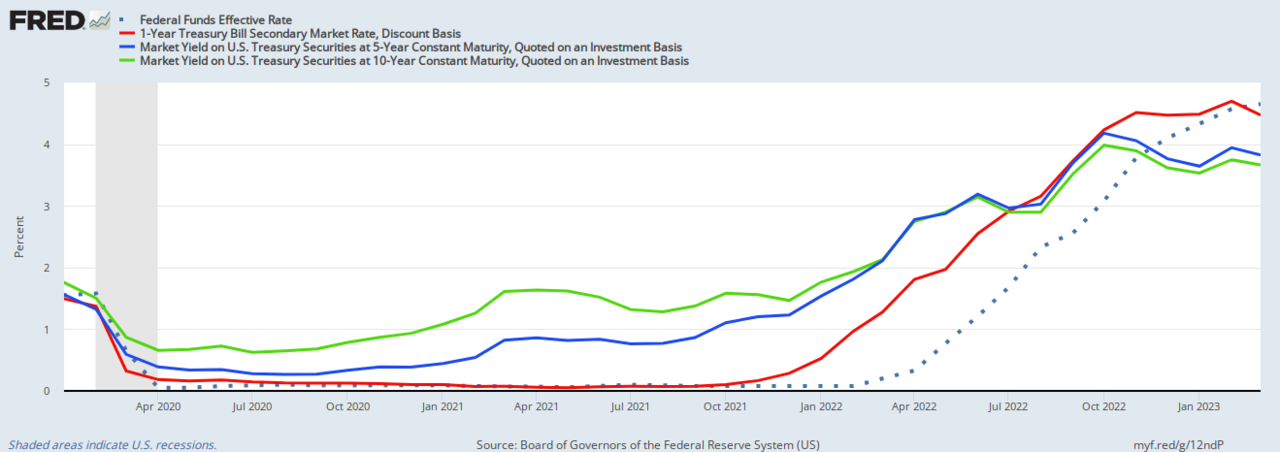
President-elect Trump's Treasury nominee Scott Bessent favors heavy T-bill issuance to fund deficits, a strategy that could steepen the yield curve and concentrate refinancing risk in 2025. Markets are pricing higher term premiums as investors demand compensation for elevated short-term debt rollover exposure.
Market Impact & Global Context: Term Premium Repricing Underway
A structural shift toward bills-only financing would compress the front end while forcing long-end yields higher as duration supply evaporates. The 2s10s spread, already positive after two years of inversion, could widen toward 100 basis points if T-bill share of total issuance sustains above 25%. Foreign official accounts — particularly Japan and China — have shown declining appetite for coupon securities, amplifying the convexity risk for domestic buyers.
"Bessent's preference for bills mirrors the 2017 Mnuchin playbook but at far greater scale — $2 trillion in net new bills annually versus $800 billion then. The term premium must rise to clear duration risk when the marginal buyer shifts from price-insensitive central banks to yield-sensitive real money."
Primary dealer balance sheets face acute pressure: bill absorption capacity is finite, and repo market volatility spikes each quarter-end as leverage ratio constraints bind. The SOFR-OIS spread has widened 15 basis points since the nomination, signaling funding stress. Emerging market sovereigns with dollar-denominated debt face contagion risk — a steeper U.S. curve lifts global discount rates and tightens financial conditions disproportionately for frontier issuers.
Key Takeaways for Fixed Income Investors
- Monitor the Treasury's quarterly refunding announcement in February for definitive bill-to-coupon allocation guidance.
- Watch 10-year term premium estimates (ACM model) for sustained move above 50 basis points as structural inflection signal.
- Expect elevated bill auction tail risk — bid-to-cover ratios below 2.5x would indicate dealer saturation.
- Hedge long-end convexity exposure via receiver swaptions; gamma hedging flows could amplify yield moves during low-liquidity windows.
Frequently Asked Questions
Will Bessent's Bill Strategy Trigger a Funding Crisis in 2025?
Not immediately — T-bill demand remains robust from money market funds holding $6.5 trillion in assets. However, concentration of $8 trillion in maturing bills within a 12-month window creates rollover vulnerability if money fund flows reverse or the debt ceiling standoff disrupts issuance.
How Does Short-Term Issuance Affect the Fed's Balance Sheet Normalization?
Heavy bill supply competes directly with ON RRP facility demand, potentially draining reverse repo balances faster than projected. This accelerates the transition to scarce reserves regime, forcing the Fed to end quantitative tightening earlier than the current mid-2025 guidance.